Recovery
How to Use a Portable Steam Sauna: Setup, Session Time and Safety
How to use a portable steam sauna tent at home: setup, which water to use, pre-heat time, how long to sit in it, cleaning to stop mould, and who should check with a GP first.

By Mike Shilling, Recovery & Training Editor · Updated 26 October 2026
A vibrating foam roller is worth it if plain foam rolling feels too painful to stick with, or if you want a slightly bigger short-term boost in flexibility before training. For everyone else, a normal foam roller does most of the job for a fraction of the price. That's the honest answer to the Reddit question "gimmicky or useful?", and it's what the research supports: vibration adds a small, real edge in range of motion and pain tolerance, not a recovery revolution.
Below we go through what these rollers actually do, what the studies found (including the results that came out flat), who should spend the extra money and what to look for when you buy.
It's a foam roller with a motor inside. The outside looks much like any firm roller, usually high-density EVA foam with ridges or grooves, but a rechargeable battery and an off-centre motor make the whole cylinder vibrate while you roll on it. Most models give you three to five intensity levels, controlled by a button on the end cap or, on pricier rollers, a phone app.
You use it exactly like a normal roller: lie on it, put body weight through the muscle and roll slowly back and forth. The vibration just runs underneath. If you've used a massage gun, it's a similar sensation spread across a much larger surface, with less depth and less precision. Our guide on how to use a massage gun covers that side of things if you're deciding between the two.
There are two plausible explanations, and neither is about "breaking up knots" or flushing out lactic acid, claims you'll still find on some product pages.
The first is pain gating. Vibration stimulates touch and pressure receptors in the skin and muscle, and that extra input seems to dampen how strongly your nervous system registers discomfort. In practice, rolling on a sore calf feels less sharp with the motor on, so you can press harder or relax into it rather than tensing up. That alone explains a lot of the appeal.
The second is a short-term change in how much stretch your nervous system will tolerate. When pressure feels less threatening, muscles let you move a bit further before they push back. This is why most of the benefits show up as range of motion and pain threshold measured minutes after rolling, not as any lasting change in the tissue itself.
The research on vibration foam rolling is small but growing, and most of it compares vibrating rollers directly with plain ones, which is exactly the comparison you care about. Here's what holds up.
This is where vibration has its best case. A 2021 systematic review and meta-analysis pooled eight trials with 230 healthy adults and found vibrating rollers improved range of motion more than non-vibrating ones, with a moderate effect size (SMD 0.53). The gains were clearest at the hip and knee. The authors rated the included studies' quality as only "fair", though, and the trials were small, so treat it as a likely effect rather than a settled one.
Individual studies tell a similar story. In a 2021 University of Graz trial on the quadriceps, both rollers increased strength and reduced stiffness in one thigh muscle, but only the vibrating roller improved hip extension range, by 3.3 degrees. That's a real number, and it's a small one.
In Cheatham and colleagues' 2019 randomised trial, 45 active adults rolled their quads for two minutes with a vibrating roller, a plain roller or not at all. Pressure pain threshold rose by 180 kPa with vibration against 112 kPa with the plain roller, a significant difference. Knee range of motion, on the other hand, rose 7 degrees versus 5 degrees, and that gap wasn't statistically significant. So in this study vibration made pressure more bearable, while flexibility came out roughly level with plain rolling.
A 2019 Spanish study gave 38 people serious muscle damage with a heavy eccentric squat session, then had them roll 48 hours later. The vibration group reported a bigger drop in soreness (around 30%) and gained more hip extension. Both groups improved on pain threshold, muscle oxygen, jump height and knee range, so plain rolling did most of the useful work too.
A 2025 systematic review of eight studies on fatigued muscles reached a fair conclusion: vibration rollers seemed to help with soreness, pain threshold and fatigue, but the findings varied a lot, and the authors said the effect of vibration is hard to separate from the effect of pressure itself. If your main aim is getting over sore legs faster, read our breakdown of how long DOMS lasts first, because sleep and time matter far more than any roller.
Nobody has shown that vibration makes you jump higher, sprint faster or lift more than plain rolling. One study of 16 college volleyball players found plain foam rolling improved drop jump height two minutes later, while vibration rolling didn't change it and hip power actually dropped at the five-minute mark. That's a single small study, but it points the opposite way to the marketing.
The short version
Vibration gives a small extra short-term boost in range of motion and makes rolling hurt less. It hasn't been shown to improve strength, speed or long-term flexibility, and for soreness the extra benefit over a plain roller is uncertain. Every effect lasts minutes to hours, not days.
Most people shouldn't. If you can already foam roll without wincing, a £20 roller from our best foam roller UK roundup will give you nearly everything a £129 vibrating one does.
The money makes sense in a few situations. If you find plain rolling so uncomfortable that you skip it, the pain-dampening effect is the one thing vibration does reliably, and a roller you actually use beats one gathering dust behind the sofa. Runners and lifters who roll as part of a pre-session warm-up also get a slightly bigger short-term mobility bump, which matters more for hips and hamstrings than anywhere else. And people who already own a massage gun and like that sensation tend to enjoy vibrating rollers for the bigger muscles a gun takes ages to cover.
If timing is your question, our article on foam rolling before or after a workout covers when each approach makes sense.
| Tier | Typical price | What you get |
|---|---|---|
| Budget | £35 to £50 | Three to four vibration levels, button control, basic battery |
| Mid-range | £60 to £100 | Better build, more levels, longer battery life, sometimes quieter motors |
| Premium | £120 to £150 | Brand names, app control, more refined motors and textures |
The jump from budget to premium buys you nicer build quality and app control rather than any proven extra benefit. None of the studies above used a premium roller to get their results, and the vibration frequency research doesn't support one level being clearly better than another.
Density and texture. Look for high-density EVA foam that doesn't compress much under body weight. Smooth or gently ridged surfaces suit beginners; aggressive spikes and deep grooves feel more intense, especially once the motor's running.
Length: 30cm vs 45cm. Most vibrating rollers are around 30cm long, which is fine for legs, glutes and lats and easy to pack in a kit bag. A 45cm roller is more stable for rolling your upper back because you can lie across it with both shoulder blades supported. If you mainly want back work, the longer size is the better buy.
Battery life. Two hours of runtime sounds short, but at 10 to 15 minutes per session that's around a week of daily use. Check the charge time and the charging port too; USB-C is far more convenient than a proprietary plug.
Vibration levels. Three to five levels covers almost everyone. More settings beyond that rarely matter, so don't pay extra for a long list of modes.
Noise. These are motors spinning inside a hollow cylinder, and some rattle on a wooden floor. Owner reviews mention noise more than any other complaint, so read them before you buy, particularly if you'll use it while someone else is watching TV.
The Therabody Wave Roller is the premium pick, made by the company behind Theragun. It uses grooved high-density foam, offers multiple vibration frequencies and connects to the Therabody app over Bluetooth. At around £129 at the time of writing, you're paying for polish and app control rather than results a cheaper roller can't match.
Check Therabody Wave Roller priceIf you want to try vibration without committing £100-plus, the PURSONIC vibrating foam roller sits at around £45 at the time of writing. Check the listing for the current battery and level specs, and read recent owner reviews on noise before ordering, as that's where budget rollers vary most.
Check PURSONIC roller pricePain shouldn't go above a 6 or 7 out of 10. If you're gritting your teeth and holding your breath, ease off, because tensing against the roller defeats the point of the vibration in the first place.
Slightly, for a couple of specific things. Studies comparing the two find vibration gives a small extra short-term gain in range of motion and makes pressure feel less painful. For DOMS and athletic performance the difference is inconsistent or absent, so a normal roller still gives you most of the benefit for a fraction of the price.
Not entirely, but the marketing oversells them. A 2021 meta-analysis of eight trials found vibration rollers improved range of motion more than plain rollers, which is a real effect. It's a short-term, modest one though, and nobody has shown vibration makes you stronger, faster or meaningfully better recovered.
Around 60 to 90 seconds per area is plenty, and most of the studies used one to two minutes per muscle group. Roll slowly, pause on tender spots for a few breaths and move on. Longer sessions don't add much and can leave the area feeling bruised.
Yes, and a warm-up is one of the better uses for one. A minute or two on the muscles you're about to train can loosen you up without hurting strength. Keep it brief, though: one study on volleyball players found plain rolling helped jump height two minutes later while the vibration version didn't.
Keep it off joints, bones and the lower back. Don't roll directly over the knee, the front of the shin, the spine or the side of the neck, and avoid areas with fresh injuries, varicose veins or clots. If you're pregnant or have a medical condition, check with your GP first.
Budget vibrating rollers start around £35 to £50, mid-range models sit between £60 and £100, and premium options like the Therabody Wave Roller cost around £129. A decent plain foam roller costs £15 to £30, so you're paying roughly three to six times as much for the vibration.
How to use a portable steam sauna tent at home: setup, which water to use, pre-heat time, how long to sit in it, cleaning to stop mould, and who should check with a GP first.
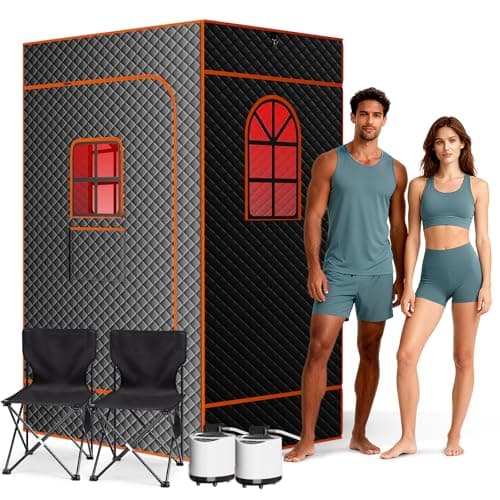
An honest Obqer 2 person portable steam sauna review: two 1200W generators, 9 heat levels, a 120 x 90cm footprint and £212.99 price, compared with Manastin and SereneLife.
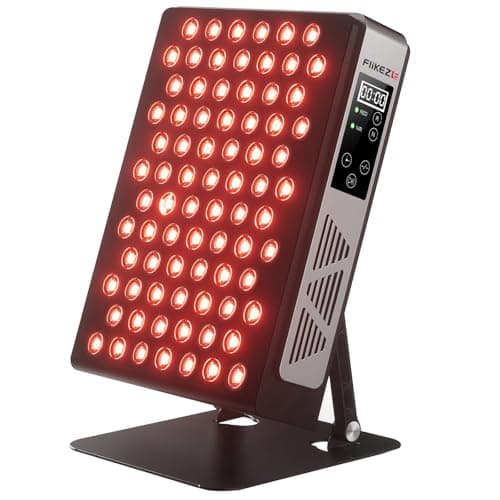
FliKEZE red light therapy review: 78 quad chip LEDs, 630 to 850nm, a 134 mW/cm² claim at 6 inches, five intensity levels and how it compares at £249.99.
How to use a red light therapy panel properly: the right distance and session time, how often, before or after training, eye safety and how to work out your dose.
Best Exercise is a participant in the Amazon EU Associates Programme, an affiliate advertising programme designed to provide a means for sites to earn advertising fees by advertising and linking to Amazon.co.uk. As an Amazon Associate we earn from qualifying purchases. This comes at no extra cost to you and never influences our independent reviews or rankings.