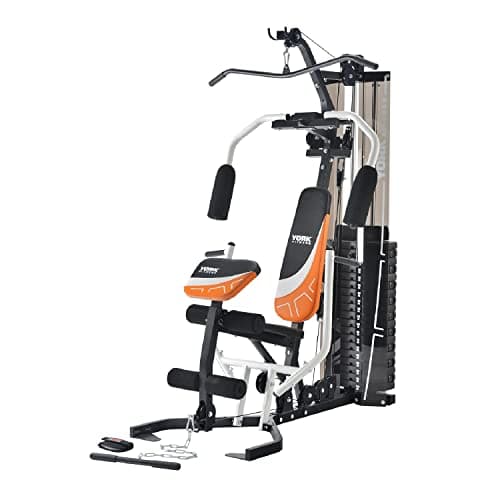
Home Gym
York Fitness Multi Gym Review: A 100kg Stack for £399
Our York Fitness multi gym review: the 100kg stack, chest press, pec deck, lat bar, row and leg extension, 196cm height, 125kg user limit and who it suits.

By Paul Kendrick, Cardio & Endurance Editor · Updated 2 November 2026
A stair climber machine is a cardio machine that makes you climb, either on a revolving staircase (the gym StairMaster or StepMill) or on two pedals that you push down in turn (the stepper type sold for homes). It burns about as many calories as running at 6mph, with no landing impact, and it works your glutes and quads harder than walking does. The catch for UK buyers is that the real revolving-step machine rarely fits in a house, so most home "stair climbers" are big steppers, and it helps to know the difference before you spend £400.
The name gets stuck on three quite different machines, and retailers don't always say which one they're selling.
This is what most people picture: a short escalator running the wrong way. A loop of real steps rolls down towards you and you step up onto each one as it arrives. You lift your knee, place your foot and push your whole body weight up, exactly like a flight of stairs. These are commercial machines built for gyms, mains-powered, very heavy and priced in the thousands. They give the most authentic climb and the hardest workout of the three types.
The second type has two large foot plates on arms. Push one down against resistance and the other rises; your foot stays on the plate the whole time. Older gym models and most home "stair climbers" work this way, including the ExacMe magnetic stair climber, which has a 48cm stride, 16 magnetic resistance levels and tall handles. The movement is shorter than a real step because there's no lifting phase, but the quads, glutes and calves still work hard, and the heart rate climbs quickly.
These are small pedal units that sit on the floor, usually hydraulic and often sold with resistance bands. They cost the least, slide under a bed and give a short, quick stepping motion. Most have nothing to hold on to. A premium example is the Xiser mini stair stepper, a cast alloy unit built for hard sprint intervals; budget versions sit around £40 to £80 and are covered in our best stepper machine UK guide.
Quick way to tell them apart
If your foot leaves the step and lands on a new one, it's a revolving-step machine. If your foot stays on a pedal that moves up and down, it's a stepper, whatever the box calls it.
Every step is a single-leg push from a bent knee and hip, so the work lands mostly on your legs and backside.
It isn't a strength builder in the way squats or lunges are. Think of it as hard leg endurance work. If you want more glute size, pair it with step-ups or other loaded leg work.
The Compendium of Physical Activities, which researchers use to estimate energy cost, lists a stair treadmill ergometer at 9.3 METs. One MET is roughly your resting burn, so that's about nine times resting. The same figure applies to running at 6 to 6.3mph.
Using calories = METs x body weight (kg) x hours, here's what 9.3 METs works out to:
| Body weight | 20 minutes | 30 minutes |
|---|---|---|
| 60kg | about 186 kcal | about 279 kcal |
| 75kg | about 233 kcal | about 349 kcal |
| 90kg | about 279 kcal | about 419 kcal |
Treat these as averages rather than a promise. Lighter people burn less; slower stepping burns less; and propping yourself on the handrails, which almost everyone does once they tire, cuts the real number noticeably. The Compendium doesn't give pedal steppers or mini steppers their own value, and we won't invent one. Expect a pedal stepper to sit somewhat below a revolving machine, because you don't lift your body up onto a new step.
Calories aside, stair climbing is a very efficient way to build fitness. In an eight-week trial of sedentary young women, climbing a public staircase, built up to five ascents of about two minutes a day, raised VO2 max by 17.1% compared with a control group. A 2024 randomised trial in inactive adults went shorter still: three 30-second all-out stair climbs per session, three days a week for six weeks, raised peak oxygen uptake by about 7%, while 40 minutes of moderate cycling didn't produce a significant change. Both used real stairs, not machines, and both were small, but the principle carries across: climbing is hard, so short sessions count.
For general health, the NHS physical activity guidelines ask adults for 150 minutes of moderate activity or 75 minutes of vigorous activity a week. Three 25-minute stair climber sessions at a pace that leaves you breathing hard covers the vigorous option.
We've compared the two in detail in our StairMaster vs treadmill guide, but the short version is this.
If you only want one machine and you run, buy a treadmill with 15% powered incline; our treadmills hub has the options. If you don't run and want hard cardio in 20 minutes in a small room, a stepper-style stair climber makes more sense.
This catches more people out than anything else. On a pedal stepper you stand on a plate that rises, and on a revolving machine you stand several steps up. Measure from the floor to the ceiling (or the lowest light fitting or beam), then compare it with your own height plus the machine's top pedal or step height, and leave clear room above your head. Loft rooms and sloped ceilings are the usual problem.
Check the full dimensions on the listing, not the folded size alone. The ExacMe, for example, is listed at about 122 x 58 x 165cm and 26kg, which one adult can fold and shift. A commercial revolving-step machine is far heavier, won't fold, and may not fit up a narrow staircase. Mini steppers fit almost anywhere.
Look for a limit comfortably above your own weight. Compact steppers often top out around 100kg to 120kg; sturdier home climbers go higher (the ExacMe is rated to 158kg). A higher rating usually signals a stiffer frame that rocks less as you shift from foot to foot.
Magnetic resistance is the quietest and most consistent, which suits flats and upstairs rooms. Hydraulic cylinders, used on most mini steppers, are cheaper but can soften as they warm up during a long session. Ignore extreme noise claims such as "under 20dB"; no loaded machine with moving pedals and a person stepping on it is that quiet. Put a rubber mat underneath to cut vibration through the floor.
A longer stride gives a deeper knee and hip bend, which feels more like real stairs and works the glutes more. Handles help with balance, but use them for a light touch only. If you need something to hold and want the arms involved too, a vertical climber is another route; see our best vertical climber UK guide.
Pedal pivots and bearings are the parts that wear. A one-year warranty is common on budget and mid-range steppers; longer cover is worth paying a little extra for if you'll use it daily.
Prices change, so treat these as rough bands from what we've seen on Amazon UK and our own reviews.
The ExacMe was £399.90 and in stock when we checked, with only a few units left, so availability may move.
Check price on Amazon£399.90If you want to try stepping cheaply before committing to a bigger machine, the Sunny Health & Fitness mini stepper with resistance bands was £44.99. It has no handles, so stand near a wall or worktop the first few times.
Check price on Amazon£44.99Take full steps, keep your chest up and push through your whole foot. If your knees complain, slow down and shorten the session before you add resistance.
It's a cardio machine that copies climbing stairs. The gym version, often called a StairMaster or StepMill, is a revolving staircase: real steps roll down towards you on a loop and you keep stepping up. Home stair climbers are usually pedal steppers, where each foot pushes a plate down against resistance while the other rises.
The Compendium of Physical Activities gives a stair treadmill 9.3 METs. For a 75kg person that works out at roughly 230 calories in 20 minutes and about 350 in 30 minutes. Your own figure depends on your weight, your step rate and how much you lean on the handrails, which takes weight off your legs and cuts the burn.
It burns more than walking on the flat and about the same as running at 6mph or walking up a steep incline. It has no landing impact, so it's kinder than running on feet and shins. A treadmill is more versatile because you can walk, hike at incline and run on one machine.
You can, but a commercial revolving-step machine costs several thousand pounds, is very heavy and needs a lot of headroom, so few UK homes can take one. Most people buy a large pedal stepper with handles (roughly £300 to £600) or a compact mini stepper (roughly £40 to £80) instead.
Mainly the quads and glutes, with the hamstrings and calves helping on every step. Your core works to keep you upright, provided you don't hang off the rails. Slower, full steps through the whole foot bias the glutes; quick, shallow steps on your toes shift the work to the calves and quads.
Start with 10 to 15 minutes at an easy pace and build up. Research on real stairs has found fitness gains from very short, hard efforts, such as three 30-second all-out climbs per session. For general health, 20 to 30 minutes three or four times a week counts towards the NHS target of 150 minutes of moderate activity.
Our York Fitness multi gym review: the 100kg stack, chest press, pec deck, lat bar, row and leg extension, 196cm height, 125kg user limit and who it suits.
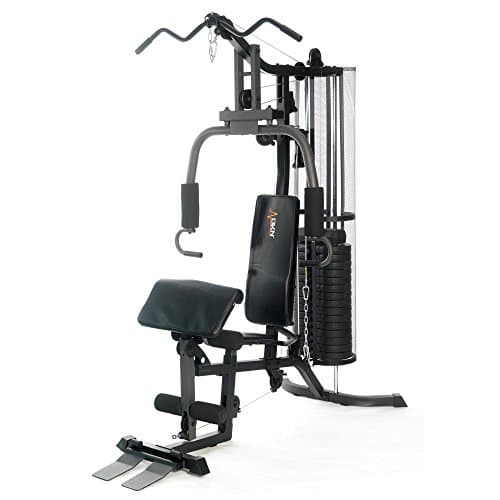
The best multi gyms in the UK for 2026, compared on stack weight, footprint and height: 45kg compact stations to 102kg weight stacks, Smith machines and cable cages. Footprints, user limits and who each one suits.
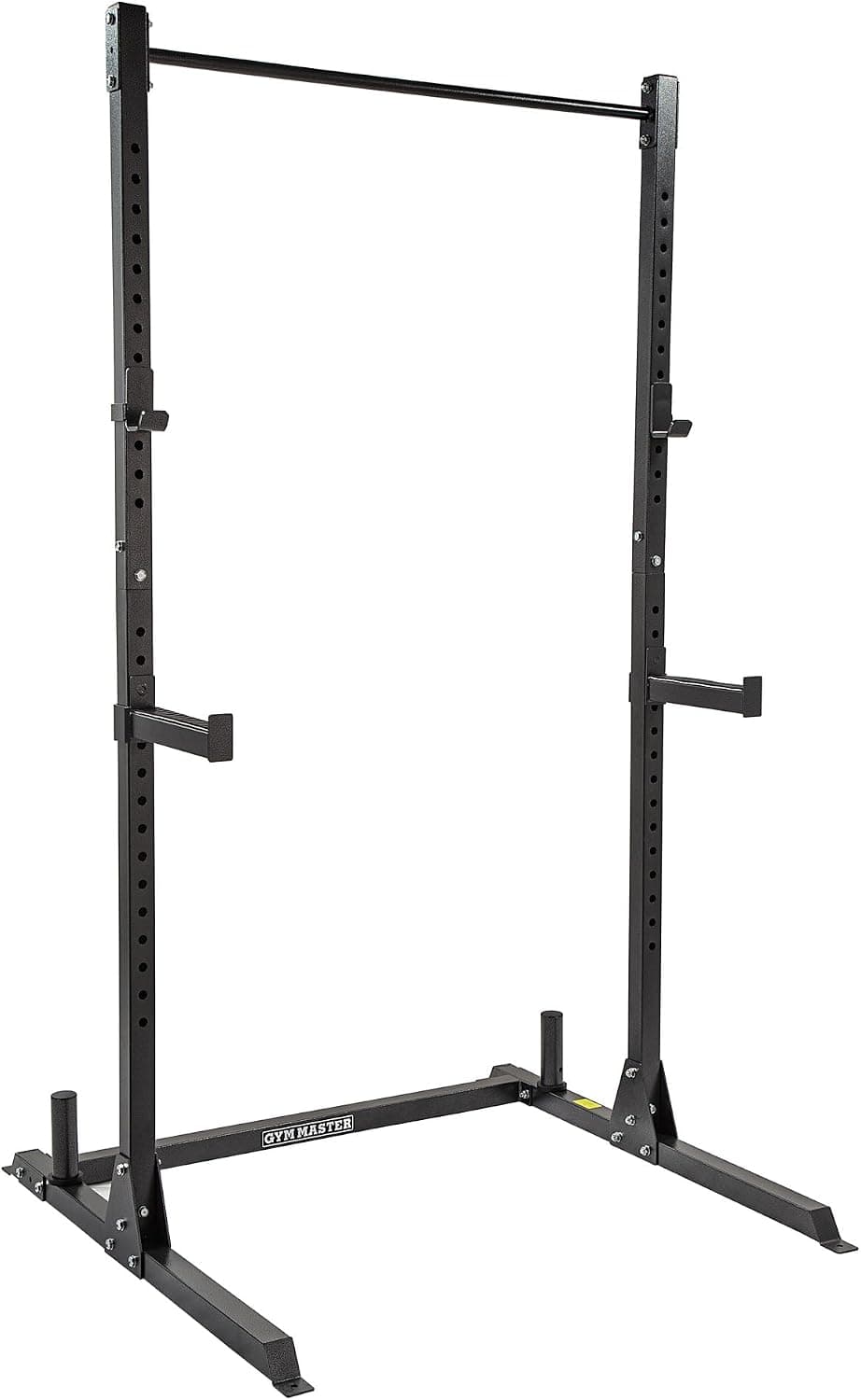
The best squat racks in the UK for 2026, compared on weight rating, height range and spotters. Home squat rack picks from £80 stands to a full cage, plus the room you need for each.
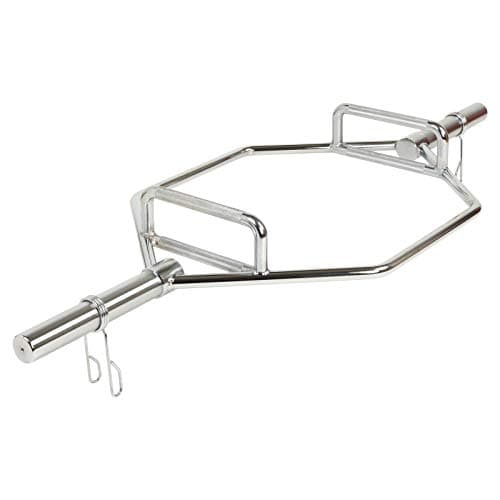
The best trap bars and hex bars in the UK for 2026, with the hex bar weight of every pick (21kg to 27kg for Olympic frames). Honest picks for deadlifts, shrugs and farmer's carries.
Best Exercise is a participant in the Amazon EU Associates Programme, an affiliate advertising programme designed to provide a means for sites to earn advertising fees by advertising and linking to Amazon.co.uk. As an Amazon Associate we earn from qualifying purchases. This comes at no extra cost to you and never influences our independent reviews or rankings.