Treadmills
How to Lubricate a Treadmill: Step-by-Step Belt Lube Guide
How to lubricate a treadmill belt in 10 minutes: which 100% silicone lube to use, how often, signs it's dry, step-by-step instructions and mistakes to avoid.

By Paul Kendrick, Cardio & Endurance Editor · Updated 9 October 2026
Pick the StairMaster if you want the most work done in the least time without any running, and the treadmill if you want one machine that covers walking, incline hiking and running. On calorie burn they're closer than gym lore suggests: a stair machine at a steady pace burns about the same as running at 6mph, or walking steeply uphill. At home the answer is easier still, because a real StepMill costs more than most people's car and stands taller than their doorframe.
| StairMaster (StepMill) | Treadmill | |
|---|---|---|
| Compendium MET value | 9.3 (stair treadmill, general) | 3.8 walking 3 to 3.4mph flat; 8.8 steep hill walking; 9.3 running 6mph |
| Landing impact | None | Low walking, high running |
| Glute and quad emphasis | High, deep hip and knee bend each step | Moderate; high at steep incline |
| Calf emphasis | Moderate | High at steep incline |
| Can you run on it? | No | Yes |
| Home price | £5,000 and up for a gym model | Roughly £300 to £500 for a 15% incline model |
| Footprint | Tall, heavy, not foldable | Long; many fold |
The Compendium of Physical Activities is the reference researchers use for energy cost, and it lists a stair treadmill ergometer (that's a StepMill-style revolving staircase) at 9.3 METs. One MET is roughly what you burn sitting still, so 9.3 means about nine times resting.
Compare that with the treadmill entries. Walking on a treadmill at 3 to 3.4mph on the flat is 3.8 METs, and a brisk 3.5 to 3.9mph is 4.8. Climbing hills at an 11 to 20% grade at a slow to moderate pace is 8.8. On the running page, 6 to 6.3mph (a 10 minute mile) is 9.3, exactly level with the stair machine.
Here's what that works out to for a 75kg person over 30 minutes, using calories = METs x body weight in kg x hours:
| Activity | METs | Approx. kcal in 30 min (75kg) |
|---|---|---|
| Treadmill walk, 3 to 3.4mph, flat | 3.8 | 143 |
| Treadmill walk, 3.5 to 3.9mph, flat | 4.8 | 180 |
| Steep hill walking, 11 to 20% grade | 8.8 | 330 |
| Stair treadmill, general | 9.3 | 349 |
| Running, 6 to 6.3mph | 9.3 | 349 |
These are population averages, not readings off your own body. Your weight, fitness and step rate shift them, and leaning on the handrails, which almost everyone does on a stair machine, takes body weight off your legs and drags the real figure down. The 12-3-30 incline walk is a good check: a lab study we cover in our 12-3-30 workout guide measured an average of about 308 calories for the full 30 minutes, close to what the Compendium predicts.
So the StairMaster's reputation as a calorie furnace is fair against flat walking, which is how most people use a treadmill. It isn't fair against running or a steep incline.
Stair climbing has no flight phase. You never leave the step, so there's no landing, and that makes it far kinder than running to shins, feet and hips. If running hurts and walking doesn't, the stair machine is a reasonable way to get running-level effort without the pounding.
Knees are the exception worth thinking about. Every step pushes up from a bent knee under full body weight, which is exactly the position that irritates kneecap pain, and plenty of people who walk happily on the flat find stairs uncomfortable. Use your own staircase as the test; if two or three flights at home ache, a stair machine won't feel any better.
A treadmill gives you more control here. Flat walking is very low stress, incline walking adds work without adding impact, and you can run when your joints allow it.
The stair machine works the glutes and quads harder per minute because each step starts from a deeper hip and knee bend than walking. Taking a slower, full step and pushing through the whole foot shifts more of that work to the glutes; quick, shallow, toe-only steps turn it into a calf and quad exercise.
Steep incline walking is closer than you'd expect. At 12 to 15% the hips extend hard on every stride and the calves take a lot of load, more than on stairs. Flat treadmill walking, by contrast, barely challenges the glutes at all.
Neither machine builds much glute size on its own. They add endurance work to legs you're already training, and the lifting is what grows the muscle: see our hip thrust and Bulgarian split squat guides for that side of it.
It does, and in surprisingly small doses. In an eight-week trial of sedentary young women, climbing a 199-step public staircase, built up from one ascent a day to five (each about two minutes), raised VO2 max by 17.1% against controls and cut LDL cholesterol by 7.7%. A 2023 pilot study in women with overweight used just three 20-second vigorous climbs per session, five days a week for four weeks, and peak oxygen uptake rose from 31.6 to 34.9 mL/kg/min, with small drops in body weight and waist size.
Both studies used real stairs, not a machine, and both were small. Still, the principle carries over: climbing your own body weight upward is hard enough that short sessions count.
For most home buyers this is the answer. A treadmill set to 12 to 15% at a steady walking pace gets you into the same 8 to 9 MET range as a stair machine, works the glutes and calves well, has no landing impact, and still lets you run on other days. The 12-3-30 (12% incline, 3mph, 30 minutes) is the popular version; start at 5 to 8% and 15 minutes if you're new to it, and keep your hands off the rails.
The thing to check when buying is the incline. Most cheap folding treadmills top out at a few percent or have none, which makes them walking machines only. These have powered 15% or more:
Our best incline treadmill UK guide ranks more of them, and the treadmills hub has everything else.
A gym StepMill is £5,000 or more, weighs well over 100kg and needs ceiling height for a 6ft person to climb several steps up. That rules it out for nearly everyone. What you can realistically fit in a home splits three ways.
Mini steppers are the cheapest route, mostly £40 to £80, and they slide under a bed. The pedals move through a much shorter range than a real step, so the effort is lower than a StepMill and you'll feel it more in the quads and calves than the glutes. The Compendium doesn't give mini steppers their own MET value, and we won't invent one. Our Xiser mini stair stepper review covers the premium end, and the best stepper machine UK guide covers the budget ones.
Vertical climbers add a pulling motion for the arms, so the whole body works and the heart rate climbs fast. They fold flat against a wall, though they need ceiling clearance when in use and many people find the movement awkward at first. See our Relife vertical climber review and the best vertical climber UK guide.
An incline treadmill is the most versatile of the three, and the only one that also lets you run. It costs more and takes more floor space, but it's the one we'd buy if you only want one machine.
Your actual stairs are free, of course. If you have a straight flight at home, repeated climbs are the closest thing to a StepMill you'll get without paying for one.
Than walking on the flat, yes, by a wide margin. The Compendium of Physical Activities gives a stair treadmill 9.3 METs against 3.8 for treadmill walking at 3 to 3.4mph. But running at 6mph is also listed at 9.3 METs, and steep incline walking at 8.8, so a treadmill matches it when you run or crank the incline.
The StairMaster, slightly. Each step drives the hip and knee from a deeper bend than walking does, so the glutes and quads work through more range. Steep incline walking on a treadmill comes close and puts more load on the calves. Neither replaces squats, hip thrusts or lunges if glute size is the goal.
It has no landing impact, which makes it gentler than running for most people. The catch is that every step loads a bent knee, so people with kneecap pain (patellofemoral pain) often find stairs more irritating than flat walking. If stairs at home hurt, a stair machine probably will too.
A gym-style StepMill costs £5,000 or more, weighs well over 100kg and needs high ceilings, so very few homes can take one. The realistic home options are a mini stepper, a vertical climber or an incline treadmill with 15% or more of auto incline.
Yes. At the Compendium's 9.3 METs, a 75kg person burns roughly 230 calories in 20 minutes, and stair climbing trials have improved fitness with far less. One eight-week study of sedentary women using about two-minute stair climbs, built up to five a day, raised VO2 max by 17%.
How to lubricate a treadmill belt in 10 minutes: which 100% silicone lube to use, how often, signs it's dry, step-by-step instructions and mistakes to avoid.
Yes, you can put a treadmill on carpet, but a firm mat matters, especially on deep pile. How to choose a treadmill mat for carpet: size, thickness and material.
Fartlek training explained: what speed play is, how it differs from interval training, and easy outdoor and treadmill sessions with real times and paces.
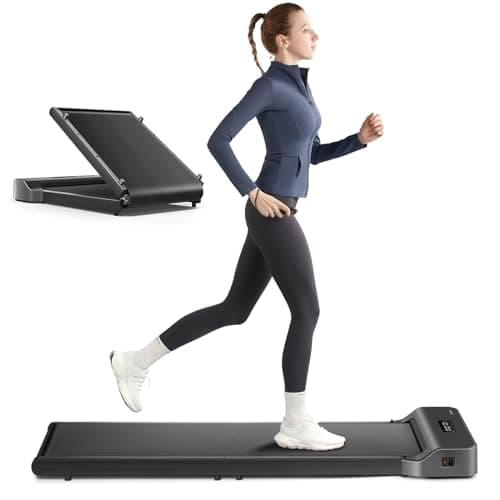
Our WalkingPad Z1 review: the 6km/h top speed, 121 x 40cm belt, 110kg limit, 23kg weight, 180 degree fold, noise claims and how it compares with the C2 and X21 in the UK.
Best Exercise is a participant in the Amazon EU Associates Programme, an affiliate advertising programme designed to provide a means for sites to earn advertising fees by advertising and linking to Amazon.co.uk. As an Amazon Associate we earn from qualifying purchases. This comes at no extra cost to you and never influences our independent reviews or rankings.