Home Gym
Cambered Bar Explained: Squat, Bench and Swiss Bar Types
What a cambered bar is, the three main types (cambered squat bar, bowed bench bar, cambered Swiss bar), what each one does, how much they weigh and how to buy one.

By Jacob Chambers, Founder & Lead Reviewer · Updated 26 July 2026
We may earn a commission from qualifying purchases made through links on this page, at no extra cost to you. This never affects our ratings.
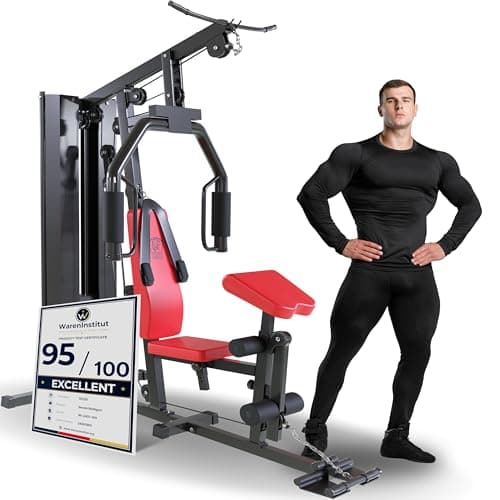
The Senshi Japan Multi Gym is the kind of machine that turns a corner of the garage into a complete gym without you ever touching a barbell. It's an all-in-one cable station: one frame, a 90kg selectorised weight stack, and a spread of positions covering lat pulldowns, chest press, pec deck flys, low rows, curls, pushdowns and leg work. Move a pin, sit down, and you can run a full-body session without loading a single plate or needing a spotter. At around £570 it undercuts most branded multi gyms considerably, and the verdict up front is that it's genuinely good value for what it is, as long as you understand what an all-in-one cable machine is and isn't good at.
Senshi Japan is a value-focused Amazon brand rather than a premium gym-equipment name, and this machine reflects that: a lot of function for the money, with the compromises you'd expect at the price. The important thing is that the compromises are in the right places for a home user who wants convenience and safety over maximal barbell loading.
How we review
This review draws on the manufacturer's specifications, verified owner feedback and how the machine compares with other home multi gyms in its price range. We have not run a long-term endurance test of this exact unit, so we have concentrated on the spec, the value case and the recurring themes in owner reviews, both good and bad, rather than isolated opinions.
This multi gym suits the home trainer who wants a safe, convenient, do-everything strength station and doesn't want to spot themselves under a heavy barbell. If you train alone, value being able to switch from a pulldown to a chest press to a curl in seconds, and want machine-guided movements that are easy to learn and hard to hurt yourself on, it's a strong fit. It's also a sensible choice for households where more than one person trains at different levels, because changing the weight is just moving a pin. Building muscle this way pays off well beyond looks: regular resistance training is linked to meaningfully lower all-cause mortality (resistance training and mortality review), and a machine that makes strength work easy to do at home removes a lot of friction.
It's less suited to dedicated powerlifters and Olympic lifters who need to squat, deadlift and press heavy free-weight loads, and to anyone chasing maximal strength, where the 90kg stack becomes a ceiling.
For the price, the Senshi Japan covers a surprising amount of ground. The 90kg stack is the engine, and driving it through a pin-selector is the whole convenience pitch: no spinning collars, no plates stacked on the floor, just pull the pin and go. For most home users, 90kg is plenty across the pressing, curling and rowing stations, and the fast changes make it easy to move between exercises or run drop sets without breaking rhythm.
The station spread is where an all-in-one like this justifies itself. A high pulley for lat pulldowns, a chest press and pec deck for the front of the body, a low pulley for rows and curls, and leg developer work all live on one frame, so a single machine handles a proper full-body split. The honest caveat is that everything moves on a fixed path. That's what makes machines safe and easy to learn, but it also means your stabilising muscles do less than they would with dumbbells or a barbell. The reassuring news is that for pure strength and muscle growth, that matters less than gym folklore suggests: a 2023 systematic review found machine and free-weight training deliver comparable gains when effort is matched (free-weight vs machine training meta-analysis).
| Weight stack | 90 kg selectorised (pin-loaded) |
|---|---|
| Stations | Lat pulldown, chest press, pec deck, low row, leg developer, cable curls and more |
| Resistance changes | Pin selector, no plates to load |
| Frame | All-in-one, non-folding |
| Best for | Full-body home strength training, solo trainers |
| Assembly | Involved, two-person job recommended |
In practice, the appeal of a machine like this is that it lowers the barrier to actually training. There's no plate maths, no setup, no spotter to arrange; you sit down and start. That convenience is why multi gym owners often train more consistently than people who keep meaning to load the barbell. You can move through a full push, pull and legs circuit in one uninterrupted session, and the guided movements make it easy for a beginner to work hard without fretting about technique breaking down under load.
The limitations are the honest flip side. Some strong lifters will find the lat pulldown, in particular, gets light as they progress, since 90kg divided across a pulldown station can be maxed out over time. And because the cables follow fixed lines, you won't build the same balance and coordination that free weights demand. For most home users chasing general strength, muscle and health, that's a fair trade, and it slots neatly into the NHS advice to train all major muscle groups on at least two days a week. Serious barbell athletes will want to pair it with, or choose instead, a rack and free weights.
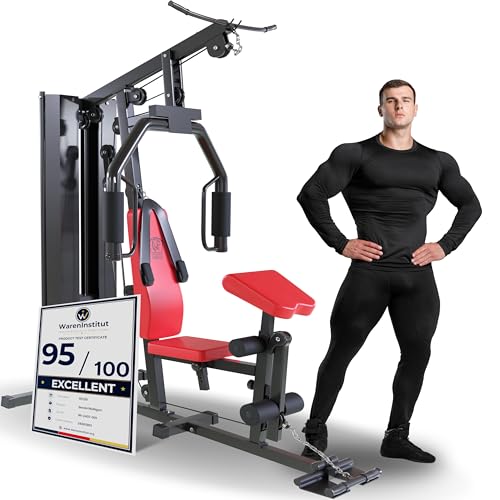
Two practical points before you buy. First, this is a big, non-folding machine. The stack, the overhead pulldown bar and the pec deck arms mean it needs a dedicated corner of a garage or spare room, plus space to sit and move on each station and ceiling height for the pulldown. It's not something you shift or stow. Second, assembly is a proper job: the parts are heavy, there are a lot of them, and it's far easier and safer with two people and an afternoon set aside.
On value, this is where the Senshi Japan makes its case. Branded multi gyms with a comparable spread of stations and a similar stack routinely cost hundreds more, so getting a complete 90kg cable station around £570 is a lot of machine for the money. You're accepting a budget brand and functional-rather-than-luxurious pads to get there, but the core function, a full-body strength station you can use solo, is all present. Our best multi gym UK guide and best cable machine UK guide put it alongside the alternatives.
Check price on AmazonAgainst pricier branded multi gyms, the Senshi Japan gives up some pad comfort, brand pedigree and, on some stations, top-end weight, but it delivers the same all-in-one convenience for a lot less. Against a power rack and free weights, it trades maximal loading and stabiliser work for safety, speed and ease of use. Which is right depends on your goal: if you want to lift heavy barbell loads, look at our best power cage UK guide; if you want a safe, convenient, do-it-all machine to build muscle at home, this fits the brief. The home gym hub has the full range of options.
For someone who wants a complete cable-based strength station at home without spending four figures, yes. At around £570 you get a 90kg weight stack, a lat pulldown, a pec deck, a low pulley and more in one frame, which covers most of a full-body routine. It will not replace a barbell and a rack for heavy compound lifting, but as a self-contained, no-spotter, all-in-one machine for general strength and muscle, it is good value.
It comes with a 90kg selectorised weight stack. You change the resistance by moving a pin, with no plates to load. 90kg is plenty for most people across pulldowns, rows, presses and curls, though very strong lifters may find some stations, like the lat pulldown, become light over time.
A lot for one machine. It covers lat pulldowns, seated chest press, pec deck flys, low rows, bicep curls, tricep pushdowns and leg developer work, among others. That range lets you train your whole body in one session without changing stations or loading plates, which is the main appeal of an all-in-one multi gym.
For building strength and muscle, machine training and free weights are closer than people assume. A 2023 meta-analysis found the two produce similar gains in strength and size when effort is matched. Free weights still demand more balance and stabiliser work, so a multi gym is best seen as a convenient, safe way to build muscle at home rather than a total replacement for a barbell.
As an all-in-one station with a weight stack, pec deck arms and a lat bar overhead, it needs a dedicated corner of a garage, spare room or gym space rather than a spot you tuck away. Allow room to sit, press and pull on each station, plus ceiling height for the pulldown, and factor in that it does not fold.
What a cambered bar is, the three main types (cambered squat bar, bowed bench bar, cambered Swiss bar), what each one does, how much they weigh and how to buy one.
What a landmine attachment is, the rack-mounted, plate-post and floor platform types, how to check bar and rack fit, safety tips, and the best exercises to do.
What a safety squat bar is, how much it weighs, how it changes your squat compared with a straight bar, who it suits and what to check before buying one in the UK.
What a Swiss bar (football or multi-grip bar) is, how much it weighs, why the neutral grip suits sore shoulders, the best exercises and what to check when buying.
Best Exercise is a participant in the Amazon EU Associates Programme, an affiliate advertising programme designed to provide a means for sites to earn advertising fees by advertising and linking to Amazon.co.uk. As an Amazon Associate we earn from qualifying purchases. This comes at no extra cost to you and never influences our independent reviews or rankings.