Exercise Bikes
Recumbent Bike Benefits: What It Does Well and Where It Falls Short
The real benefits of a recumbent bike, from back support and low joint load to easy mounting, plus honest trade-offs, calorie estimates and how to set one up.

By Paul Kendrick, Cardio & Endurance Editor · Updated 24 October 2026
We may earn a commission from qualifying purchases made through links on this page, at no extra cost to you. This never affects our ratings.
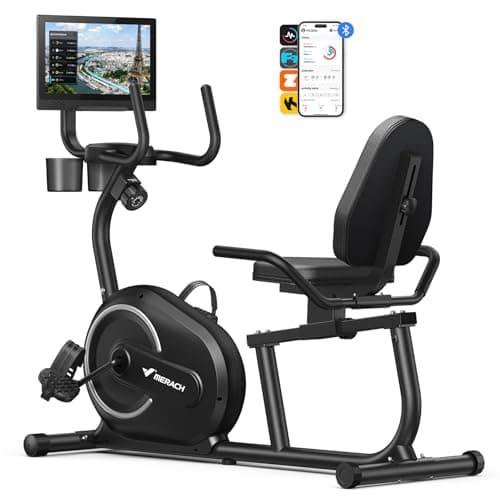
The MERACH recumbent with the 15.6in screen is a comfortable, well-adjusted bike that's worth the extra money over MERACH's classic recumbent only if the built-in display replaces a tablet you'd otherwise have to buy. At £499.99 it costs roughly £170 to £190 more than the MERACH recumbent we reviewed earlier, and most of that gap is the screen. The resistance system still tops out at eight levels, which is light for £500, and the listing's own small print says phone mirroring doesn't currently work with iPhone 17 models or Google phones.
That's the short version. The longer one is more forgiving, because the screen is properly big, it tilts and rotates, and the bike fits riders from 5ft1 to 6ft3 without tools. For an older couple who want to ride along Kinomap routes in the lounge and never fiddle with a tablet stand, it makes a decent case.
Check the price on AmazonHow we review
We haven't ridden this bike. This review weighs MERACH's published specifications and Amazon listing, recurring themes in owner feedback, and the price against rival recumbents we've already covered, including MERACH's own cheaper model. Where something can't be confirmed from the listing, we say so.
Strip away the screen and this is a familiar recipe: magnetic resistance with eight levels, a slide-adjustable seat on a 54.3in rail, a backrest that moves up and down, heart rate sensors in the grips and transport wheels at the front. MERACH quotes a unit weight of about 34kg. None of that is unusual at £300.
So the £500 price tag rests on one feature. The display is a 15.6in full HD panel (1920 by 1080) that tilts 90 degrees horizontally and 60 degrees vertically, so you can angle it towards the seat or swing it round to face a floor mat if you hop off to stretch. It can mirror your phone, which means streaming apps or YouTube on a laptop-sized screen without balancing a tablet on a ledge.
Is that worth £190? A perfectly good 10 to 11in Android tablet costs well under that, and the classic MERACH comes with a holder for one. You'd lose some screen size and the neatness of a single built-in unit. You'd keep the money, and you'd have a tablet that also works on the sofa. For most people that's the better deal; for someone who finds tablets fiddly, or who wants a big picture at arm's length because their eyesight isn't what it was, the built-in screen earns its keep.
A recumbent puts you further back and lower than an upright bike, and that changes how useful a screen is. On the classic MERACH, a tablet sits on a holder in front of the handlebars, often at an angle that suits upright posture better than reclined. Here the screen sits on an arm you can tilt towards your eyeline, and 15.6in at that distance is closer to a small telly than a phone. Kinomap route videos, which film real roads from a rider's point of view, are much more watchable at that size.
Then there's the caveat. MERACH's own listing states that mirroring is currently incompatible with the iPhone 17 series and Google phones, and that matters because mirroring is the cleanest way to get Netflix, iPlayer or YouTube onto the panel. If you own a Pixel or a new iPhone, assume mirroring won't work on day one. Phone compatibility is the usual sore point with mirroring screens on fitness kit, more so than picture quality. The word "currently" suggests MERACH expects a fix, but we wouldn't buy on a promise.
We'd also flag the warranty. One year of coverage is standard for budget home fitness kit, yet a built-in display is the part most likely to fail and the most annoying to replace. A tablet on a stand is a part you can swap yourself.
Eight levels is the honest weak point. The JLL recumbent at around £299 and the classic MERACH at around £310 to £330 both offer eight, and both of those reviews dinged them for it. At £500 the complaint gets louder, because buyers reasonably expect 16 or 24 finer steps at this price. With only eight, each click is a real jump, so you can't nudge the effort up a little as you warm into a ride.
For the riders this bike is built for, that may not matter much. Someone riding 30 minutes at a chatty pace four times a week will probably live between levels two and five. The NHS guidance for older adults asks for 150 minutes of moderate activity a week, and steady recumbent riding covers that comfortably. Fitter riders who want to use interval sessions will run out of top-end resistance, and should look at a spin bike or a smart bike instead.
MERACH's listing doesn't give a flywheel weight we could confirm for this model, so we won't guess at one. Magnetic resistance with nothing touching the flywheel should make for a smooth, quiet pedal stroke, and nobody buys a recumbent for a heavy road-like feel anyway.
| Screen | 15.6in full HD (1920 x 1080), tilts 90° horizontal and 60° vertical |
|---|---|
| Screen mirroring | Yes; listing says currently incompatible with iPhone 17 series and Google phones |
| Resistance | Magnetic, 8 levels |
| Seat | Slide-adjustable on a 54.3in rail |
| Backrest | Height adjustable |
| Rider height | 5ft1 to 6ft3 |
| Heart rate | Grip sensors |
| Apps | MERACH app, Kinomap, FantomFite, Apple Health, Google Fit |
| Unit weight | Approx 34kg |
| Assembly | About 85% pre-assembled, around 30 minutes |
| Cover | 30-day trial, 1-year coverage |
| Price at time of writing | £499.99 |
The adjustment range is the bike's second-best feature and the one most likely to settle a shared household. A 54.3in rail and a quoted 5ft1 to 6ft3 range mean a short partner and a tall one can both ride with a proper knee bend, and the seat slides rather than pinning into fixed holes. Getting the seat distance right matters more on a recumbent than people expect; our exercise bike seat height guide covers the knee angle to aim for, and the same principle applies when you're sliding forwards rather than up.
Why bother with a recumbent at all? The step-through frame and backrest take load off the lower back, and the movement itself has a useful carry-over. A 2007 Glasgow Caledonian University study found that recumbent cycling uses the legs in a way similar enough to standing up from a chair and stepping up to support it as a training method for those movements, which is exactly what many older riders want to protect. We go through more of that in recumbent bike benefits.
Heart rate from the grips is a rough guide only. Sweaty palms and shifting hands knock it about. If you want accurate numbers, pair a chest strap with the app.
MERACH says around 85% of the bike comes assembled, leaving about 30 minutes of work. At roughly 34kg you'll want a second pair of hands to lift it out of the box, but after that the front wheels let one person tip and roll it. Plan for the extra length a recumbent takes, plus room to slide the seat back for the tallest rider, plus clearance in front so you can swing the screen without hitting a wall.
Anyone training for fitness rather than gentle activity. If you want hard intervals, a heavy pedal feel or resistance that changes automatically with a Zwift climb, this bike can't do any of that, and £500 buys a capable spin bike or a starter smart bike instead. Skip it too if your household runs on Pixels or the latest iPhones and mirroring is the main reason you're interested; until MERACH updates compatibility, you'd be paying for a screen that only shows its own apps and Kinomap.
And if the bike will mostly sit in a spare room while you listen to podcasts, the screen is wasted money. Be honest about how you'll use it. A recumbent you ride with the radio on needs comfort and quiet, which the cheaper MERACH already delivers.
Here's how we'd split the decision. The classic MERACH recumbent at around £310 to £330 has the same eight-level system, a mesh backrest and a tablet holder; it scored 4.0 with us and remains the better value. The JLL at about £299 adds a 4kg flywheel and a free app with a big library of sessions; it scored 3.8. This screen version costs about £500 and wins on two things only: a large tilting display and a wider quoted height range.
If you already own a tablet, buy the classic MERACH. If you don't, and you know a fiddly tablet stand would stop you riding, the screen model makes sense, as long as your phone isn't on the incompatible list. Both cheaper bikes appear in our best recumbent exercise bike UK guide alongside heavier-duty alternatives, and the exercise bikes hub has everything else.
See the MERACH screen recumbent on AmazonOnly if you'll actually use the built-in screen and don't already own a decent tablet. The bigger bike costs roughly £170 to £190 more than the classic MERACH recumbent, and the ride underneath is very similar: magnetic resistance with eight levels. If you have an iPad or Android tablet, the cheaper bike plus its tablet holder gets you most of the way for less.
Partly. The Amazon listing itself says screen mirroring is currently incompatible with the iPhone 17 series and with Google phones. Older iPhones and most other Android phones should be fine, but if you own one of the excluded models, don't buy this bike counting on mirroring until MERACH confirms a fix.
Eight levels of magnetic resistance. That's normal on a £300 recumbent and thin on a £500 one, where 16 or more levels are common. Each step is a noticeable jump, so it suits steady riding far better than interval training.
MERACH quotes a range of 5ft1 to 6ft3, helped by a 54.3in seat rail and a backrest you can raise or lower. That's a wide spread, which makes it a good shout for couples or families who differ a lot in height.
MERACH says it arrives about 85% pre-assembled and takes around 30 minutes to finish. The unit weighs roughly 34kg, so get a second person to help lift it out of the box, then use the front wheels to roll it into place.
The listing names the MERACH app, Kinomap and FantomFite, plus syncing to Apple Health and Google Fit. Kinomap gives you real-world route videos on the big screen, which is the most compelling use of it. Check what Kinomap currently charges before you buy, as it is a paid subscription service.
The real benefits of a recumbent bike, from back support and low joint load to easy mounting, plus honest trade-offs, calorie estimates and how to set one up.
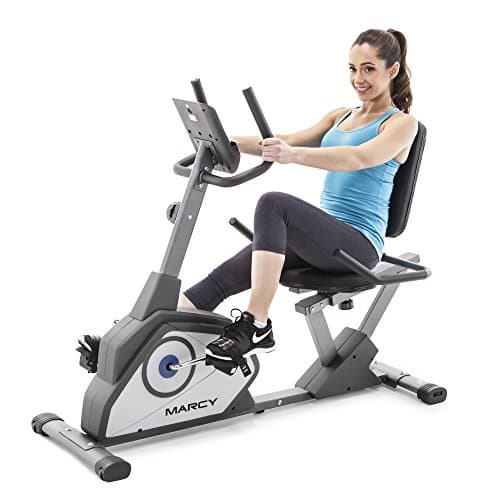
The best recumbent exercise bikes in the UK for 2026, from a £183 starter bike to a £1,399 Sole. Honest picks for sore knees, dodgy backs and long TV sessions.
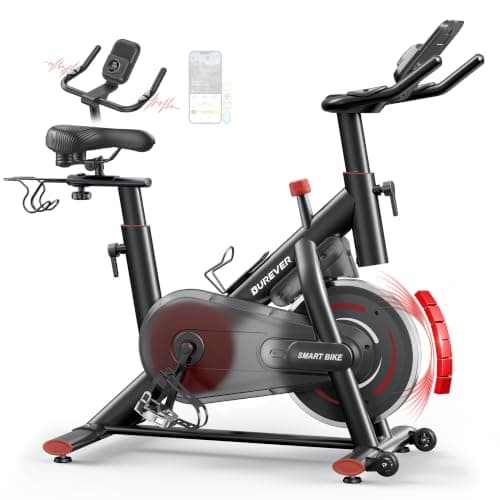
Our Burever exercise bike review: the touchscreen goal console, 0-100% magnetic resistance, 170kg limit, Zwift support without a power meter, and who should buy it.
Spin bike vs exercise bike compared on riding position, flywheel, resistance, comfort, noise and price, with a clear verdict on which suits your training.
Best Exercise is a participant in the Amazon EU Associates Programme, an affiliate advertising programme designed to provide a means for sites to earn advertising fees by advertising and linking to Amazon.co.uk. As an Amazon Associate we earn from qualifying purchases. This comes at no extra cost to you and never influences our independent reviews or rankings.