Exercise Bikes
What Muscles Does Cycling Work? A Pedal Stroke Breakdown
What muscles does cycling work? Mainly your quads, glutes, hamstrings and calves, with core and arms stabilising. See each pedal stroke phase and what to add.

By Paul Kendrick, Cardio & Endurance Editor · Updated 24 October 2026
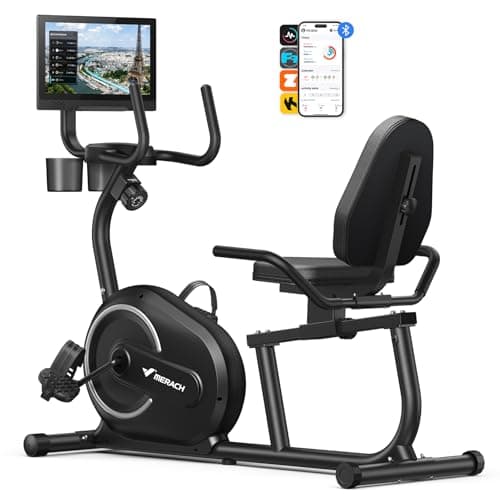
The main recumbent bike benefits are back support, low joint load and comfort: you sit in a proper chair with a backrest, your legs push forwards instead of down, and nothing jars your knees, hips or ankles. That makes it one of the easiest ways for older adults, heavier riders and people with sore backs to rack up the 150 minutes of moderate activity a week the NHS recommends for adults. The trade-off is a lower training ceiling than an upright or spin bike, plus a bigger footprint. Below is what a recumbent genuinely does well, where it doesn't, and how to work out whether it's the right bike for you.
On an upright bike you hold your torso up yourself and lean forward over the bars, often with a slight round through the lower back. A recumbent removes both. The reclined backrest carries your upper body, so the muscles along your spine aren't working to keep you upright for 40 minutes, and your pelvis sits in a neutral position rather than tipping forward onto a narrow saddle. For anyone whose back stiffens after 15 minutes on a standard exercise bike, this is the single biggest reason to switch.
Cycling is already a low-impact activity because your feet never leave the pedals. The recumbent goes a step further, since the seat spreads your weight across your backside and back instead of concentrating it on a saddle and your wrists. There's no pounding through the knees like running, and no weight on your hands at all. That matters if you have arthritic knees or hips, or you carry extra body weight that makes treadmill walking uncomfortable.
Most recumbents use a step-through frame. You walk in, sit down, and put your feet on the pedals, with no leg swing over a crossbar and no climbing up onto a high saddle. For older riders, people with limited hip mobility or anyone in rehab after surgery, this removes the moment where falls actually happen. Several models, including the JLL recumbent, let you slide the seat with a handle while you're sitting on it.
Sitting back with your hands free changes how long you'll happily ride. Holding a book or watching a whole episode is awkward when you're hunched over upright handlebars; on a recumbent it's natural. This sounds trivial, yet adherence is what produces results, and a bike you'll sit on for 45 minutes during a drama beats a harder bike you avoid. Some manufacturers have built around this: the MERACH recumbent with a 15.6in screen mirrors your phone so you can stream straight onto the console.
Don't mistake comfortable for pointless. Pedal at a pace where you can talk but not sing and you're doing moderate-intensity exercise, which is exactly what the NHS guidance counts towards your weekly target. For most beginners and older adults, moderate is where the health benefits are, and a recumbent makes it very easy to stay there for long sessions.
The leg muscles doing the work are the same ones you'd use on any bike: quads straighten the knee, glutes and hamstrings extend the hip. A 2016 study comparing muscle activity on four machines found that glute max, glute medius, hamstring, lower-back and abdominal activity were similar on upright and recumbent bikes at 40 to 50% of heart rate reserve. The upright bike did produce higher calf activity, and the study was small (12 people), so read it as "broadly similar leg work at easy intensity" rather than proof of anything stronger.
The short version
A recumbent is the most comfortable bike to ride and the easiest to stick with. It is not the best bike for hard training, and it needs more floor space than you'd expect.
Lower real-world intensity for many riders. Calories follow watts. If you hold 100 watts on a recumbent you burn the same energy as 100 watts on an upright. The problem is that a recumbent stops you standing up, pulling on the bars or using body weight to drive the pedals, so most people settle at a lower output on one. Combine that with the light 3kg to 4kg flywheels and eight-level resistance on many budget models, and fit riders run out of challenge within weeks.
Not a core workout. The backrest does the job your trunk muscles would otherwise do. In fairness, the study above found seated upright cycling isn't much of a core workout either; the gap mostly shows up when upright riders stand for climbs and sprints.
Bigger footprint. Because the seat sits behind the pedals, recumbents are long. The JLL measures 133cm front to back, and the MERACH 15.6in model extends to roughly 138cm (54.3in). An upright bike typically needs a metre or less. Leave extra room behind the seat for taller riders to slide it back.
Less carry-over to road cycling. If you ride outdoors and want indoor training that transfers, the reclined position won't match your road bike.
The 2024 Adult Compendium of Physical Activities lists stationary cycling by power output rather than bike type. There's no separate, lower entry for recumbents. A simple estimate is METs × body weight in kg × hours.
| Effort (approx. watts) | METs | 70kg, 30 min | 85kg, 30 min |
|---|---|---|---|
| Very light (25 to 30W) | 3.5 | 123 kcal | 149 kcal |
| Light to moderate (60W) | 5.0 | 175 kcal | 213 kcal |
| Moderate to vigorous (90 to 100W) | 6.0 | 210 kcal | 255 kcal |
| Vigorous (126 to 150W) | 8.0 | 280 kcal | 340 kcal |
Assumptions worth knowing: these use the standard 1 MET ≈ 1 kcal per kg per hour shortcut, and the wattage figures assume an accurate power reading. Most budget recumbents don't measure watts at all, and the calorie figure on their consoles is a generic estimate. Use it to compare your own sessions over time, not as a measurement. If you can't see watts, judge by effort: being able to talk in short sentences puts you roughly in the moderate band.
Choose a recumbent if any of these describe you:
Choose an upright or spin bike if you want HIIT, standing climbs, high wattage or training that carries over to outdoor cycling, or if floor space is tight. Our best recumbent exercise bikes roundup covers the recumbent side; the exercise bikes hub has the rest.
If screen-led riding sounds like you, the MERACH 15.6in is the one we'd look at first, with one caveat from the spec sheet: its resistance tops out at eight levels, so it suits steady riders more than interval fans.
Check price on AmazonMost of the comfort benefit disappears if the seat is in the wrong place, and seat position is a recurring complaint in owner feedback.
Locking your knee straight on every stroke, or rocking your hips to reach the pedal, both mean the seat is too far back. Move it one notch closer and try again. Our recumbent bike workout guide has sessions to try once it's set up, from easy 20-minute rides to intervals.
A recumbent bike's benefits are real but specific. It's the most comfortable and accessible way to do cardio on a bike, it protects your back and joints, and it's easy to ride for long enough to make a difference. What it won't do is push a fit rider hard or train your core, and it eats more floor than an upright. For older adults, people in rehab and anyone who's quit upright bikes because they hurt, that's a trade worth making. Our reviews of the MERACH recumbent and the JLL recumbent cover two sensible budget options.
A recumbent bike supports your lower back with a full backrest, keeps load off your knees, hips and ankles, and is easy to get on and off because there's no crossbar to step over. It gives you genuine cardiovascular exercise at moderate intensity and works your quads, glutes and hamstrings. It's also comfortable enough to ride for 30 to 60 minutes while reading or watching TV, which makes it easier to stick with.
Not at the same power output. Calorie burn tracks the work you do, measured in watts, and the 2024 Compendium of Physical Activities doesn't give recumbent cycling its own lower value. In practice many people ride at a lower wattage on a recumbent because they can't stand up or throw body weight into the pedals, so their real-world burn often ends up lower.
For many people, yes. The backrest supports the lumbar spine and you don't have to hold your torso up or lean forward over handlebars, which is what aggravates a lot of lower-back pain on upright bikes. If you have a diagnosed back condition, check with your GP or physio first, but the recumbent is usually the gentlest bike option.
Using Compendium values, a 70kg person riding at around 60 watts (5.0 METs) burns roughly 175 kcal in 30 minutes. At 90 to 100 watts (6.0 METs) that rises to about 210 kcal. An 85kg rider at the same 90 to 100 watts burns around 255 kcal. Treat these as estimates, since individual efficiency varies.
Not much, and that's true of upright bikes ridden seated too. A 2016 study measuring muscle activity at moderate intensity found similar rectus abdominis and lower-back muscle activity on upright and recumbent bikes, both at low levels. If you want core strength, add planks, dead bugs or carries alongside your riding.
Older riders, heavier riders, anyone with lower-back, hip or knee problems, people returning from injury and anyone who simply finds a saddle uncomfortable. If you want hard intervals, out-of-the-saddle climbs or training for road cycling, an upright or spin bike suits you better.
What muscles does cycling work? Mainly your quads, glutes, hamstrings and calves, with core and arms stabilising. See each pedal stroke phase and what to add.
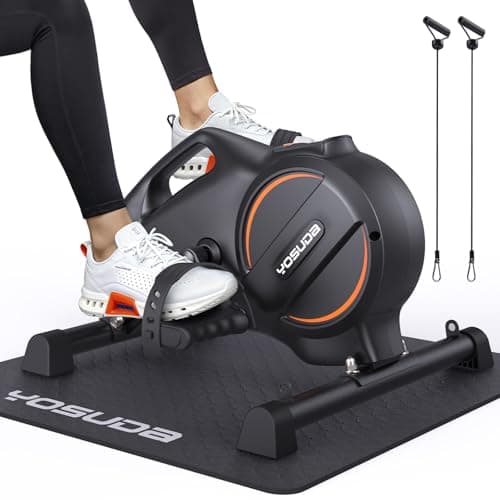
The best under desk bikes and mini exercise bikes in the UK for 2026: quiet magnetic pedal exercisers for home offices, checked against real desk heights, noise and resistance.
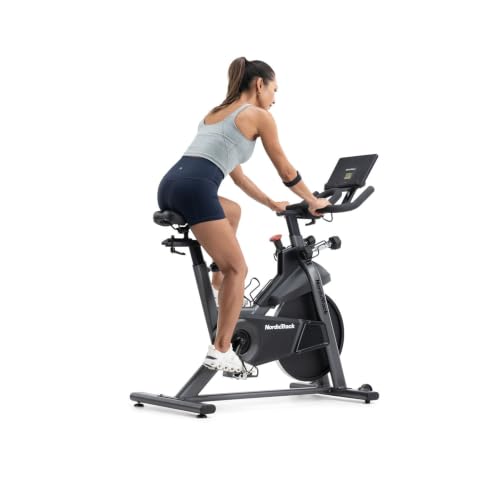
An honest NordicTrack T Series 9 Bike review: 16 resistance levels, SPD pedals, tablet holder, iFIT subscription costs and who should buy it instead of a rival.
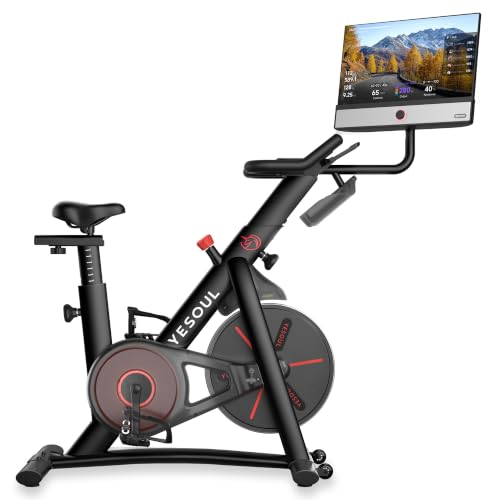
An honest YESOUL G1M Plus review: what the 21.5in screen actually does, the app and subscription picture, 100-level magnetic resistance, 120kg limit and Peloton comparisons.
Best Exercise is a participant in the Amazon EU Associates Programme, an affiliate advertising programme designed to provide a means for sites to earn advertising fees by advertising and linking to Amazon.co.uk. As an Amazon Associate we earn from qualifying purchases. This comes at no extra cost to you and never influences our independent reviews or rankings.