Glute Ham Developer (GHD): What It Is, Exercises and Buying Guide
By Jack Atkins, Home Gym Equipment Specialist · Updated 24 October 2026
A glute ham developer (GHD) is a padded bench with a footplate, ankle rollers and a rounded thigh pad, built so you can hang your body off the front and use your hamstrings and glutes to pull yourself back up. Its signature move is the glute ham raise, which bends the knee and extends the hip in a single rep, and very few other bodyweight exercises load the hamstrings at both ends like that. It's also used for hip extensions, back extensions and the infamous GHD sit-up.
They aren't cheap, and they take up a lot of floor. Here's what one actually does, how it differs from the Roman chair it's often confused with, and whether you should give one space in your garage.
GHD vs Roman chair vs 45 degree hyperextension
Retail listings use these names interchangeably, which causes a lot of bad purchases. The difference comes down to where your knees sit.
Machine
Body angle
Footplate/pad layout
What it does well
Glute ham developer
Horizontal
Adjustable footplate; knees sit just behind a rounded pad
Glute ham raise, hip and back extensions, GHD sit-ups
Roman chair (horizontal)
Horizontal
Hips over a flat pad, ankles locked
Back and hip extensions, side bends
45 degree hyperextension
Angled downward
Hips over an angled pad
Back and hip extensions, easier loading
A Roman chair puts your hips on the pad, so all the movement happens at the hip and spine. On a GHD you can slide the footplate back until your knees are behind the pad, which frees them to bend. That knee bend is the whole point: without it you're doing a back extension, not a glute ham raise. Some cheap "GHD benches" are really Roman chairs with a different sticker, so check the thigh pad shape and footplate adjustment before you buy.
What you can do on a GHD
Glute ham raise
Lock your feet in with your knees just behind the pad and your body upright. Lower yourself forward under control, keeping a straight line from knees to head, until you're roughly parallel to the floor. Then drive your toes into the footplate and curl yourself back up using your hamstrings, finishing with a glute squeeze.
It's hard. Plenty of strong lifters can't do a single clean rep at first, so they cheat with a hip bend or push off a band. That's fine as a starting point.
There's decent evidence it earns its reputation. A 2014 study in the Journal of Strength and Conditioning Research measured muscle activity in 12 trained men across the leg curl, good morning, glute ham raise and Romanian deadlift, and found hamstring activity was highest in the glute ham raise and the RDL. Its authors recommended those two for anyone trying to get the most out of the hamstrings.
Hip extension and back extension
Slide the footplate out so your hips rest on the pad. Keep your spine rigid and hinge at the hip for a glute and hamstring bias, or let your back round and then extend it for more spinal erector work. You can hold a plate across your chest once bodyweight gets easy. This is the same movement a Roman chair gives you, so if this is the only thing you'd use a GHD for, buy the Roman chair.
GHD sit-up
Sit on the pad facing away from the footplate, feet hooked under the rollers, and lean back until you're at or below parallel, then sit up hard by kicking your knees straight. It trains the hip flexors as much as the abs.
Go easy on GHD sit-ups
They look harmless and they're not. Dropping well below parallel puts your lower back into loaded extension, and the hip flexors take a beating. Beginners who do 30 or 40 reps on day one often can't sit up properly for several days afterwards. Start with 2 or 3 sets of 5 to parallel only, and add range and reps over a few weeks. Skip them entirely if you have a history of lower back problems.
How to set up a GHD
Getting the footplate right makes the difference between a hamstring exercise and a kneecap grinder.
For glute ham raises: your kneecaps should sit just behind the rear edge of the thigh pad, with the pad on the lower part of your thighs. Too far forward and the pad presses into your kneecaps; too far back and you lose leverage and the move turns into a back extension.
Footplate height: most GHDs let you raise or lower the plate as well. Set it so your knees are in line with the top of the pad rather than sagging below it.
For hip extensions and sit-ups: slide the footplate out until your hip crease clears the pad. For sit-ups your bum sits on the pad, not your thighs.
Ankle rollers: tight enough that your heels can't lift. Loose rollers mean you'll push your heels up and lose tension at the hardest point of the rep.
Expect to fiddle for a session or two. Mark the settings with tape once you find them.
Floor GHD, standing GHD or rack attachment?
Floor GHD. The standard type, a free-standing frame of roughly 1.5 to 2 metres long and 70 to 90cm wide, with wheels at one end so you can tip it up and roll it. This is what most UK retailers sell, from budget to commercial grade. Heavier frames feel much more stable on the way back up.
Standing or vertical GHD. A compact variant that stands more upright and folds or stores against a wall. It saves floor but usually feels less stable, with fewer adjustment points. Better than nothing if space is tight; a compromise if it isn't.
Rack-mounted attachment. A footplate and pad assembly that bolts onto the uprights of a power rack. It's the cheapest and smallest route to a true glute ham raise, though sit-ups and back extensions are awkward or impossible depending on the design. Check your rack's upright size (commonly 50mm, 60mm or 75mm) and hole spacing before ordering, because these attachments are rarely universal.
How much space you need
Plan for more than the frame itself. A 1.8 metre GHD needs roughly another 60cm clear at the head end, since your torso drops past the pad on every rep, plus room to get on and off at the side. Call it a 2.4 by 1.2 metre zone. In a single garage that's a meaningful chunk of floor, so measure before you commit.
UK price bands
Prices move often, so treat these as rough bands rather than quotes:
Under £300: budget floor GHDs and most rack attachments. Thinner steel, lighter frames and less padding. Usable, though some wobble at the top of a glute ham raise.
£300 to £800: the sweet spot for most home gyms. Heavier frames, more footplate adjustment and sturdier pads. UK strength brands such as Strength Shop and Wolverson both sell floor GHDs, so check their current prices against these bands.
£800 and up: commercial-grade units of the kind Rogue builds. Built for gyms that take a pounding. Overkill for a home user unless you want it to outlast you.
Delivery adds up on a bulky machine, often £30 to £100 depending on the retailer and where you live, so factor that in when comparing.
Who should buy one, and who shouldn't
Buy one if you sprint, play football, rugby or another field sport and want hamstring strength that carries over; you already train hard and have plateaued on curls and RDLs; or you run a garage gym with a few training partners who'll all use it. It's also a good fit for CrossFit-style training where GHD sit-ups appear in workouts.
Don't buy one if you're new to lifting, short on space, or would mostly use it for back extensions. A beginner gets more from learning the Nordic curl and Romanian deadlift than from a £500 bench, and a 45 degree hyperextension does back extensions in about half the footprint. A GHD is a specialist tool. You'll get your money's worth only if hamstring training is a priority.
Cheap substitutes that get you most of the way
Nordic curl strap. A padded strap that anchors your ankles under a door. It turns any floor into a Nordic curl station for £20 to £40, and the Nordic is a close cousin of the glute ham raise, minus the hip extension at the top. The injury evidence is strong: a meta-analysis of 15 studies covering 8,459 athletes found that prevention programmes including the Nordic hamstring exercise roughly halved the rate of hamstring injuries.
Partner Nordics. Kneel on a mat and have a training partner hold your ankles down. It costs nothing and it was the standard way to do the exercise long before straps existed.
Bench or loaded barbell anchor. Hook your heels under a heavy loaded barbell or the end of a bench with a dumbbell on it. Check it can't tip before you lean forward.
Mainly the glute ham raise, a bodyweight hamstring exercise that trains the muscles at both the hip and the knee in one movement. You can also do hip extensions, back extensions and GHD sit-ups on it. It's a posterior chain machine first and an abs machine a distant second.
Is a GHD the same as a Roman chair?
No, though retailers mix the names up constantly. A Roman chair or 45 degree hyperextension bench locks your legs in place for back and hip extensions. A GHD adds a footplate and a rounded thigh pad positioned so your knees can bend over it, which is what lets you do a true glute ham raise. A Roman chair can't do that movement properly.
How much space does a GHD need?
Most floor GHDs are roughly 1.5 to 2 metres long and 70 to 90cm wide. Add about 60cm of clear space at the head end for the top of a sit-up or back extension, so plan for a strip of floor at least 2.2 metres long.
Are GHD sit-ups safe?
They're safe for trained people who build up slowly, but they're harsh on beginners. Dropping all the way back below parallel puts the lower back into extension under load, and high-volume first sessions can leave your abs and hip flexors badly sore for days. Start with a few reps to parallel and add range over weeks.
Is a GHD worth buying for a home gym?
Only if you already train hamstrings seriously and have the floor space. For most home lifters a Nordic curl strap and a 45 degree back extension bench cover most of what a GHD does for a fraction of the price and footprint.
How should a GHD be set up?
Set the footplate so your kneecaps sit just behind the rear edge of the thigh pad when your feet are locked in. For hip and back extensions, slide the footplate further away so your hips rest on the pad instead. Recheck the setting each time you switch exercise.
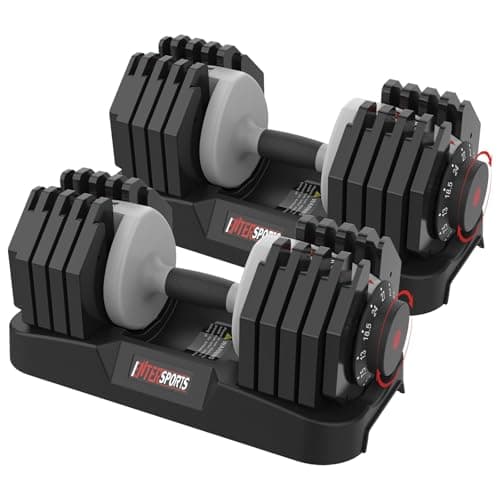
EnterSports 27kg adjustable dumbbells review: 10 settings from 2 to 27kg, uneven 2.5 to 3kg jumps, dial lock, wobble and who should pick it over the 20kg pair.
Which lat pulldown attachment to use or buy: straight, angled, V-bar, neutral-grip, rope and D-handles explained, plus how to choose a rack-mounted pulldown unit.
What a Roman chair is, how it differs from a hyperextension bench, GHD and captain's chair, 45-degree vs horizontal, how to set the pad height, the best exercises and what to check before you buy.
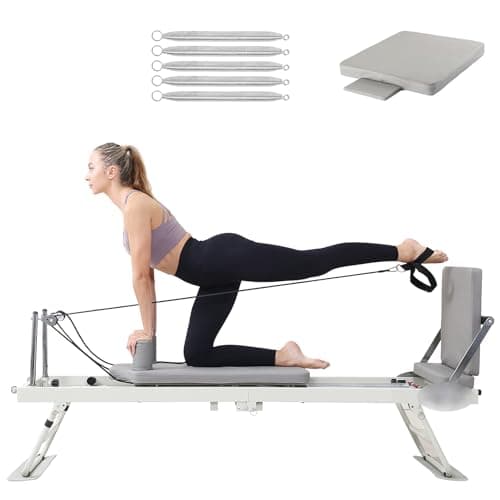
The best reformer pilates machines for home use in the UK in 2026, from a £259 foldable to a £788 wooden frame. Honest picks, real specs and how to choose a pilates machine.
Best Exercise is a participant in the Amazon EU Associates Programme, an affiliate advertising programme designed to provide a means for sites to earn advertising fees by advertising and linking to Amazon.co.uk. As an Amazon Associate we earn from qualifying purchases. This comes at no extra cost to you and never influences our independent reviews or rankings.