Home Gym
Dumbbell Set With Rack: Sizes, Real Costs and What to Buy
Buying a dumbbell set with rack in the UK: what 2.5 to 10kg, 2.5 to 25kg and 5 to 30kg bundles actually weigh, cost per kg, rack styles and delivery.

By Jack Atkins, Home Gym Equipment Specialist · Updated 1 November 2026
A folding weight bench makes sense if your training space has to become a living room, spare bedroom or car park again once you've finished, and you mostly train with dumbbells or moderate barbell weights. If your bench can stay out permanently, or you're pressing heavy and getting heavier, buy a fixed flat or FID (flat, incline, decline) bench instead; it'll be steadier, take more load and you won't spend each session checking a hinge. That's the short answer. The rest of this guide covers how the folding designs actually work, what you trade away for the space saving, and the specs that separate a usable bench from a wobbly one.
How we researched this guide
We haven't physically tested the benches mentioned here. This guide draws on manufacturer specifications, Amazon UK listings, the safety standard that covers training benches, and patterns in owner feedback across the budget and mid-range folding benches sold in the UK.
Buy a folding bench if most of these apply to you: you train in a room with another job, you lift dumbbells up to roughly 30kg each, you'd rather spend £50 to £150 than £250 or more, and you're happy to accept a bit of movement in the frame.
A fixed bench is the better buy if you bench press a barbell over about 80kg, you train in a dedicated garage gym, or you're tall and heavy enough that a light frame will feel nervous under you. Our best weight bench UK guide covers both types, and the Metis adjustable bench review is a good example of the heavier, fixed-frame end of the market.
There's a middle ground too. Some solid FID benches aren't sold as "folding" but have wheels and a handle, so you can stand them on end against a wall. If floor space is the issue rather than height, that can beat a true folder.
Not every folding bench folds the same way, and the mechanism decides how small it gets and where the weak points are.
The backrest pivots down onto the seat and the front leg tucks under, leaving a long, low package you can slide under a bed or stand upright. This is the most common design on budget FID benches. It folds quickly, often in seconds, but the folded length is still close to the full bench length (typically 110cm to 135cm), so it saves height rather than floor length.
Here the main spine of the bench has a hinge, and the two halves fold together like a book. The folded package is shorter, which suits cupboards and car boots. The trade-off is a central hinge sitting right under your back while you press, and that's where you'll feel any play first. Look for a hinge with a chunky locking pin or bolt rather than a spring clip.
Some flat benches keep a rigid pad but have legs that fold flush against the underside. The result is very thin, sometimes under 15cm, and it hangs on a wall or slides behind a sofa. These are usually flat-only, so you lose incline pressing, but the pad itself doesn't hinge, which is good news for stability.
Every hinge adds a little play. It's physics, not a quality issue that disappears at a higher price, although better benches minimise it.
None of that rules a folding bench out. It just means the bench should match what you lift, and you should treat the quoted numbers with healthy suspicion.
Listings for budget folding benches commonly quote 250kg to 375kg. That's usually a static load figure from a test rig, not a recommendation for how much you should lift on it. Add your bodyweight to the heaviest barbell or dumbbells you'll use, then add room for dropping into the bottom of a rep. An 85kg lifter pressing 60kg already puts 145kg through the frame before any dynamic load. If the bench is light (under about 15kg) we'd keep that total comfortably under half the quoted figure.
Training benches fall under the EN ISO 20957 family of standards for stationary training equipment. ISO 20957-1 sets the general safety requirements and test methods, and a listing that names the standard is a better sign than one quoting a big number with no reference. It isn't a guarantee of rigidity, though.
Measure the place it'll live first: under the bed, behind a door, in a cupboard. Then compare that to the folded length, width and thickness, not the unfolded size. A fold-flat bench that's 130cm long folded won't fit a 100cm cupboard no matter how slim it is.
Aim for a pad height of around 43cm. That lets most adults plant their feet flat and drive through the floor, which matters far more for safe pressing than people expect. Pad width of 25cm to 30cm is the comfortable range for the back; narrower pads save weight but feel precarious under a barbell.
More positions sound better, but beyond five or six backrest angles you rarely use the extra ones. More important is how the backrest locks.
Front wheels and a rear handle make a 15kg to 25kg bench easy to wheel away, which is the whole point of buying a folder. Leg-hold rollers (for decline sit-ups and leg extensions) are nice to have, but check they're removable, because they add bulk when folded and get in the way on flat pressing.
Never bench press a heavy barbell on any bench, folding or fixed, without a spotter or safety arms set just below your chest. A folding bench on its own gives you no way out if you fail a rep, and the bar ends up on your chest or neck.
If you want to press with a barbell at home, pair the bench with a rack that has spotter arms. A folding squat rack suits the same small-space setup, since both can fold away together. With dumbbells only, the risk is much lower because you can simply drop them to the side.
Check the locking pins and hinge bolts before each session. It takes ten seconds. And put the bench on a flat, firm floor; a mat over thick carpet adds yet more wobble. Two strength sessions a week is what the NHS physical activity guidelines recommend for adults, so the bench will see regular use and the joints need to stay tight.
These two are budget folding FID benches with plenty of UK owner reviews. We haven't tested either, and the specs below come from the listings.
YOLEO Adjustable Weight Bench. The listing quotes a 375kg capacity and certification to the EN ISO standard, says it arrives about 98% pre-assembled, and claims 84 positions through combined backrest and seat adjustments. A sensible pick if you want a folder that names its safety standard.
Check YOLEO folding bench price on AmazonFitinOne Adjustable Folding Weight Bench. A cheaper option quoting 660lb (about 300kg) capacity. Fine for dumbbell work and lighter barbell pressing, but treat that capacity figure as a ceiling rather than a target.
Check FitinOne folding bench price on AmazonIf your budget stretches further and the bench can stay out, compare them against the JOROTO MD85 and the Keppi 3000 V2, two heavier adjustable benches built to stay out (the JOROTO has wheels for tipping it out of the way).
A folding weight bench is the right call when storage beats everything else and your lifts are dumbbells or moderate barbell weights. Check the folded size against where it'll live, keep your total load well under the quoted capacity, look for a pad near 43cm, and use safeties for anything heavy. If the bench can stay out, spend the same money on a fixed FID bench and enjoy the extra stability.
A decent folding bench is safe for dumbbell work and moderate barbell pressing as long as you stay within the real-world load limit, set it up on a flat floor and check the locking pins every session. They are less stable than a fixed bench under heavy loads, so don't bench a heavy barbell on one without spotters or safety arms on a rack.
Budget folding benches usually quote 250kg to 375kg, but that figure is a static test load, not how much you should lift. Add your bodyweight to the heaviest weight you plan to use and leave a generous margin, ideally keeping the total well under half the quoted figure if the bench feels light or flexes.
Yes, and it's a common combination in small home gyms. Check the bench's pad height against your rack's J-hook and safety arm positions, and make sure the bench's feet fit between the uprights. Many people pair a folding bench with a folding wall-mounted rack so both disappear when not in use.
Around 43cm from floor to top of the pad is the usual target, because it lets most adults plant their feet flat and drive through the floor when pressing. Benches much taller than 45cm can leave shorter lifters on their tiptoes, which makes heavy pressing less stable.
It's worth it if you genuinely need to store the bench away after each session, for example in a spare room, flat or shared garage. If the bench can stay out permanently, a fixed flat or FID bench is steadier and usually lasts longer for the same money.
Buying a dumbbell set with rack in the UK: what 2.5 to 10kg, 2.5 to 25kg and 5 to 30kg bundles actually weigh, cost per kg, rack styles and delivery.
What a free standing pull up bar is, when it beats a wall or doorway bar, the three main types, and how to check height, footprint and wobble before you buy.
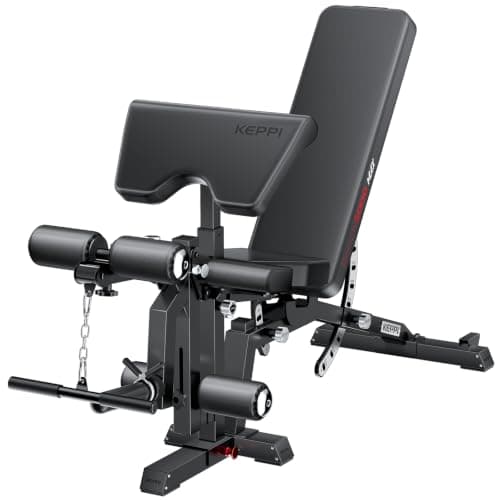
Our Keppi 3000 V2 weight bench review: 600kg rating, 12 backrest angles with decline, leg extension and preacher attachments, the catches and who should buy it.
How to set up an outdoor pull up bar in a UK garden: galvanised vs powder coat, concreting posts in, tree and wall mounts, ground cover and wet-weather grip.
Best Exercise is a participant in the Amazon EU Associates Programme, an affiliate advertising programme designed to provide a means for sites to earn advertising fees by advertising and linking to Amazon.co.uk. As an Amazon Associate we earn from qualifying purchases. This comes at no extra cost to you and never influences our independent reviews or rankings.