Home Gym
Fitbit vs Apple Watch: Which Should You Buy in 2026?
Fitbit vs Apple Watch for UK buyers: battery, price, Google Health Premium, GPS, accuracy research and apps compared, with a straight answer on which to buy.

By Jack Atkins, Home Gym Equipment Specialist · Updated 7 October 2026
We may earn a commission from qualifying purchases made through links on this page, at no extra cost to you. This never affects our ratings.
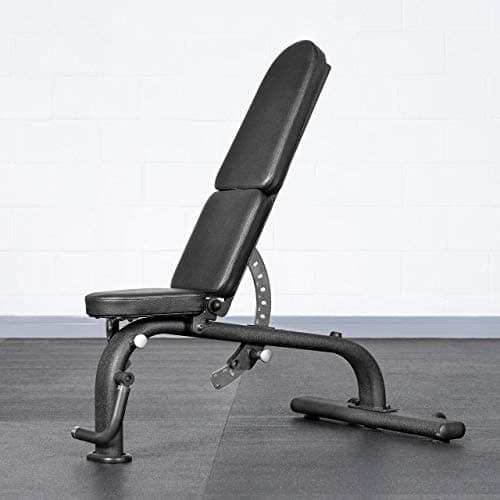
The METIS Adjustable Weights Bench is a heavy, no-frills adjustable bench from Net World Sports' gym brand, and at £249.99 (7 October 2026, in stock on Amazon UK) it's priced towards the top of what most people spend on a home bench. You get a solid steel frame weighing around 40kg, a backrest with 10 angle settings and a seat with 3 positions. There's no storage, no pulling arm and no leg developer. For someone who wants a bench that stays put under heavy dumbbells, that plainness is the point.
We rate it 4.3 out of 5. It's the bench we'd pick over flashier rivals for pure pressing, because weight and adjustability matter more here than gadgets. It loses marks because the Amazon listing leaves out basic facts (no stated weight capacity, no angle range, no warranty term) and because METIS's own product page wouldn't load for us to fill those gaps.
How we review
This review is based on research, not hands-on testing. We worked from the METIS Amazon UK listing and its product data, tried to check the specifications on the Net World Sports website (the METIS product page returned an access error for us), compared the bench against the JOROTO MD85 we've already reviewed and the picks in our buying guide, and read the research on bench angle and chest training. We haven't assembled or lifted on this bench. Where the listing is silent, we say so rather than fill the gap with a guess.
This bench suits lifters who already own decent dumbbells (or a rack and barbell) and want a bench that won't rock, slide or flex as the weights get heavier. A frame of roughly 40kg is a lot of steel for a home bench; most budget adjustables sit nearer 15 to 25kg. More mass usually means more stability when you're settling a pair of heavy dumbbells off your knees into the start of a dumbbell bench press.
It's also a good fit for anyone who trains a lot of inclines. Ten backrest settings is more than most home benches offer, so you can find the low incline that suits your shoulders for the incline dumbbell press rather than living with a single 30 or 45 degree notch.
Skip it if you need decline pressing or decline sit-ups, or if your spare room is so tight the bench has to be moved after every session. A 40kg bench is fine to drag a few feet but tiresome to carry up stairs.
Check the METIS bench price on Amazon£249.99METIS sells this as a semi-commercial bench, meaning it's built for the kind of use a hotel gym or small studio sees as well as a home garage. The listing describes a solid steel frame with a black powder coat, and the item weight backs that up: Amazon's product data puts it at about 88lb, roughly 40kg. For comparison, the JOROTO MD85 we reviewed last week weighs about 27kg, and that bench carries a storage compartment and a pulling arm.
Why does weight matter on a bench? Mostly for stability. When you press heavy dumbbells, the moment you lower them to your chest and drive back up puts uneven, shifting forces through the frame. A light bench can tip slightly or creep across the floor; a heavy one tends to sit still. It also helps with the awkward part nobody likes: rocking back with a pair of 30kg dumbbells and getting them into position without the bench lifting at one end.
The upholstery is moisture-resistant leather, by which METIS almost certainly means a PU-type synthetic rather than hide, so wipe it down after sweaty sessions and it should hold up. The listing says the seat, backrest and head pads are all "extra-thick" but doesn't give a measurement. That's a fair complaint at this price; the JOROTO listing quotes 50mm of padding, and we'd expect METIS to do the same.
This is the strongest part of the spec. The backrest has 10 angle settings and the seat has 3, which gives you a lot of combinations. On incline work, being able to raise the seat a notch matters more than people expect, because it stops your hips sliding forward as the backrest gets steeper, so you stay in a proper pressing position for longer sets.
What the listing doesn't tell you is the range those 10 settings cover. We'd expect flat through to roughly upright for seated shoulder pressing, which is the norm on benches built this way, but METIS doesn't confirm it on Amazon, and there's no mention of a decline position or a leg hold-down. If decline matters to you, check with the seller before buying.
Why care about fine incline control at all? A 2020 study in the International Journal of Environmental Research and Public Health had 30 trained adults press at 0, 15, 30, 45 and 60 degrees while researchers recorded muscle activity (Rodríguez-Ridao et al., 2020). Upper chest activity peaked at 30 degrees, the middle and lower chest worked hardest flat, and the front delts took over most at 60 degrees. In other words, small changes in angle shift where the work goes, and a bench with more settings lets you choose rather than accept whatever notch the manufacturer picked.
It's fair to add some perspective, though. A training study in untrained young men found that eight weeks of flat, incline or combined pressing produced similar gains in isometric strength (around 10kg in each group), with the incline group showing more growth at one upper chest site (Chaves et al., 2020). So 10 angles is a nice-to-have, not a magic ingredient; turning up and pressing consistently matters more than the exact degree.
| Price | £249.99 (Amazon UK, 7 October 2026) |
|---|---|
| Frame | Solid steel, matt black powder coat |
| Backrest | 10 angle positions (range not stated) |
| Seat | 3 positions |
| Decline | Not mentioned in the listing |
| Upholstery | Moisture-resistant leather, thick seat, back and head pads |
| Weight | About 40kg (88lb) |
| Dimensions | About 120 x 45 x 63cm |
| Weight capacity | Not stated on Amazon; unconfirmed by METIS |
| Warranty | Not stated on Amazon |
This is the gap that cost the METIS a higher score. Amazon's listing talks about "excellent weight capacity" and a "heavy weight bench" without giving a number. We tried the METIS product page on Net World Sports, which owns the brand, and the site blocked our request, so we couldn't read the official spec sheet.
Some third-party retailer listings quote a 300kg maximum user weight for this bench. We haven't verified that against METIS, so treat it as unconfirmed. Even if it's right, remember how these figures usually work: a capacity rating describes load on the bench, and pressing a heavy barbell adds dynamic force on top of the bar weight. For dumbbell training and moderate barbell work, a 40kg steel bench has plenty of frame to work with. If you're a heavy barbell presser, ask the seller for the rated capacity in writing first.
Warranty is the other unknown. The Amazon listing doesn't give a term, and that's something you'd want to know before spending £250 on one piece of kit. Keep your order confirmation.
Amazon lists the bench at roughly 120cm long, 45cm wide and 63cm high. That's a normal footprint for an adjustable bench, though you'll want at least 60cm of clear space either side for your elbows and dumbbells, and more at the head end if you plan to roll it under a barbell rack. Check the bench against your rack's J-hook heights too, bearing in mind the listing doesn't give a flat pad height, only the overall 63cm figure.
There's no mention of wheels or a carry handle in the listing. On a 40kg bench that's a real nuisance if you train in a shared room and need to tidy up afterwards. Look at the product images before you buy; if transport wheels aren't there, plan to leave it in place.
See the METIS Adjustable Weights Bench on Amazon£249.99The obvious comparison is the JOROTO MD85, which cost £218.49 when we reviewed it on 3 October 2026. The two benches take opposite approaches.
The JOROTO adds features: a storage compartment in the base, a 9-position pulling arm, a 3-angle foot hook and wheels, with a stated 450kg static rating. Its backrest has 7 positions from 0 to 90 degrees, and it weighs about 27kg. The METIS goes the other way, with more backrest settings, an adjustable seat and roughly 13kg more steel, but none of the extras and fewer published specs.
Which should you buy? If clutter is your main problem or you want some cable-style rows and flies, the JOROTO makes more sense, and it's about £30 cheaper. If your bench is mostly for pressing heavy dumbbells and you want it to feel like a gym bench, we'd pick the METIS. Neither declines, as far as their listings show, so if you need that our best weight bench UK guide has FID benches for less money.
At £249.99, you're paying mainly for mass and adjustability. That's a reasonable trade, because those are the two things that make a bench pleasant to train on for years, and gimmicks tend to be the first parts to wear out. Cheaper adjustable benches in our buying guide add decline and quote big capacity figures, but they're lighter, and a light bench is the one that shuffles across the floor during a set.
Where METIS lets itself down is the listing. A brand selling a £250 "commercial" bench should publish its weight capacity, angle range, pad thickness and warranty on Amazon. Until it does, you're taking some of the spec on trust. And if you're still building a home setup, pair whichever bench you choose with the right weights from our best adjustable dumbbells UK guide; for general strength guidance, the NHS strength exercises page is a sensible starting point.
The Amazon UK listing doesn't state one, and we couldn't load the METIS product page on the Net World Sports site to check. Some third-party retailer listings quote a 300kg maximum user weight, but we haven't been able to confirm that with METIS directly, so ask the seller before you plan heavy barbell work around it.
The listing describes 10 backrest angles and 3 seat positions but never mentions decline, and it doesn't give the angle range. Assume it runs from flat to upright with no decline unless the seller confirms otherwise.
Amazon lists it at about 88lb, which is roughly 40kg. That's heavier than most home benches and a big part of why it should feel stable under dumbbell and barbell pressing, but it also makes it awkward to move around a small room.
If you want a heavy, plain adjustable bench that will last and you'll press with it several times a week, yes. If you mainly want storage, a pulling arm or a decline setting, other benches in our buying guide offer more features for similar or less money.
Amazon gives the dimensions as roughly 120cm long, 45cm wide and 63cm high. Allow extra room either side for your elbows and dumbbells, and more behind the head end if you'll be pressing a barbell from a rack.
Fitbit vs Apple Watch for UK buyers: battery, price, Google Health Premium, GPS, accuracy research and apps compared, with a straight answer on which to buy.
Every common leg machine at the gym named and explained: what each one trains, a beginner leg machine workout, and which leg machines make sense for a home gym.
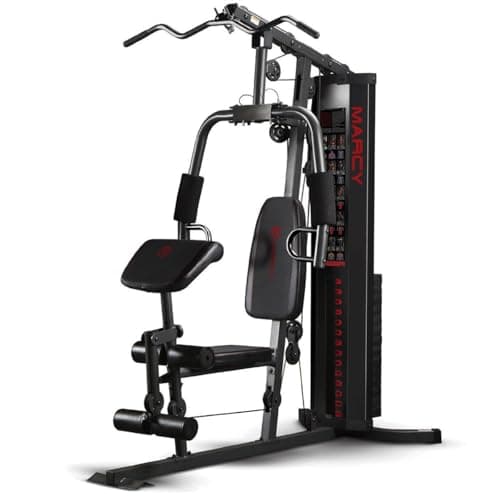
Our Marcy HG3000 multi gym review: the 68kg stack versus the 90kg claim, pec dec, preacher pad, leg extension, 210cm height, £599 price and who it suits.
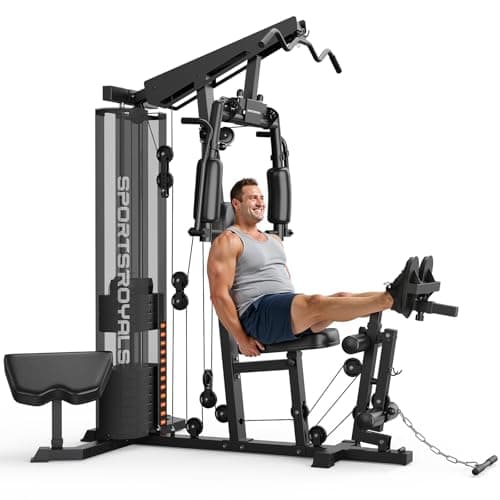
SPORTSROYALS home gym review: the 68kg stack, leg press and chest fly stations, 191 x 131cm footprint, 142kg build, £759.99 price and who it suits in the UK.
Best Exercise is a participant in the Amazon EU Associates Programme, an affiliate advertising programme designed to provide a means for sites to earn advertising fees by advertising and linking to Amazon.co.uk. As an Amazon Associate we earn from qualifying purchases. This comes at no extra cost to you and never influences our independent reviews or rankings.