Home Gym
Best Adjustable Dumbbells UK: 6 Top Picks for 2026
The best adjustable dumbbells in the UK for 2026, from quick-dial sets to heavy 40kg and 50kg options. Budget to premium picks researched and ranked.

By Nadia Popescu, Strength & Conditioning Writer · Updated 27 June 2026
We may earn a commission from qualifying purchases made through links on this page, at no extra cost to you. This never affects our ratings.
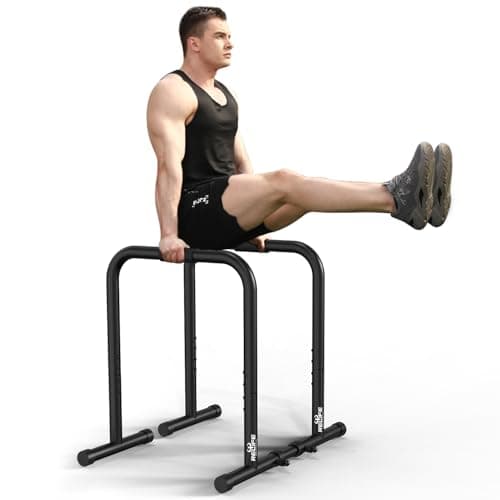
A dip station is one of the most underrated bits of home gym kit going. Two sturdy bars turn dips, L-sits, leg raises and even push ups into a proper upper-body session, and they cost a fraction of a cable machine or power tower. The catch is that "dip station" covers everything from £30 portable dip bars to heavy steel stands and tall parallettes, and the cheap ones can wobble alarmingly. This guide sorts the genuinely stable dip bars on Amazon UK from the flimsy ones, across every budget, with notes on weight rating, footprint and adjustability so you buy once.
How we chose
We researched the most popular dip stations and parallel bars on Amazon UK rather than testing every unit ourselves in a long-term hands-on review. We read through owner reviews, manufacturer specs and expert round-ups to weigh up stability, build quality, weight rating, footprint and value. Prices and specs are correct at the time of writing and can change, so always check the current details before you buy.
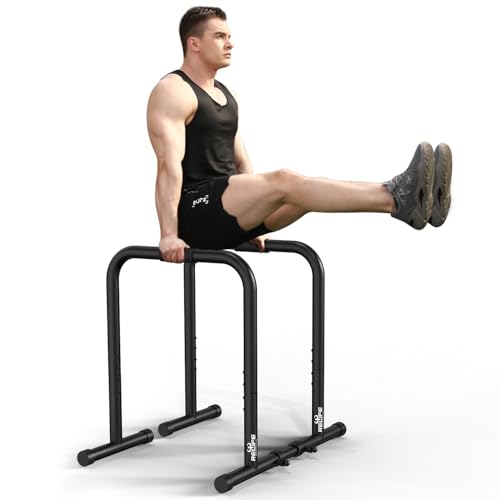
The RELIFE dip bars are the cheapest sensible way to start training dips at home. They are two separate steel uprights with a triangular base, adjustable in height from roughly 77 to 87cm across three settings, and rated to around 136kg. That covers most people's bodyweight with room for a light dip belt, and because the two halves come apart they pack down small and tuck behind a sofa or under a bed.
They suit beginners, smaller spaces and anyone who wants to try dips without spending much. The honest cons are the ones you would expect at this price. The bases are fairly light, so owners note a bit of wobble if you swing or kip rather than dipping under control, and the foam grips are basic. Keep your reps strict and set them on a hard, flat floor and they do the job well. For a first dip station that genuinely works, this is the value pick.
Check price on Amazon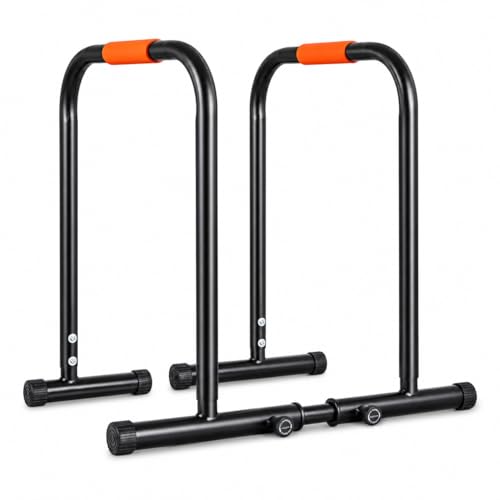
The Panana Adjustable Dip Bars are the ones we would point most home users towards first. They are heavy-duty steel uprights with 1.5mm tube walls, rated to 200kg, with three height levels and a base that adjusts to seven different width positions. That width range is the headline feature: set the bars narrow and close for triceps-focused dips, wider for a bigger chest stretch, or move the two uprights apart entirely for L-sits and leg raises.
They suit anyone who wants one dip stand that adapts as they progress. The 200kg rating is enough for bodyweight plus a loaded vest for most people. The cons are worth stating plainly. A few owners report some sideways flex under load if the feet are not fully tightened, so seat the adjustment pins firmly and check them before each session. Assembly is straightforward but the instructions are basic. For flexibility and weight rating at a fair price, these are the best all-rounder here.
Check price on Amazon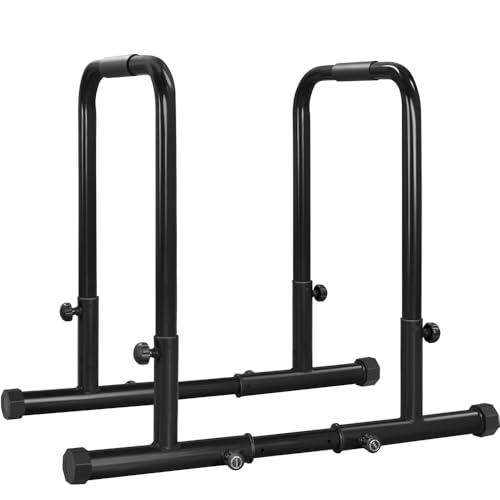
When you want something planted and reassuring under heavier loads, the Yaheetech dip station steps up the build. It is heavy duty steel with a 227kg (500lb) weight rating and adjustable height, on a wide footprint that resists the tipping feeling cheaper stands can give. The thicker tubing and broader base mean it stays put for controlled weighted dips, and the larger uprights feel more like commercial-gym kit than flat-pack dip bars.
It suits bigger or stronger lifters, and anyone adding a dip belt who wants a margin of safety in the rating. The trade-offs are size and storage. It is heavier and does not break down as small as the RELIFE, so it is less of a tuck-away item and more of a permanent fixture in a corner. Some owners also recommend a few minutes squaring up the base feet so it sits dead level. If stability under load is your priority, this is the heavy-duty choice.
Check price on Amazon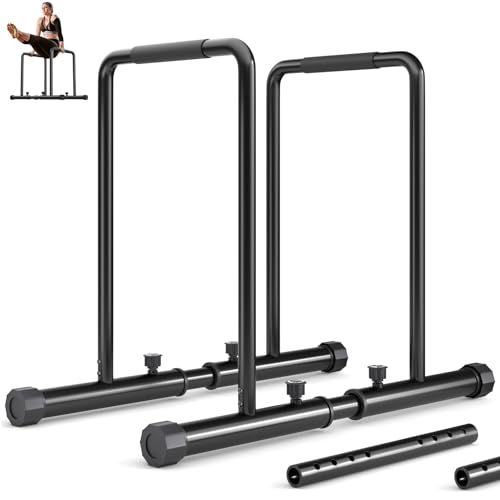
The YOLEO Adjustable Dip Bars solve the wobble problem in the most direct way: a safety connector bar that joins the two uprights into one rigid frame. That single addition transforms how planted a freestanding stand feels, because the bases can no longer drift apart or rock independently. The bars are height-adjustable, built from steel, and the listing quotes a 500kg static rating, which in practice means it shrugs off your bodyweight plus a loaded vest without complaint.
They suit anyone who has been put off freestanding dip bars by reviews mentioning movement, and people who want to train L-sits and tuck holds where rock-solid bars matter. You can run them connected for maximum rigidity or separate the uprights when you want them further apart. The cons are minor: the connector adds an assembly step, and treat that 500kg figure as a static ceiling rather than a green light for dynamic muscle-ups. For the steadiest freestanding feel here, this is the pick.
Check price on Amazon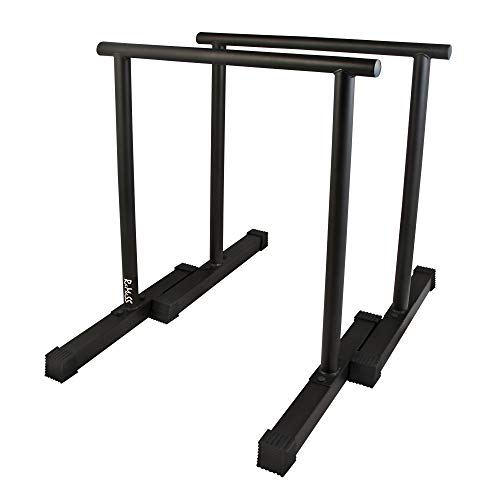
If you care about calisthenics skills as much as raw dips, the RAMASS tall parallettes are the premium pick. At around 80cm tall they are high enough to dip on properly, but the real draw is the clearance for L-sits, tuck holds and the early stages of planche and handstand work, where shorter parallettes leave your legs scraping the floor. They are heavy duty steel, rated to 200kg, with a build quality and finish that feels a clear step above flat-pack dip stands.
They suit calisthenics-minded trainers and anyone who wants kit that lasts and looks the part. The handles are comfortable for long support holds, and the wide base stays steady through static work. The cons are price and focus. They cost more than the all-purpose dip stands here, and as a fixed-height design they do not adjust like the Panana or YOLEO. For skill work and a premium feel, though, they are worth it. Pair them with gymnastic rings for a full calisthenics setup.
Check price on AmazonDips are a compound push, and that is why one bit of kit earns its space. The movement loads the triceps brachii, the lower and inner pectoralis major and the anterior deltoids together, with leaning forward shifting more onto the chest and staying upright biasing the triceps. EMG research on bodyweight pressing shows the pectoralis major and triceps brachii drive these movements, with hand and body position changing which muscle does more of the work. The NHS recommends muscle-strengthening activity that works all the major muscle groups on at least two days a week, and dips plus pull ups cover most of the upper body between them.
Stay safe on dips
Dips load the shoulder at the bottom of the rep, so do not drop into a deep dip before your shoulders are ready. Keep your shoulder blades down and back, stop at the point where your upper arms are roughly parallel to the floor, and build depth gradually. If you feel a pinch at the front of the shoulder, shorten the range. The NHS guidance on improving strength safely is to progress in small steps.
The right dip station comes down to your budget, your bodyweight and whether you want skill work or just solid dips. Here is the quick version:
A quick safety note: whichever you pick, set it on a flat, hard floor, tighten every pin and foot before you load it, and test it at a low height before trusting it with your full bodyweight plus any added weight.
If you want to build a full bodyweight corner, a dip station pairs naturally with a bar for pulls. See our best pull up bar guide for the doorway, wall and freestanding options, and the best push up board if you want to vary your pressing angles too.
For most home gyms the Panana Adjustable Dip Bars are the best dip station in the UK. They are two separate steel uprights with three height settings and seven width positions, rated to 200kg, so you can set them narrow for triceps or wide for chest and move them apart for L-sits. They sit in the sensible middle of the price range at the time of writing. If you want the cheapest reliable option, the RELIFE dip bars are the budget pick.
Good freestanding dip bars are stable enough for controlled dips once they are set up on a flat, hard floor. The wobble most people complain about comes from light, narrow bases or from kipping and swinging rather than the bars themselves. Heavier stations like the Yaheetech and YOLEO, or models with a safety connector bar joining the two uprights, feel much more planted. If you train explosively or do muscle-ups, bolt a wall mounted bar instead.
Dip bars (or a dip stand) are two waist-to-chest-height uprights you grip to do dips and leg raises. Parallettes are lower, fixed bars for L-sits, planches and handstand work, and tall parallettes blur the line by being high enough to dip on too. A power tower is a single tall frame that combines a pull up bar, dip station and knee-raise pad, so it does more but takes up more floor space.
Most home dip stations are rated between 136kg and 227kg, which covers your bodyweight plus a weighted vest or dip belt for the vast majority of users. Some listings quote eye-catching numbers like 500kg, but treat those as a static maximum rather than a guarantee for dynamic training. Always check the rating against your bodyweight plus any added load, and add a safe margin.
Yes, and that is one of the main reasons to buy a dip station rather than a fixed bar. Set the uprights at a comfortable shoulder width, press up into a support hold and raise your legs to horizontal for an L-sit, or bend and lower for dips. Tall parallettes like the RAMASS are ideal because the extra height lets your legs clear the floor for full L-sits and tuck holds.
No, all the dip stations here are freestanding and need no drilling, which is part of the appeal for renters and flats. They rely on a wide, stable base and your bodyweight to stay put. If you want a permanent, zero-wobble setup for heavy weighted dips or muscle-ups, a wall mounted dip and pull up station bolted into solid brick is more rigid, but for standard dips a quality freestanding stand is plenty.
The best adjustable dumbbells in the UK for 2026, from quick-dial sets to heavy 40kg and 50kg options. Budget to premium picks researched and ranked.
The best cable machines in the UK for 2026, from dual cable machines and functional trainers to wall-mounted and folding designs. Honest picks for any home gym and budget.
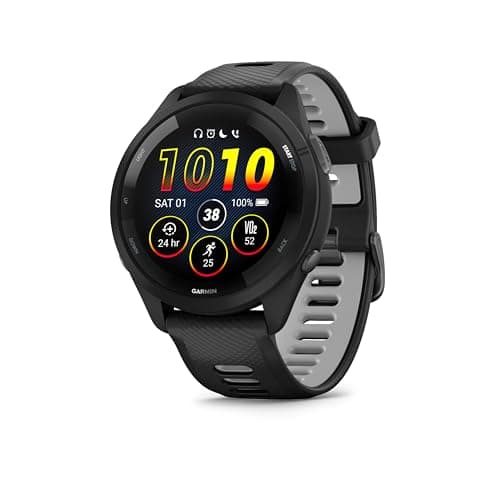
The best Garmin watch for most UK buyers in 2026 is the Forerunner 265, but not for everyone. Five models compared honestly, from the £162 Forerunner 165 to the fēnix 8.
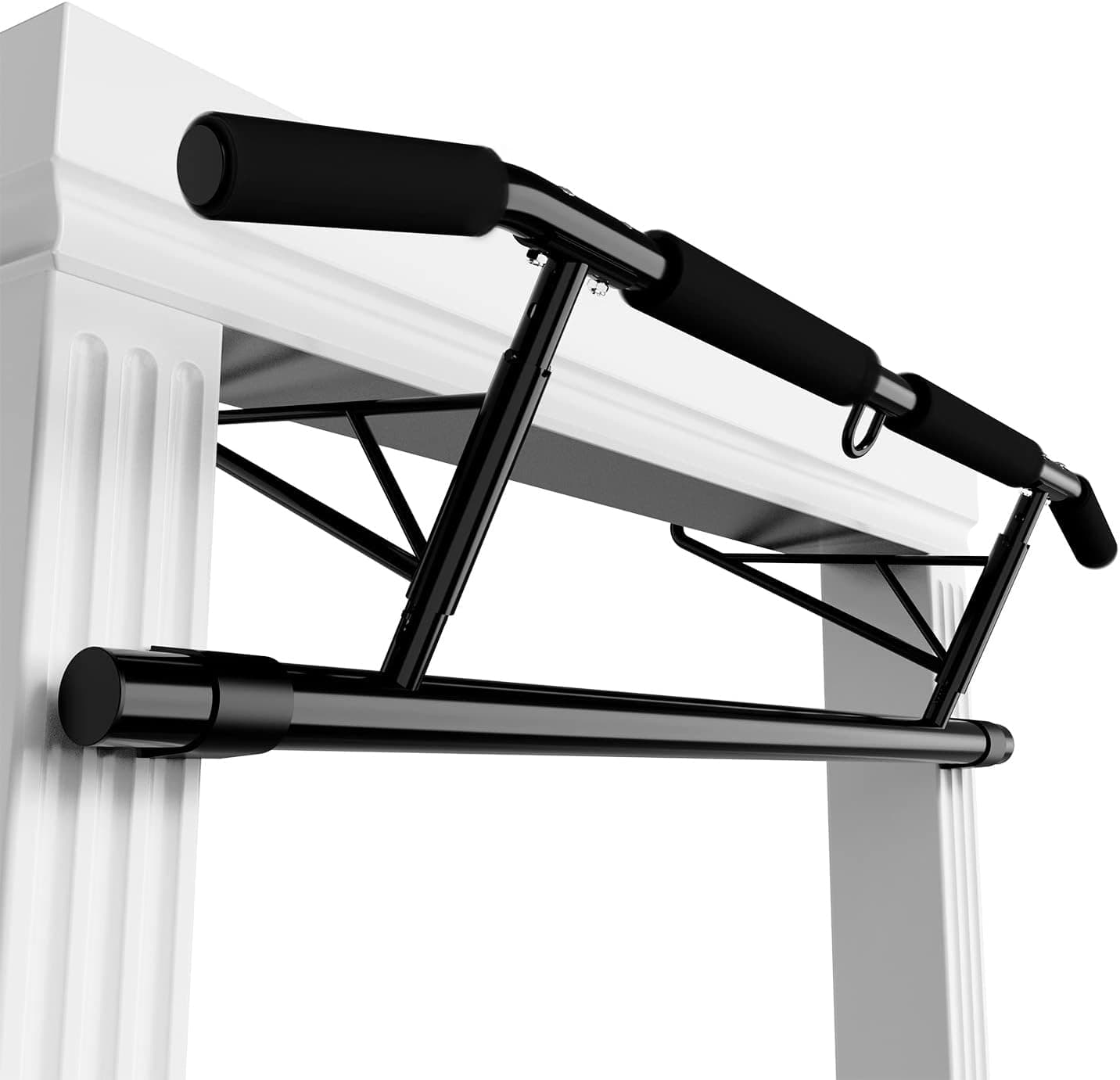
The best pull up bars in the UK for 2026: no-drill doorway bars, wall mounted pull-up bars and free standing power towers, with frame sizes, weight ratings and honest picks for every budget.
Best Exercise is a participant in the Amazon EU Associates Programme, an affiliate advertising programme designed to provide a means for sites to earn advertising fees by advertising and linking to Amazon.co.uk. As an Amazon Associate we earn from qualifying purchases. This comes at no extra cost to you and never influences our independent reviews or rankings.