Best Beetroot Powder UK 2026: Which Ones Are Worth Buying
By Declan Hallwood, Nutrition & Supplements Editor · Updated 12 August 2026
We may earn a commission from qualifying purchases made through links on this page, at no extra cost to you. This never affects our ratings.
Beetroot powder occupies an odd spot on the supplement shelf. The underlying science is real, the raw ingredient costs almost nothing, and yet the gap between what the research used and what you can actually buy in a bag on Amazon is wide enough to drive a van through. Nearly every beetroot powder sold in the UK is dried, milled beetroot with no declared nitrate content, and nitrate levels swing wildly depending on growing conditions and drying method. That does not make the powders useless. It does mean you should know what you're buying and why.
This guide covers the beetroot powders worth your money, plus the one product here that tells you exactly how much nitrate you're getting.
How we chose
We researched the best-reviewed and most widely bought beetroot powders on Amazon UK rather than running our own lab analysis or a long-term hands-on test. We weighed up ingredient lists, organic certification, bag size and cost per 100g, whether nitrate content is declared, and the recurring themes in verified owner feedback. Prices and specs were correct at the time of writing and change often, so check the current details before buying.
The dose problem, up front
Nitrate is the active part. Your body converts dietary nitrate to nitrite and then to nitric oxide, which widens blood vessels and appears to make muscle contraction slightly more efficient at a given oxygen cost. The trials that found a performance benefit mostly used standardised beetroot juice or concentrate delivering somewhere around 400mg to 800mg of nitrate, taken roughly two to three hours before exercise.
How reliably that translates into a real-world gain depends on who you are and what you're doing. A large systematic review with meta-regression looking at the factors that moderate nitrate's effect on exercise performance found the response varies with training status, dose and the type of effort involved (Adv Nutr). A more recent meta-analysis on aerobic and anaerobic performance came to broadly similar conclusions (Front Nutr). Trained endurance athletes tend to see less than recreational exercisers, which is the opposite of what most marketing implies.
There's supporting work outside performance too. A 2026 systematic review of randomised trials on inorganic nitrate and endothelial function found measurable improvements in vascular function (Nutr Rev), and a separate review looking at nitrate-rich beetroot juice and markers of exercise-induced muscle damage reported some benefit for recovery, though the trials were small and heterogeneous (J Diet Suppl).
So here's the honest position: buy a cheap single-ingredient beetroot powder if you want more beetroot in your diet, in your porridge, your smoothies or your pre-training oats. Buy a nitrate-declared shot or gel if you want the effect the studies measured. Do not pay £35 for a branded powder that hides its nitrate content behind a proprietary blend.
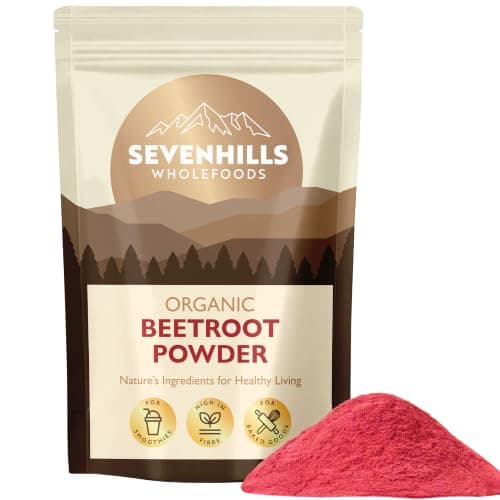
1. Sevenhills Wholefoods Organic Beetroot Powder 500g: Best Overall
Sevenhills is the one we keep coming back to, mostly because it does the boring things right. One ingredient, organic certified, non-GMO, kosher, and available in 200g, 500g and 1kg bags so you can buy at the size you'll actually get through. At roughly £10 for 500g it works out around £2 per 100g, which undercuts the branded nitric oxide powders by a factor of five or more for what is fundamentally the same raw material.
The powder is fine-milled and a deep magenta, and it dissolves reasonably well in cold liquid if you whisk rather than stir. Taste is earthy and faintly sweet; in a smoothie with banana or berries it disappears, in plain water it does not. Sevenhills also sell it as a natural food colouring, which tells you something useful about how well the pigment holds up.
The honest limitations: no nitrate declaration, no third-party assay published, and like all fine powders it clumps if the bag gets damp. Store it sealed and dry.
Pros
Single ingredient, certified organic and non-GMO
Roughly £2 per 100g, far cheaper than branded blends
Three bag sizes so you are not stuck with a kilo you will not finish
Fine mill, dissolves acceptably when whisked into cold liquid
Cons
No declared nitrate content, which is true of nearly all beetroot powders
Earthy flavour is obvious in water and needs masking
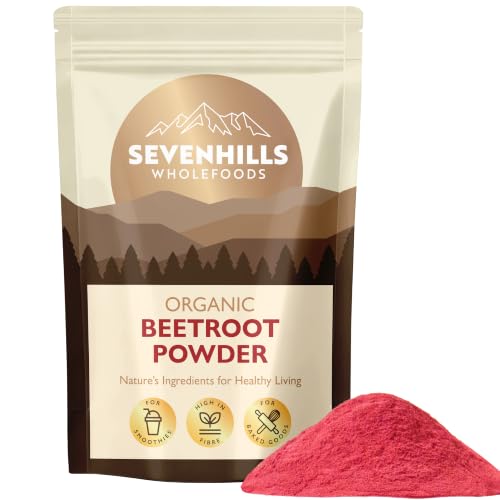
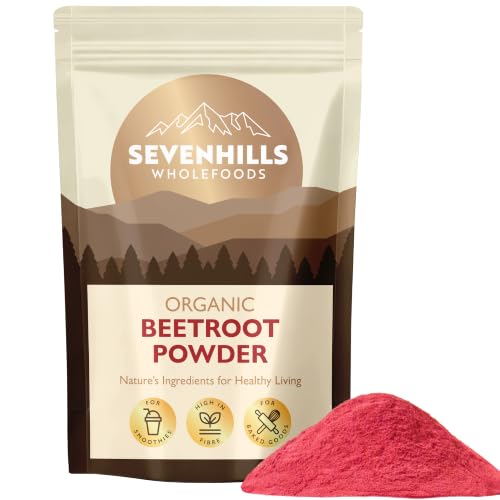
2. Sevenhills Wholefoods Organic Beetroot Powder 1kg: Best Value in Bulk
Same powder, bigger bag, better maths. At around £18 for a kilo the cost falls to roughly £1.80 per 100g, which is about as cheap as organic beetroot powder gets in the UK without going to a wholesaler.
Worth buying only if you'll genuinely use it. A kilo is around 100 to 200 servings at a typical 5g to 10g scoop, and beetroot powder is hygroscopic; leave it half-finished in a damp kitchen cupboard for eight months and you'll end up with a magenta brick. Decant into an airtight jar and it keeps fine.
If you cook with it as well as drink it, and plenty of people use it as a natural colouring for icing, pasta dough and homemade energy balls, the kilo is the obvious buy.
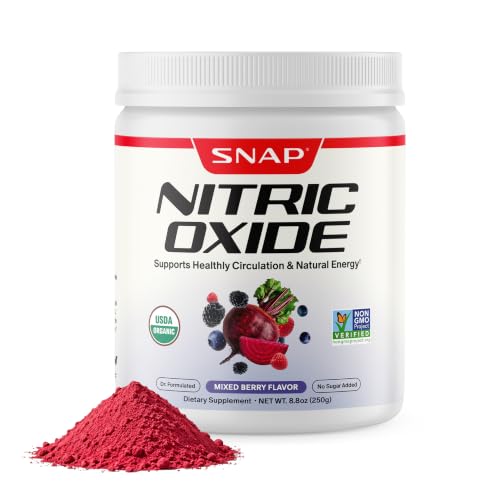
3. Snap Supplements Beetroot Powder: Best Pre-Workout Blend
This one is a different proposition. Rather than plain beetroot, Snap blend organic beetroot with red spinach and pomegranate, aiming to stack nitrate sources rather than rely on beetroot alone. Red spinach extract is genuinely nitrate-dense, and pomegranate brings polyphenols that some research links to blood flow. Thirty servings per tub.
It's also roughly £35, which is three and a half times the price of the Sevenhills 500g bag. Whether that's worth it comes down to whether you value the blend and the flavouring over raw cost per gram. The powder mixes more easily than plain beetroot and tastes considerably better, which matters if you're drinking it before every session and dread the earthiness.
Genuine cons: the nitrate content still isn't declared per serving, so you're paying a premium for a formulation you cannot quantify. Mainstream pre-workouts aren't much better here, as our C4 pre workout review found with its proprietary pump blend. Thirty servings at £35 is well over £1 a day. And it's a US-formulated product, so the labelling conventions differ from what UK buyers expect.
Pros
Stacks beetroot with red spinach and pomegranate rather than beetroot alone
Mixes and tastes noticeably better than plain beetroot powder
Thirty measured servings, so no guessing with a teaspoon
Cons
Around £35, roughly three times the cost of plain organic powder
Nitrate per serving still not declared despite the pre-workout positioning
US formulation and labelling, which some UK buyers find confusing
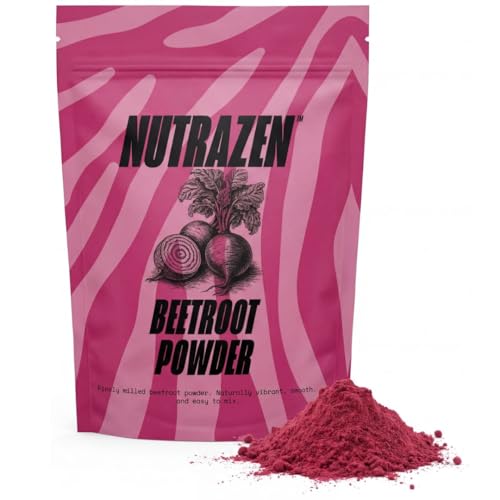
4. NutraZen Premium Beetroot Powder 100g: Best Small Bag
Buying a kilo of anything you have never tasted is a mistake, and beetroot powder is a flavour people either tolerate or actively dislike. NutraZen's 100g bag is the sensible way in: about £8, pure ground red beet root, roughly 10 to 20 servings depending on your scoop.
Per gram it's the most expensive powder here by a wide margin, and that's fine because it isn't trying to be a value buy. Use it to find out whether you'll stick with the habit, then move to a 500g bag if you do.
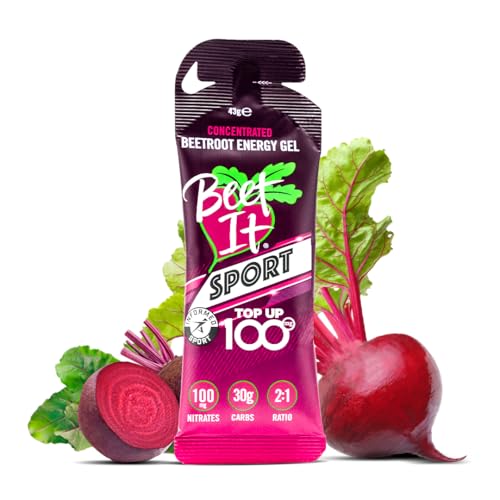
5. Beet It Sport Concentrated Beetroot Energy Gel: Best for a Known Nitrate Dose
If you actually want the effect the research measured, this is the section to read. Beet It is the brand that turns up repeatedly in the published nitrate literature, precisely because its products declare nitrate content per serving instead of leaving you to guess. This is a pack of 12 concentrated beetroot gels at 43g each, built for runners and cyclists to take before or during an event.
You're paying around £29 for twelve servings, so about £2.45 a go, against pennies per serving for plain powder. What you get for the difference is certainty: a known nitrate load, a consistent product batch to batch, and a format designed to be swallowed on the move rather than whisked into a glass.
The drawbacks are real. It's expensive as a daily habit, the concentrated flavour is intense and unmistakably beetroot, and gels do not suit everyone's stomach mid-effort. Treat it as race-day or hard-session kit rather than an everyday supplement, and keep a bag of the Sevenhills for the other six days.
Around £10, roughly £2 per 100g, single ingredient, organic certified
Sevenhills Organic 1kg
Around £18, roughly £1.80 per 100g, same powder in bulk
Snap Supplements Beetroot
Around £35, 30 servings, beetroot plus red spinach and pomegranate
NutraZen 100g
Around £8, pure ground beet root, 10 to 20 servings, trial size
Beet It Sport Gel
Around £29 for 12 x 43g, nitrate content declared per serving
How to take beetroot powder
Timing matters more than most people realise. Plasma nitrite peaks roughly two to three hours after you take nitrate, so ten minutes before a session is too late. Take it with a meal earlier in the day if you're training in the evening.
Two things will blunt it. Antibacterial mouthwash kills the oral bacteria that do the first step of the nitrate conversion, so skip it on days you're relying on the supplement. Spitting rather than swallowing your saliva does the same thing on a smaller scale.
Doses of 5g to 10g of plain powder are the norm on labels. Start at the lower end for a week; the fibre in whole-root powder can be brisk on an unaccustomed gut, and the pigment will change the colour of things you were not expecting.
Who should be careful
Beetroot is a food and the powders here are food products, but a few points are worth flagging. Nitrate lowers blood pressure, so if you already take medication for hypertension the effects can add up and you should check with your GP or pharmacist first. Beetroot is also relatively high in oxalate, which matters if you've had calcium oxalate kidney stones. And anyone on nitrate-based heart medication should get advice rather than self-experimenting.
None of that applies to sprinkling a teaspoon into a smoothie. Alongside the general physical activity guidelines, beetroot is a sensible addition to a diet rather than a substitute for the training that does the actual work. Beetroot handles the performance side of that equation; for the recovery side, the best tart cherry juice in the UK is the other polyphenol worth the shelf space, and the two don't compete.
Sevenhills Wholefoods Organic Beetroot Powder is the one we would buy first. It is a single-ingredient organic powder, it is certified organic and non-GMO, it comes in 200g, 500g and 1kg bags, and at roughly £10 for 500g it costs a fraction of what the branded nitric oxide blends charge for the same raw material. It will not tell you how much nitrate is in a scoop, but neither will almost any other beetroot powder on Amazon.
Does beetroot powder actually improve performance?
Beetroot in the form of nitrate-standardised juice or concentrate has decent evidence behind it, particularly for endurance work in recreationally trained people. The catch is dose. Trials that found a benefit typically used around 400mg to 800mg of nitrate, written in the research as roughly 6 to 13 mmol, taken two to three hours beforehand. A generic beetroot powder does not declare its nitrate content, and the amount varies with the soil the beetroot grew in and how it was dried, so you cannot know whether your scoop is delivering a research dose or a tenth of one.
How much beetroot powder should I take?
Most brands suggest one to two teaspoons, roughly 5g to 10g, daily. For general dietary use that is sensible. If you are chasing the performance effect seen in the studies, a nitrate-declared shot or gel is the only way to know what you are actually getting, and you want it two to three hours before you train rather than ten minutes before.
Is beetroot powder good for blood pressure?
Dietary nitrate raises nitric oxide availability, which relaxes blood vessels, and the evidence on inorganic nitrate and endothelial function is reasonably supportive. The size of the effect in the trials is modest and the products used were standardised for nitrate content. Beetroot powder is a reasonable addition to your diet, not a treatment. If you take medication for blood pressure, speak to your GP or pharmacist before adding it, because the effects can stack.
Why has beetroot powder turned my urine pink?
That is beeturia, and it is harmless. Somewhere between 10 and 14 percent of people cannot fully break down the betalain pigments in beetroot, so the colour comes straight through in urine and sometimes stool. It says nothing about how well the product is working.
Is beetroot powder the same as beetroot juice powder?
Not quite. Beetroot powder is usually whole beetroot that has been dried and milled, so it keeps the fibre. Beetroot juice powder is juice that has been concentrated and spray dried, which strips most of the fibre and concentrates the sugars and nitrate. Juice powder tends to dissolve better and taste sweeter; whole-root powder is cheaper and better in cooking.
The best multivitamin UK buyers can get right now, compared on nutrient forms, dose and price, plus what changes for seniors and over 50s and the honest evidence on who benefits.
How much water should you drink with creatine? The honest answer: mix each 3 to 5g dose in 250 to 350ml, then drink to normal needs. Loading, cramps and dehydration myths explained.
Creatine gummies vs powder, with real UK prices per 5g dose. Gummies cost 4 to 10 times more and some fail lab tests. Here's when each one actually makes sense.
What nutrient dense foods are, why they matter if you train, and a UK shopping list of the best ones, from oily fish and eggs to lentils and Greek yoghurt.
Best Exercise is a participant in the Amazon EU Associates Programme, an affiliate advertising programme designed to provide a means for sites to earn advertising fees by advertising and linking to Amazon.co.uk. As an Amazon Associate we earn from qualifying purchases. This comes at no extra cost to you and never influences our independent reviews or rankings.