Home Gym
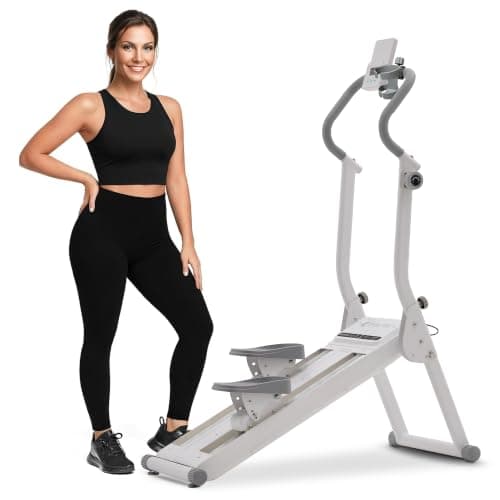
ExacMe Magnetic Stair Climber Review: A Big Stepper, Not a StairMaster
Our ExacMe magnetic stair climber review covers its 16 magnetic resistance levels, 48cm stride, 158kg user limit, app and noise claims, and who should buy it.

By Mike Shilling, Recovery & Training Editor · Updated 15 October 2026
Vibration plates are worth it for a narrow set of jobs and a poor buy for the jobs they're usually sold on. The research backs them as an add-on for older adults who want stronger legs and steadier balance, for postmenopausal women looking for a small extra nudge to spine bone density, and for anyone who wants a low-impact warm-up or can't tolerate jumping and running. It doesn't back them for weight loss, and it doesn't show they can replace proper strength training. If your reasons sit in the first group, a £150 to £250 plate used three or four times a week is a reasonable spend. If they sit in the second, put the money towards dumbbells or a walking habit instead.
Our position
Worth it as an add-on: balance and leg strength in older or less mobile people, support for bone density alongside other exercise, warm-ups, and gentle sessions on days when impact work isn't an option. Not worth it for fat loss, and not a substitute for lifting weights, brisk walking or the NHS recommendation of strength work on two days a week.
That view comes from the meta-analyses below rather than from plate listings, which tend to promise everything from cellulite reduction to "lymphatic drainage" with no trial data behind them. We haven't run a lab study ourselves; this is a reading of the published research plus what we've learned covering the plates on this site.
This is the strongest case for owning a plate. A 2026 systematic review of 36 studies in adults aged 60 and over found that around two-thirds reported significant gains in lower-limb strength, with knee extensor strength (the muscles that get you out of a chair) improving most consistently (J Am Med Dir Assoc, 2026). Balance results were patchier: roughly half the studies showed benefits on tests like the Timed Up and Go, and the clearest improvements came in frail or mobility-limited people. Adverse events were rare and mild.
The same review is honest about the limits, though. No trial was designed to measure whether people actually fell less, so "reduces falls" is a claim the evidence can't yet make. What it can say is that standing on a plate tends to build the strength that falls prevention depends on, especially for someone who finds squats or step-ups difficult.
How does that compare with lifting weights? A meta-analysis of 63 randomised trials in older adults found resistance training and vibration training were comparably effective for muscle strength, but only resistance training also improved functional performance measures and quadriceps size (J Clin Med, 2020). The authors' conclusion was that resistance training, or resistance training combined with vibration, is the more reliable route. That's the add-on argument in a single study.
The bone evidence is real but specific. A 2023 meta-analysis of randomised trials in postmenopausal women (23 studies in the review, 20 pooled) found vibration improved bone mineral density at the lumbar spine, with some protocols also helping the hip's trochanter (Osteoporos Int, 2023). Only one combination earned a high-quality rating: high frequency around 30Hz, low magnitude around 0.3g, and a high cumulative dose of roughly 7,000 minutes. At 15 minutes a day, that's roughly 15 months of daily use.
So a plate isn't an osteoporosis treatment, and it doesn't replace medication your doctor prescribes. It's a plausible extra for women who are already doing the weight-bearing and resistance exercise the NHS recommends for bone health and want something gentle to stack on top. The review also flags that higher-magnitude vibration (1g and above) needs more safety data, which is a reason to start on low settings.
There's less formal research here, but the practical case holds up. Ten minutes of squats, lunges and calf raises on a plate wakes up the legs without jarring your knees, which suits people with arthritic joints, heavier beginners and anyone coming back from a long layoff. Plenty of owners also like a few minutes of gentle vibration after a run or a leg session. Treat that as a comfort rather than proven faster recovery.
This is where marketing and evidence part ways most sharply. A 2025 meta-analysis pooled 20 randomised trials with 585 participants and found vibration training alone had no significant effect on body mass, BMI or fat mass (Int J Obes, 2025). The one interesting subgroup was age: people aged 50 and over lost about 1.8 percentage points of body fat, compared with essentially nothing in younger participants.
The reason is simple enough. Standing on a vibrating platform doesn't burn many calories, and 10 minutes a day of light squats won't create the energy deficit fat loss requires. If weight is your goal, a treadmill or regular brisk walking plus diet changes will do far more for the same money.
A plate can make bodyweight squats harder for a minute or two, but it can't progressively load your muscles the way adding kilos to a dumbbell can. For younger, healthy adults that's the whole game. Vibration can sit alongside lifting, and it's a decent stepping stone for someone who can't yet lift, but it's not a replacement.
The type of motion changes how a plate feels more than what it can achieve.
Oscillating (side-alternating) plates pivot around a central point like a seesaw, so one foot rises while the other drops. They usually run at lower frequencies of roughly 5 to 30Hz, and the amplitude increases the further your feet are from the centre. That gives you an easy way to control intensity: stand narrow for gentle, wide for strong. Most people find the motion feels like walking, which makes oscillating plates the friendlier choice for beginners and older users.
Lineal or vertical plates move the whole platform straight up and down. They tend to run faster, often 25 to 50Hz, with a smaller amplitude of a few millimetres, and the sensation travels further up the body towards the head. Gym machines such as Power Plate use this type. Some people find it uncomfortable on the neck and jaw.
3D and 4D plates combine motions, typically oscillation plus vertical movement, using two motors. The "4D" label isn't a standard; each brand defines it differently. The appeal is variety, with more modes and settings, but there's no research showing combined motion beats a single type. The LifePro Rumblex 4D Pro and Bluefin 4D are good examples of what dual-motor plates offer.
Since the bone meta-analysis found benefits with both side-alternating and synchronous vibration, choose the motion you'll actually tolerate several times a week.
Frequency (Hz) is how many times per second the plate moves. Amplitude (mm) is how far it moves each time. Together they decide how hard the plate pushes you. Most budget plates don't list either honestly; they show "speed levels" from 1 to 99 or 1 to 180 with no Hz figure attached, which makes it impossible to match a research protocol. If replicating the bone study matters to you, look for a plate that states its frequency range and amplitude in the specs.
| Price band | What you get | Who it suits |
|---|---|---|
| Under £100 | Single motor, small platform, "speed levels" with vague specs, lighter frames | Trying the idea out, short gentle sessions |
| £100 to £250 | Better motors, clearer specs, oscillating or dual-motor options, higher weight limits | Most home users using it 3 to 4 times a week |
| £250 to £600 | Heavier steel frames, quieter motors, longer warranties, larger platforms | Daily users, heavier users, households sharing one plate |
| £1,000+ | Commercial lineal machines such as Power Plate | Clinics, gyms, enthusiasts with space and budget |
For most people the middle band is the sweet spot. Compact options like the LifePro Waver Mini at around £140 work if storage is tight, while the dual-motor plates in the £200 to £600 range add variety and sturdier builds. Our best vibration plate UK guide ranks the current picks across each band.
Vibration plates are low risk for healthy adults, but there's a clear list of situations where you shouldn't use one without medical advice:
Even if none apply, start on the lowest setting with soft knees, never lock your joints, and keep sessions under 10 minutes for the first fortnight. If you feel dizzy, get a headache or notice numbness, stop and lower the setting next time.
Three or four times a week, do 10 to 12 minutes of bodyweight moves: squats, split squats, calf raises and a plank with your hands on the plate. Work for 30 to 60 seconds and rest for the same. Our vibration plate exercises guide has a full 12-minute routine with form cues. Keep walking, and if you can, keep doing some form of resistance work with dumbbells or bands on separate days. The plate earns its place as the extra session, not the main one.
They are worth it if you buy one for the things the research supports: leg strength and basic balance in older or less mobile people, a modest boost to spine bone density in postmenopausal women, and low-impact warm-ups. They are not worth it if your main goal is weight loss or you hope one will replace lifting weights, because the evidence for both is weak.
Not on their own. A 2025 meta-analysis of 20 randomised trials with 585 people found vibration training alone made no meaningful difference to body mass, BMI or fat mass. Over-50s saw a small drop in body fat percentage of about 1.8 points, but that is a minor effect next to diet and regular walking.
Most home routines run 10 to 15 minutes, split into bouts of 30 to 60 seconds with rest between them. Three or four sessions a week is plenty. The bone density trials that worked used small doses over many months, so consistency matters more than long single sessions.
Oscillating plates rock side to side like a seesaw and feel more natural for beginners and people with sensitive joints. Lineal plates move straight up and down at higher frequencies and are more common in gyms. Both types have produced benefits in bone density research, so pick the motion you find comfortable enough to use regularly.
Avoid vibration plates if you are pregnant, have a pacemaker or other implanted device, have had recent surgery, have a history of deep vein thrombosis or blood clots, or have joint replacements, metal implants, epilepsy, recent fractures or severe heart disease. If any of these apply, or you are unsure, check with your GP before buying one.
Our ExacMe magnetic stair climber review covers its 16 magnetic resistance levels, 48cm stride, 158kg user limit, app and noise claims, and who should buy it.
What a cambered bar is, the three main types (cambered squat bar, bowed bench bar, cambered Swiss bar), what each one does, how much they weigh and how to buy one.
What a landmine attachment is, the rack-mounted, plate-post and floor platform types, how to check bar and rack fit, safety tips, and the best exercises to do.
What a safety squat bar is, how much it weighs, how it changes your squat compared with a straight bar, who it suits and what to check before buying one in the UK.
Best Exercise is a participant in the Amazon EU Associates Programme, an affiliate advertising programme designed to provide a means for sites to earn advertising fees by advertising and linking to Amazon.co.uk. As an Amazon Associate we earn from qualifying purchases. This comes at no extra cost to you and never influences our independent reviews or rankings.