Ankle Mobility Exercises: Test Yourself, Then Fix It
By Mike Shilling, Recovery & Training Editor · Updated 20 September 2026
Most people who cannot squat properly blame their hips. Often it is the ankles. Your shin needs to travel forward over a flat foot as you descend, and if the joint blocks that motion at 20 degrees, your body will find the range somewhere it should not: heels peeling off the floor, knees drifting inward, chest dropping towards the bar. Fix the ankle and a lot of squat problems quietly solve themselves.
Test before you treat
Do the knee-to-wall test before you spend six weeks on drills you may not need.
Stand facing a wall. Put the big toe of your test foot roughly 10cm back from the skirting board, keep the other leg behind you for balance, and drive the knee straight forward over the second toe until it touches the wall. The heel must stay down. If the knee touches, shift the foot back a centimetre and try again. Keep going until the heel lifts or the knee misses, then measure the last successful distance from toe to wall.
Ten centimetres or more is fine for squatting and running. Between 8 and 10cm is workable but tight. Under 8cm is where you start compensating without realising it. Test both sides, because a side-to-side difference of more than 1.5cm usually matters more than the absolute number, and it is nearly always the previously sprained ankle that comes up short.
One useful detail from the research: when investigators compared people with limited and normal ankle dorsiflexion, group differences in knee and ankle kinematics during squatting and landing showed up when range was measured with the weight-bearing lunge, but not when it was measured passively with a straight knee and no load (study on limited ankle dorsiflexion and squat kinematics). Test the way you move, standing and loaded, not lying on a table.
The exercises
1. Banded ankle distraction
The one to do first if the joint feels blocked rather than tight. Loop a heavy resistance band around a low anchor and over the front of your ankle, just below the bony bumps, then step away until the band pulls the shin bone backwards. Put that foot on a low box, keep the heel down, and drive the knee forward over the toes for 20 to 30 slow reps.
The band pulls the talus back into the joint, which is the glide that stiff ankles lose. It feels odd and it is by far the most effective drill here.
2. Knee-to-wall rocks
The test doubles as the exercise. Set your foot at a distance where the knee only just reaches, then rock forward and back 15 times, pausing two seconds at the end of each rep. Move the foot back a few millimetres between sets. Three sets a side, daily.
3. Half-kneeling ankle rock
Kneel with the working foot flat in front of you, hands on the knee for balance, and push the knee forward over the toes while the heel stays glued down. Add a gentle side-to-side sweep at the end range, taking the knee inside and outside the foot, which addresses the rotation component that straight-ahead drills miss.
4. Calf stretch, both versions
Your calf has two muscles that need different positions. Straight back leg stretches the gastrocnemius; bent back knee stretches the soleus, which is the one that limits deep squatting. Thirty to forty-five seconds each, both legs, both versions. Our calf stretches guide has the full detail.
5. Loaded heel drops
Stand on a step with your heels hanging off, lower slowly to the bottom over three seconds, and hold for five at the end. Fifteen reps. This one builds strength through the new range rather than just opening it, which is what makes the change stick.
6. Soft tissue work on the calf and sole
Two to three minutes of rolling the calf and the bottom of the foot before the mobility drills makes the stretching more productive. A foam roller covers the calf; a massage ball reaches the plantar fascia and the deeper soleus that a roller skims over.
Order matters more than duration
Soft tissue first, then joint mobilisation, then loaded work through the new range. Stretching a joint open and then never loading it is why so many people's mobility resets to baseline by the next session. The heel drops are not optional.
A five-minute routine
Do this before lower-body training, or daily if you are actively trying to change something:
Calf and foot rolling, 90 seconds total
Banded ankle distraction, 20 reps each side
Knee-to-wall rocks, 15 reps each side
Loaded heel drops on a step, 15 reps
Retest with the knee-to-wall measurement once a week, same time of day, same shoes or barefoot. Morning range is reliably worse than afternoon range, so comparing a Monday morning test to a Friday evening one will flatter you.
What stiff ankles cost you
Squat depth and position. The obvious one. Limited dorsiflexion pushes you into a more forward-leaning squat, or stops you reaching parallel at all. Heels-elevated work in the goblet squat is the practical workaround while you fix the underlying range.
Knee tracking. When the ankle will not let the shin travel forward, the foot often collapses inward to find range through the arch instead, and the knee follows it. That is the valgus pattern people spend a lot of time trying to coach out at the hip when the problem is two joints lower.
Calf and shin overload. Restricted ankles change how you load the lower leg when you walk and run, and they show up repeatedly in the background of shin splints and plantar fasciitis complaints.
Stair descent and landings. Not a gym issue, but the one people notice most as they get older.
When it will not improve
Some ankles have a hard stop. An old fracture, significant scar tissue from repeated sprains, or anterior bony impingement where the talus and tibia meet will not stretch away, and four months of daily drills will not change that. If your range has been identical for two months of honest work, stop grinding at it. Raise your heels for squatting, adjust your stance width, and put the training time somewhere it pays. That is a sensible adaptation, not a defeat.
Pain is a different signal from stiffness. Sharp pain at the front of the ankle during the knee-to-wall test, or an ankle that gives way, is worth a physiotherapist rather than another YouTube drill.
Use the knee-to-wall test. Face a wall, put your big toe about 10cm back from it, keep your heel flat, and drive your knee forward to touch the wall. If you manage it, slide the foot back a centimetre at a time until your knee can no longer touch without the heel lifting. Ten centimetres or more is workable; under 8cm is restricted enough to change how you squat.
Why does poor ankle mobility affect my squat?
Your shin has to travel forward over your foot as you descend. When the ankle will not let it, your body finds the range elsewhere: your heels lift, your knees cave in, or you fold forward at the hips. Research comparing people with limited and normal weight-bearing lunge range found altered knee and ankle kinematics during squats and landings in the restricted group.
How long does it take to improve ankle mobility?
Two to six weeks of daily work for most people, with the first noticeable change usually in the first fortnight. If years of restriction come from an old ankle sprain with scar tissue or bony changes, expect slower progress and a ceiling you cannot stretch past.
Should I stretch my calves or mobilise the joint?
Both, because they are different problems. A tight gastrocnemius or soleus is a muscle length issue and responds to stretching. A blocked joint, where the talus does not glide back properly in the ankle mortise, needs loaded mobilisation such as banded distraction. If straight calf stretching has done nothing in a month, your limit is probably the joint.
Can I just raise my heels instead?
For squatting, yes, and lifting shoes or a small plate under each heel are a legitimate long-term answer rather than a cheat. But you cannot put a wedge under your heel when you walk downstairs, run, or land from a jump, so it is worth doing the mobility work too.
Is ankle mobility work safe after a sprain?
Once the acute pain and swelling have settled, gentle range work is standard practice and one of the reasons the knee-to-wall test is used in rehab. If the ankle is still painful, unstable or giving way, see a physiotherapist before you start loading it into end range.
WHOOP vs Apple Watch compared for UK buyers: WHOOP 5.0 and MG memberships against the Apple Watch Series 12, SE 3 and Ultra 4. Battery, recovery, HRV, sleep, GPS, accuracy research and the real cost over three years.
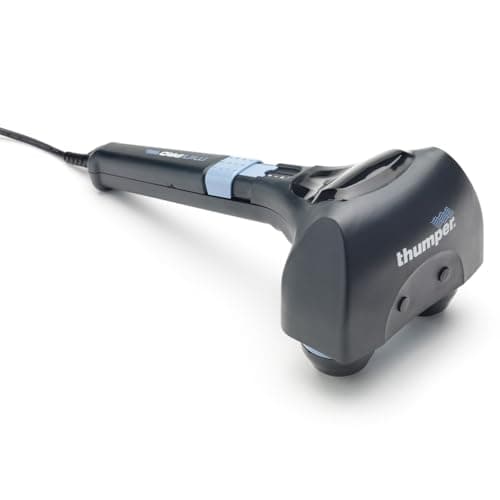
Our Thumper Mini Pro review: a corded, broad-head percussive massager with 6mm stroke and a long handle for your back. How it compares with massage guns.
Are massage chairs good for you? What randomised trials show for back pain, neck pain, stress and muscle soreness, who should avoid them, and how long and often to use one.
Best Exercise is a participant in the Amazon EU Associates Programme, an affiliate advertising programme designed to provide a means for sites to earn advertising fees by advertising and linking to Amazon.co.uk. As an Amazon Associate we earn from qualifying purchases. This comes at no extra cost to you and never influences our independent reviews or rankings.