Home Gym
How Long Should a Skipping Rope Be? Sizing Chart by Height
How long should a skipping rope be? A height to rope length chart in cm and feet, the stand-on-it test, and how to shorten an adjustable rope properly.

By Paul Kendrick, Cardio & Endurance Editor · Updated 6 November 2026
A weighted skipping rope is a jump rope with extra mass in the cable, the handles or both, usually somewhere between a quarter of a pound and 2lb (roughly 110g to 900g). The extra weight slows the rope down and makes your shoulders, forearms and grip work harder on every turn, so it suits short, hard intervals rather than long steady skipping. It won't magically double your calorie burn, and it's a poor first rope for anyone still learning to skip. Here's how the two main types differ, what the research does and doesn't show, and how to pick a weight that won't wreck your shoulders in week one.
There are two quite different ways to make a rope heavier, and they feel nothing alike.
Weighted cable. The rope itself is thicker or heavier, often a PVC-coated cable or a thick 6mm to 10mm cord. Because the mass sits in the part that travels around you, the whole arc feels heavier and slower. You get feedback on every turn, which is why many people find a quarter-pound cable easier to time than a whippy wire speed rope. Heavier cables (1lb and up) hit the shoulders hardest.
Weighted handles. The cable stays light and the handles carry removable weights, often 90g to 150g each. This mostly loads your grip and forearms, because the weight stays in your hands rather than swinging around you. The rope still turns fairly fast. It's a gentler way in, and the removable weights mean one rope can be light or heavy.
Plenty of sets combine both. That's useful if you want to move up gradually, because you can change one variable at a time.
The honest answer is that the research on weighted ropes is thin, mostly small groups of teenage athletes, and the results are mixed. That's worth knowing before you believe any packaging that promises you'll "build muscle".
The best-known study put 25 adolescent female volleyball players into three groups for 12 weeks: weighted rope, ordinary rope, or no rope training. Both skipping groups improved joint position sense compared with controls, and the weighted rope group made bigger gains in lower-limb coordination and some eccentric endurance measures (Ozer et al., 2011). With nine people in each skipping group, that's a hint rather than proof.
Shoulder strength is where you'd expect the biggest effect, and it's murkier. A sister study in volleyball players found weighted rope training raised external rotation strength at the slower test speed, though most other shoulder measures didn't change much between groups (Duzgun et al., 2010). A 2025 study in CrossFit athletes went further and found no significant change in shoulder rotation strength at all after six weeks of weighted rope work, with no control group to compare against (Torres-Banduc et al., 2025). So a weighted rope makes your shoulders tired; whether it makes them measurably stronger is still an open question.
What about calories? Ordinary skipping is already a hard workout. A classic lab study measured adults skipping at 125 to 145 turns a minute and found an energy cost of roughly 12 METs, about 14 kcal a minute, with heart rates averaging around 176 beats per minute (Town, Sol and Sinning, 1980). Turning faster didn't raise the energy cost, because people jumped lower as the rope sped up. A heavier rope should add a little on top, since you're moving more mass, but we couldn't find a published study that measures how much. Treat any "burns 30% more" claim as marketing.
A weighted rope makes sense for you if:
Start with a light rope instead if you can't yet manage a minute of basic bounces, if you've had a recent shoulder or elbow problem, or if double unders are your goal (heavy ropes are too slow for them). Our guide to the best skipping ropes in the UK covers light speed ropes and beaded ropes that make better first buys.
Length matters as much as weight. A rope that's too short gets even harder to control once it's heavy, so check our guide on how long a skipping rope should be before you cut any cable.
Rope weights are usually quoted in pounds, and often the figure means the rope's total weight, not the extra on top. Read the listing carefully, because some brands quote the cable alone and some include the handles.
| Weight | Roughly | Best for |
|---|---|---|
| 1/4lb | 110g to 150g | Beginners moving off a basic rope, timing practice, longer intervals |
| 1/2lb | 225g | Regular skippers wanting more shoulder work without losing too much speed |
| 1lb | 450g | Short, hard intervals of 20 to 60 seconds; boxers and fitter users |
| 2lb and up | 900g+ | Slow, heavy conditioning; experienced users only |
If you're unsure, go lighter. A quarter-pound or half-pound rope gets used three times a week, while a 2lb rope too often gets three sessions and then a permanent spot in the cupboard.
A few current ropes we checked are in stock on Amazon UK at the time of writing, and they cover the main types:
These are research-based picks from the listings and manufacturer specs, not ropes we've tested by hand.
Run this two or three times a week, on a forgiving surface such as a rubber gym mat, wood floor or short grass. Concrete is hard on your shins and chews through PVC cables.
Once that feels comfortable, stretch the work intervals to 45 seconds, then add rounds. A boxing-style session of three-minute rounds with a minute's rest is a good long-term target with a quarter-pound or half-pound rope. Keep 1lb-plus ropes for intervals under a minute.
Keep the jumps small
A heavy rope tempts you to jump higher to clear it. Don't. Your feet only need to leave the floor by 2cm to 3cm. Let the rope do the work and stay light on the balls of your feet.
Going too heavy too soon. It's the most common error by a distance. Your legs may cope, but your shoulders and forearms haven't done this work before, and a week of sore front delts and elbows will stall you. Start lighter than you think you need.
Turning from the shoulders. With a light rope you can get away with big arm circles; with a heavy rope it tires you out in seconds. Keep your elbows near your ribs and turn from the wrists and forearms. The shoulders hold position rather than drive the rope.
Cutting the cable too short. A short rope forces you to hunch and jump higher, which is miserable with a heavy cable. Size it properly first.
Skipping on concrete in old trainers. Weighted ropes don't change your landing much, but you'll often skip longer with them. Wear cushioned trainers and use a mat if you can.
Adding ankle weights as well. Ankle weights change how you land and stress the knees and ankles. Save ankle weights for slow, controlled leg exercises, never for jumping.
You don't always need more weight. Alternating feet, high knees, side-to-side hops and single-leg bounces all raise the demand with the same rope. Pair weighted rope intervals with grip work like forearm exercises or a few rounds on boxing pads and you have a full conditioning session that fits in a spare room.
Neither is better overall; they do different jobs. A light speed rope is best for learning, for double unders and for long steady sessions. A weighted rope turns more slowly and makes your shoulders, arms and grip work harder, so it suits short, hard intervals. If you can only buy one and you're new to skipping, buy the light rope.
For most people a quarter-pound rope (roughly 110g to 150g of cable) or a rope with about 100g of weight in each handle is the right first step. Half a pound to 1lb (roughly 225g to 450g) is for people who already skip comfortably for several minutes. Ropes of 2lb and over are slow, heavy conditioning tools aimed at boxers and experienced users.
Probably a little, because you're moving more mass with every turn, but nobody has published solid numbers on how much. Ordinary rope skipping is already very demanding: a classic study measured about 12 METs, or roughly 14 kcal a minute in young adults. The extra from a weighted rope is small next to the effect of simply skipping for longer.
It will build some shoulder and forearm endurance, and it can make your legs work a bit harder on landing. It won't build much size. A 1lb rope is light compared with even a small dumbbell, so think of it as conditioning rather than strength training.
A very light weighted rope can actually help some beginners, because the extra weight makes it easier to feel where the rope is. A heavy rope (1lb or more) is a poor choice if you can't yet skip for a minute without tripping. Learn the basic bounce first, then add weight.
Use the rope. Ankle weights change how you land and add load to the knees and ankles in an awkward place, which isn't what you want for a jumping exercise. A weighted rope adds the extra work to your upper body instead and leaves your landing mechanics alone.
How long should a skipping rope be? A height to rope length chart in cm and feet, the stand-on-it test, and how to shorten an adjustable rope properly.
How to clean a yoga mat properly: a 30-second after-class wipe, a weekly clean and a deep clean, plus what's safe for PVC, TPE, natural rubber, PU, cork and cotton mats.
How to use lifting straps properly, step by step. Lasso wrapping, figure 8 and closed-loop straps, how many wraps, which way the tail goes, and when not to strap.
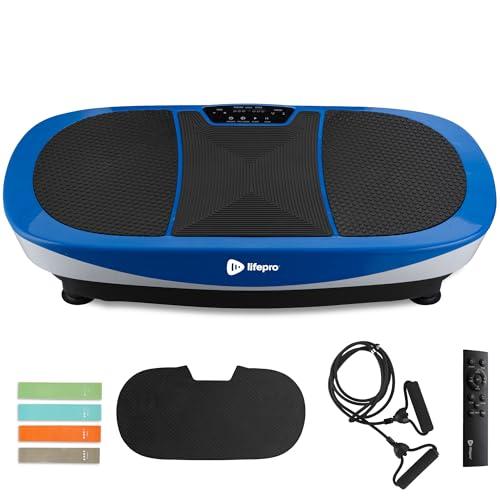
Our LifePro Rumblex Max review covers the triple motor 4D vibration, 99 speeds, 16 programmes and 226kg rating, how it compares with the Rumblex Plus and 4D Pro, and what the research supports.
Best Exercise is a participant in the Amazon EU Associates Programme, an affiliate advertising programme designed to provide a means for sites to earn advertising fees by advertising and linking to Amazon.co.uk. As an Amazon Associate we earn from qualifying purchases. This comes at no extra cost to you and never influences our independent reviews or rankings.