Treadmills
Non-Electric Treadmill: Manual vs Curved, Pros, Cons and Who Should Buy
Non-electric treadmills explained: cheap flat manual models vs £2,000+ curved self-powered machines, how each compares with motorised ones, and who should buy.

By Paul Kendrick, Cardio & Endurance Editor · Updated 27 October 2026
A walking pad is a slim, handrail-free treadmill made for walking, usually capped at 6 km/h, while a full treadmill is a bigger machine with a console, handrails, a longer deck and a top speed of 16 to 20 km/h. If you want more steps while you work and you don't plan to run, buy a walking pad. If you want to jog, run, do intervals or walk on a steep incline, buy a treadmill, because no walking pad will do those jobs well.
That's the short version. The longer one comes down to six numbers: deck size, top speed, motor, incline, weight limit and the space you have. Here's how they compare, with real figures from models sold on Amazon UK.
| Walking pad | Folding treadmill | |
|---|---|---|
| Running deck | About 40 to 45 x 100 to 120cm | About 45 to 55 x 125 to 150cm |
| Top speed | 6 km/h on most (10 to 12 km/h on some 2-in-1s) | 16 to 20 km/h |
| Motor | Small brushless motor, roughly 1 to 2.5 HP peak | 2 to 3.5 HP, often quoted as continuous |
| Incline | None, or a fixed manual tilt | Powered incline, often 12 to 15 levels |
| Max user weight | 100 to 120kg typical, up to about 180kg on heavy-duty pads | 120 to 150kg typical |
| Machine weight | 20 to 30kg | 60 to 100kg |
| Height | Around 12 to 16cm, no console | Around 130 to 140cm with handrails up |
| Storage | Slides under a bed or sofa, or stands on end | Folds upright, still takes floor space |
| Under-desk use | Designed for it | Handrails and console get in the way |
| Price on Amazon UK | About £100 to £400 | About £250 to £1,000+ |
The most telling row is the deck. A walking pad belt of 40 x 120cm is plenty for a walking stride. Once you start running your stride lengthens a lot, and that's why proper running treadmills sit at 140 to 150cm long and around 50cm wide.
Walking pads keep the deck short and narrow to stay light and easy to store. The KingSmith WalkingPad C2 has a 120 x 40cm belt, and the WalkingPad Z1 is 121 x 40cm. Some budget pads go smaller still: the UREVO 4-in-1 desk treadmill has a 100 x 40cm running area, and the cheapest CITYSPORTS pad is 38 x 102cm.
Compare that with a home running treadmill. The Reebok FR30z has a 150 x 51cm deck, which is about 25% longer and 11cm wider than the C2. That extra width matters more than people expect. On a 40cm belt you have to walk in a fairly straight line, and the odd foot clips the side rail, especially if you're looking at a screen rather than at your feet.
Walking short, steady steps at a desk, you won't miss the extra length. Taller users above about 6ft, or anyone with a long natural stride, will feel cramped on anything under 120cm.
Here the two machines part ways completely. Nearly every walking pad tops out at 6 km/h, which is about 3.7mph. That's a brisk walk for most adults and a 10-minute kilometre. You can't jog at it.
A few 2-in-1 pads with a fold-up handrail reach 10 to 12 km/h. On paper that's a jog. In practice the deck is still the same short, narrow belt, the motor is working near its limit and the frame moves more at speed. We cover the details in can you run on a walking pad, but the honest answer is: only gently, and only now and then.
Treadmills start where walking pads stop. Most folding models reach 16 km/h, and the FR30z goes from 0.5 to 20 km/h. That covers everything from slow recovery walks to 5K pace and sprint intervals.
Walking pads use small brushless motors because they only need to turn the belt at walking pace, often for hours on end. Brushless motors are quiet, which is why a pad like the C2 sits around 48 dB at a normal pace and you can take calls on it.
Treadmill motors are bigger because running puts much higher loads on the belt with every footstrike. Look for the continuous rating, not the peak. The FR30z, for example, is marketed at 4.0 HP but is listed as 2.0 CHP continuous, and the continuous figure is the one that tells you how it copes with sustained running. Treadmills also add proper cushioning systems under the deck, which you'll appreciate at running speeds.
Most walking pads are flat. A handful have a manual tilt you set before you start, like the 4% incline on the CITYSPORTS pad, and a few premium desk models offer a powered incline: the UREVO 4-in-1 goes to 9%. They're the exception.
Treadmills almost always have a powered incline you can change mid-session, commonly 12 to 15 levels, and dedicated incline machines go further. If you like hill walking for fitness or want to raise your heart rate without running, incline is the reason to choose a treadmill. A 6 km/h walk on a flat belt is light exercise. The same walk at 10 to 12% is hard work.
Budget walking pads are usually rated for 100 to 120kg, mid-range pads 120 to 136kg, and a smaller group of heavy-duty pads 150 to 180kg. The C2 is rated at 100kg and the Z1 at 110kg. Folding treadmills typically start around 120kg, and the FR30z takes 150kg.
Whichever you buy, leave 15 to 20% headroom above your body weight. Our walking pad weight limit guide explains why, and which specs show a pad is built to cope with a heavier user.
This is where walking pads win clearly. A walking pad weighs 20 to 30kg, stands only 12 to 16cm tall and has no console. The Z1 is 142.5 x 56 x 10.6cm unfolded and folds to 81 x 56 x 13.8cm. One person can tip it on its wheels and roll it under a bed or stand it against a wall.
A folding treadmill is a piece of furniture. Even folded it takes a footprint of roughly 1 square metre and stands well over a metre tall. The FR30z weighs around 80kg, so moving it between rooms is a two-person job. If you live in a flat and need the floor back every evening, that alone can settle the decision.
At the time of writing (prices move often):
So a good walking pad costs about the same as a cheap treadmill. If you're torn at the £250 to £350 mark, ask what you'll do on it most. A quality walking pad will do walking better than a budget treadmill. A budget treadmill will do running better than any walking pad.
A walking pad is built to go under a standing desk: no handrails, no console in the way, and a remote or app to change speed. A normal treadmill doesn't fit under a desk at all, because the console and uprights sit exactly where your keyboard would be.
Does walking while you work actually help? A 2021 meta-analysis of 13 treadmill desk studies found users burned about 105 extra calories an hour compared with sitting in lab settings (Oye-Somefun et al., BMC Public Health). The real-world effect on sitting time in workplace trials was small, though, and the authors found no clear change in blood pressure. A walking pad helps if you use it, and it doesn't replace proper exercise. We set out how to make it part of your day in our walking pad under desk guide.
How much walking counts as exercise?
The NHS physical activity guidelines ask adults for at least 150 minutes of moderate activity a week, and list brisk walking as an example. The NHS test for moderate is that you can still talk but not sing. A slow 3 km/h desk shuffle won't hit that, so if the pad is your main exercise, add a few faster 5 to 6 km/h blocks each day.
If that's you, start with our best walking pad UK picks. If you want incline too, the UREVO SpaceWalk 5L adds up to 9% for around £350; read our UREVO SpaceWalk 5L review first.
Check the UREVO SpaceWalk 5L on AmazonBrowse our treadmill reviews and buying guides for machines at every budget.
For most people working from home, a walking pad is the better buy. It's cheaper, it gets used because it sits under the desk rather than in the spare room, and steady walking is what most of us need more of. If you're still unsure whether you'd use one, read are walking pads worth it first.
Buy a treadmill the moment running, intervals or real incline are on your list. No walking pad covers them properly, and a 2-in-1 that claims 12 km/h is a compromise you'll outgrow quickly. If you want both desk walking and running, the honest answer is two machines, or a treadmill and a lot of discipline about getting on it.
A walking pad is a low, handrail-free treadmill built for walking. Most top out at 6 km/h, have a belt of around 40 x 100 to 120cm and slide under a desk or sofa. A full treadmill has a console, handrails, a longer and wider deck of around 45 to 55 x 125 to 150cm, a top speed of 16 to 20 km/h and usually a powered incline, so you can run on it.
For walking, mostly yes. You burn similar calories at the same speed and incline, and a walking pad is far easier to use every day because it lives under your desk. For running, intervals or steep hill walking it isn't close: the short deck, 6 km/h ceiling and smaller motor rule it out.
Not on a standard one. A 6 km/h top speed is a brisk walk for most adults. Some 2-in-1 pads reach 10 to 12 km/h with the handrail raised, which allows a light jog, but the belt is still too short and narrow for proper running strides. If you plan to run more than occasionally, buy a treadmill.
Usually. On Amazon UK, budget walking pads start around £100 and well-known models such as the WalkingPad Z1 sit near £300. Folding running treadmills start around £250, and a solid mid-range machine like the Reebok FR30z costs about £899. Prices move often, so check the current listing.
At the same speed and incline the calorie burn is the same, because your body does the same work. The difference is what each machine lets you do. A treadmill lets you run and climb steep inclines, which burns far more per minute. A walking pad wins on volume, since it's easy to walk for hours while you work.
Non-electric treadmills explained: cheap flat manual models vs £2,000+ curved self-powered machines, how each compares with motorised ones, and who should buy.
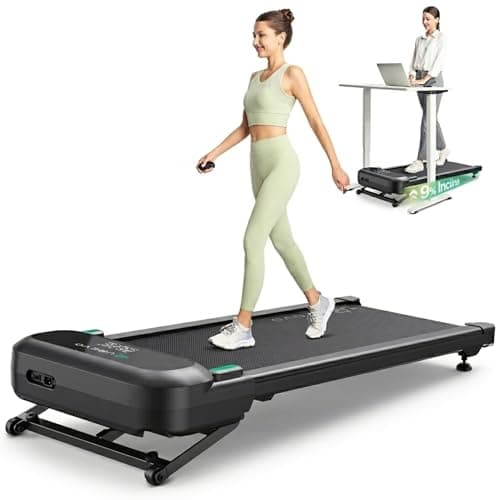
Our honest UREVO SpaceWalk 5L walking pad review: 9% auto incline, dual brushless motor, 136kg limit and a narrow 40x100cm deck, for £349.99 on Amazon UK.
What a curved treadmill is, how the self-powered slat belt works, what research says about calorie burn vs motorised treadmills, and whether one suits you.
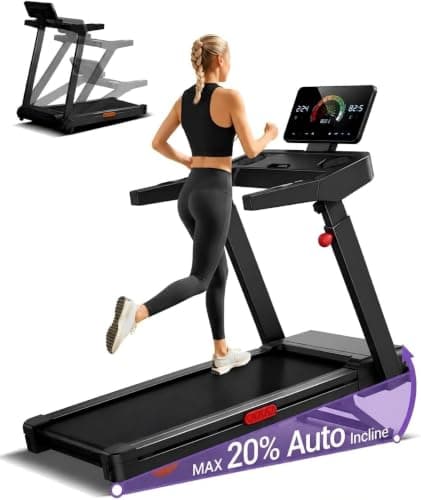
An honest UMAY 20% incline treadmill review: 3.5HP, 14km/h, a 108 x 40cm belt and a 180kg rating for around £240, plus the listing claims we'd question.
Best Exercise is a participant in the Amazon EU Associates Programme, an affiliate advertising programme designed to provide a means for sites to earn advertising fees by advertising and linking to Amazon.co.uk. As an Amazon Associate we earn from qualifying purchases. This comes at no extra cost to you and never influences our independent reviews or rankings.