Treadmills
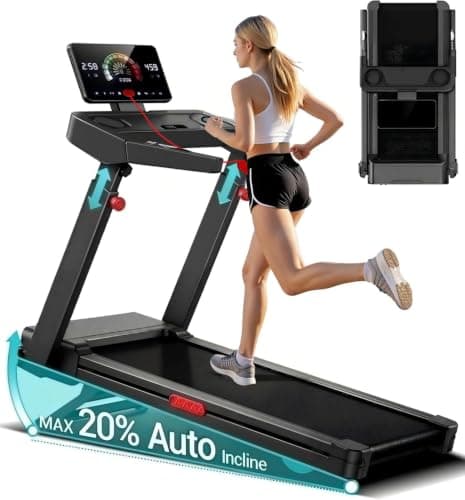
CURSOR FITNESS Treadmill Review: 20% Auto Incline for £240
An honest CURSOR FITNESS treadmill review: 2 to 20% auto incline, 14km/h, a 40 x 107cm belt and a 180kg rating for £240, plus the claims we'd treat with care.

By Paul Kendrick, Cardio & Endurance Editor · Updated 13 October 2026
To convert treadmill speed to pace, divide 60 by your speed in km/h: the answer is your pace in minutes per km. So 10 km/h = 6:00 per km, 12 km/h = 5:00 per km and 15 km/h = 4:00 per km. The chart below covers every half step from 5 to 20 km/h, with pace per mile and 5k and 10k finish times alongside.
There are only two numbers to remember.
The awkward bit is the decimal. Take 11 km/h: 60 / 11 = 5.4545 minutes. The 5 is whole minutes, and 0.4545 x 60 = 27.3 seconds, so you're running 5:27 per km. Going the other way, a 5:30 pace is 5.5 decimal minutes, and 60 / 5.5 = 10.9 km/h.
For a mile, multiply the per-km pace by 1.609 (there are 1.609344 km in a mile). And for finish times, multiply the per-km pace by the distance: 6:00 per km over 5km is 30:00.
I generated every value in this table with a short script rather than working them out by hand, then rounded to the nearest second. The mph column is rounded to one decimal place.
| Speed (km/h) | Speed (mph) | Pace per km | Pace per mile | 5k time | 10k time |
|---|---|---|---|---|---|
| 5.0 | 3.1 | 12:00 | 19:19 | 1:00:00 | 2:00:00 |
| 5.5 | 3.4 | 10:55 | 17:33 | 54:33 | 1:49:05 |
| 6.0 | 3.7 | 10:00 | 16:06 | 50:00 | 1:40:00 |
| 6.5 | 4.0 | 9:14 | 14:51 | 46:09 | 1:32:18 |
| 7.0 | 4.3 | 8:34 | 13:48 | 42:51 | 1:25:43 |
| 7.5 | 4.7 | 8:00 | 12:52 | 40:00 | 1:20:00 |
| 8.0 | 5.0 | 7:30 | 12:04 | 37:30 | 1:15:00 |
| 8.5 | 5.3 | 7:04 | 11:22 | 35:18 | 1:10:35 |
| 9.0 | 5.6 | 6:40 | 10:44 | 33:20 | 1:06:40 |
| 9.5 | 5.9 | 6:19 | 10:10 | 31:35 | 1:03:09 |
| 10.0 | 6.2 | 6:00 | 9:39 | 30:00 | 1:00:00 |
| 10.5 | 6.5 | 5:43 | 9:12 | 28:34 | 57:09 |
| 11.0 | 6.8 | 5:27 | 8:47 | 27:16 | 54:33 |
| 11.5 | 7.1 | 5:13 | 8:24 | 26:05 | 52:10 |
| 12.0 | 7.5 | 5:00 | 8:03 | 25:00 | 50:00 |
| 12.5 | 7.8 | 4:48 | 7:43 | 24:00 | 48:00 |
| 13.0 | 8.1 | 4:37 | 7:26 | 23:05 | 46:09 |
| 13.5 | 8.4 | 4:27 | 7:09 | 22:13 | 44:27 |
| 14.0 | 8.7 | 4:17 | 6:54 | 21:26 | 42:51 |
| 14.5 | 9.0 | 4:08 | 6:40 | 20:41 | 41:23 |
| 15.0 | 9.3 | 4:00 | 6:26 | 20:00 | 40:00 |
| 15.5 | 9.6 | 3:52 | 6:14 | 19:21 | 38:43 |
| 16.0 | 9.9 | 3:45 | 6:02 | 18:45 | 37:30 |
| 16.5 | 10.3 | 3:38 | 5:51 | 18:11 | 36:22 |
| 17.0 | 10.6 | 3:32 | 5:41 | 17:39 | 35:18 |
| 17.5 | 10.9 | 3:26 | 5:31 | 17:09 | 34:17 |
| 18.0 | 11.2 | 3:20 | 5:22 | 16:40 | 33:20 |
| 18.5 | 11.5 | 3:15 | 5:13 | 16:13 | 32:26 |
| 19.0 | 11.8 | 3:09 | 5:05 | 15:47 | 31:35 |
| 19.5 | 12.1 | 3:05 | 4:57 | 15:23 | 30:46 |
| 20.0 | 12.4 | 3:00 | 4:50 | 15:00 | 30:00 |
Most home machines stop well short of the bottom rows. Budget folding treadmills often max out around 12 to 14 km/h, which is a 4:17 to 5:00 per km ceiling; our guide to how fast treadmills go breaks top speeds down by price. If you want to run sub-20 5k reps indoors, you need a machine that holds at least 15 km/h without straining.
Since most consoles adjust in 0.1 km/h steps, you'll usually land a fraction off a round pace. These are the closest settings for common targets:
| Target pace per km | Set the treadmill to |
|---|---|
| 7:00 | 8.6 km/h |
| 6:30 | 9.2 km/h |
| 6:00 | 10.0 km/h |
| 5:30 | 10.9 km/h |
| 5:00 | 12.0 km/h |
| 4:30 | 13.3 km/h |
| 4:00 | 15.0 km/h |
Plenty of treadmills sold in the UK are designed for the US market and display mph by default. Many let you switch to km/h in a settings or engineering menu (check the manual for the button combination), but if yours doesn't, this table does the conversion in half-mph steps.
| Speed (mph) | Speed (km/h) | Pace per km | Pace per mile | 5k time |
|---|---|---|---|---|
| 3.0 | 4.8 | 12:26 | 20:00 | 1:02:08 |
| 4.0 | 6.4 | 9:19 | 15:00 | 46:36 |
| 5.0 | 8.0 | 7:27 | 12:00 | 37:17 |
| 5.5 | 8.9 | 6:47 | 10:55 | 33:54 |
| 6.0 | 9.7 | 6:13 | 10:00 | 31:04 |
| 6.5 | 10.5 | 5:44 | 9:14 | 28:41 |
| 7.0 | 11.3 | 5:20 | 8:34 | 26:38 |
| 7.5 | 12.1 | 4:58 | 8:00 | 24:51 |
| 8.0 | 12.9 | 4:40 | 7:30 | 23:18 |
| 9.0 | 14.5 | 4:09 | 6:40 | 20:43 |
| 10.0 | 16.1 | 3:44 | 6:00 | 18:38 |
| 12.0 | 19.3 | 3:06 | 5:00 | 15:32 |
The mph version of the formula is identical: 60 / mph gives minutes per mile. To convert, multiply mph by 1.609 for km/h, or divide km/h by 1.609 for mph.
If 5:00 per km on the treadmill feels comfortable but the same pace outside leaves you gasping, you're not imagining it. Outdoors you push air out of the way with every stride, and that drag grows quickly as you speed up. On a treadmill you run on the spot, so that cost disappears. You also never meet a headwind, a camber or a muddy patch.
That's where the 1% incline habit comes from. A 1996 study by Andrew Jones and Jonathan Doust at the University of Brighton had nine trained male runners do repeated six-minute efforts on a treadmill at 0%, 1%, 2% and 3% grades, plus once on a level road, and measured oxygen uptake (Jones and Doust, Journal of Sports Sciences, 1996). Across speeds of roughly 10.5 to 18 km/h, a 1% grade matched the energy cost of road running best. At the two slowest speeds, the road and the 0% treadmill weren't significantly different, which makes sense: air resistance hardly registers at a jog.
So my rule of thumb is simple: walking or easy jogging, leave it flat; steady running above about 10 km/h, set 1%. Bear in mind that study was small and short (around five minutes per effort), so 1% is a sensible convention, not a precise correction for every runner.
How you move changes a bit too. A 2020 systematic review pooling 33 studies found treadmill and overground running biomechanics are "largely comparable", with small differences such as a flatter foot angle at footstrike on the treadmill (Van Hooren et al., Sports Medicine, 2020). For pacing purposes, that means the treadmill is a fair stand-in for the road, as long as you account for the effort gap. Our treadmill running form guide covers the habits worth fixing.
The console reports what the motor controller thinks the belt is doing, not a measured belt speed. Home treadmills are rarely recalibrated after they leave the factory, and a few things can push the number away from reality over time:
You can check it yourself in about ten minutes. Measure the full length of the belt (all the way round, not just the visible top), stick a strip of tape across it, then set a steady speed and count how many times the tape passes in one minute while someone runs or walks on it. Belt length in metres x revolutions per minute x 60 / 1,000 gives the true speed in km/h. A 3.0m belt passing 55 times a minute, for example, is 9.9 km/h.
A running watch or footpod won't settle the argument either, because indoors both estimate distance from your wrist or foot movement rather than measuring it. They're useful for spotting a big mismatch, not small ones.
Pace numbers transfer between treadmill and road better once you add a few adjustments.
Start with the 1% incline for anything above an easy jog. Then run by effort or heart rate for the first few sessions rather than chasing your road pace exactly. If your easy outdoor runs sit at a certain heart rate, find the treadmill speed that produces the same reading at 1% and note it down; that becomes your indoor easy pace.
Warm-up matters more indoors too. With no hills or traffic lights breaking up the run, it's easy to lock onto a pace that's a touch quick and hold it for far longer than you would outside. Give yourself five to ten minutes of walking or slow jogging, then build.
For harder sessions, the treadmill is actually an advantage, because the belt holds the pace for you. Use the chart to set exact interval speeds: a run of 1km reps at 4:30 pace is just 13.3 km/h, punched in once. If you'd rather mix things up by feel, try fartlek training on the belt with speed changes every minute or two, or work through one of our treadmill HIIT workouts.
Which treadmill speed range do you need?
Walkers and easy joggers are fine with a 12 km/h top speed. If you plan tempo runs or intervals faster than 4:30 per km, look for 16 km/h or more. Hill sessions need powered incline; most of our best incline treadmills top out at 8% to 10%, plenty for walking hills.
If you're shopping, the Reebok i-Run 5.0 reaches 15 km/h, enough for 4:00 per km, in a folding frame that suits walkers and joggers. Runners after faster intervals and a longer, sturdier deck should look at the Sole F80, which reaches 20 km/h. Our treadmills hub lists every machine we've covered.
10 km/h is exactly 6:00 per km, or 9:39 per mile. Hold it for 30 minutes and you cover 5km; hold it for an hour and you run 10km.
Divide 60 by your speed in km/h to get minutes per km. At 12 km/h that is 60 / 12 = 5 minutes, so 5:00 per km. If the answer has a decimal, multiply the decimal part by 60 to get seconds: 60 / 11 = 5.45, and 0.45 x 60 = 27, so 11 km/h is 5:27 per km.
Set 12.0 km/h (7.5 mph) for a 5:00 per km pace. For 5:30 per km set about 10.9 km/h, for 6:00 per km set 10.0 km/h, and for 4:30 per km set about 13.3 km/h.
For steady runs at roughly 10.5 to 18 km/h, a 1% incline brings the effort closer to running on a flat road, according to a 1996 study by Jones and Doust. At walking and slow jogging speeds air resistance barely matters, so 0% is fine there.
The maths is the same, but the effort usually isn't. With no air resistance, no wind and a belt that never changes surface, the same pace tends to feel a little easier indoors. Your treadmill's speed reading can also drift a few percent from the real belt speed, so treat it as a close guide rather than gospel.
An honest CURSOR FITNESS treadmill review: 2 to 20% auto incline, 14km/h, a 40 x 107cm belt and a 180kg rating for £240, plus the claims we'd treat with care.
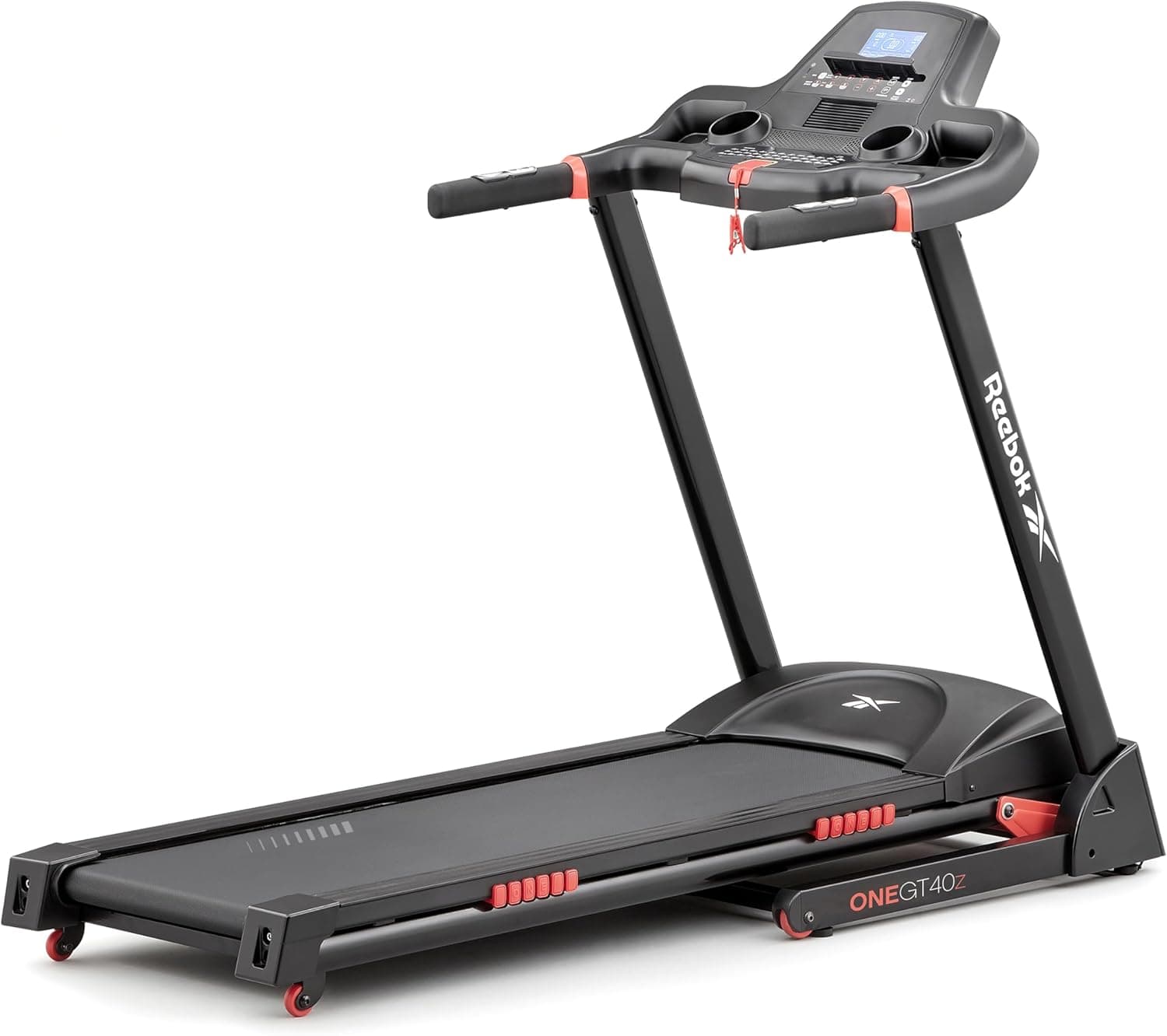
An honest Reebok GT40z treadmill review: 2.0HP motor, 18km/h, 12 incline levels, a 130 x 45cm deck, Zwift and Kinomap support, and the 110kg limit.
StairMaster vs treadmill compared honestly: Compendium MET values for calorie burn, joint impact, glute and quad work, the incline walking middle ground, and realistic home options.
How to lubricate a treadmill belt in 10 minutes: which 100% silicone lube to use, how often, signs it's dry, step-by-step instructions and mistakes to avoid.
Best Exercise is a participant in the Amazon EU Associates Programme, an affiliate advertising programme designed to provide a means for sites to earn advertising fees by advertising and linking to Amazon.co.uk. As an Amazon Associate we earn from qualifying purchases. This comes at no extra cost to you and never influences our independent reviews or rankings.