Cross Trainers
Cross Trainer vs Exercise Bike: Which Should You Buy?
Cross trainer vs exercise bike compared on muscles, calories, joint impact, space, noise and price, with a straight verdict on which suits your home and goals.

By Paul Kendrick, Cardio & Endurance Editor · Updated 14 October 2026
We may earn a commission from qualifying purchases made through links on this page, at no extra cost to you. This never affects our ratings.
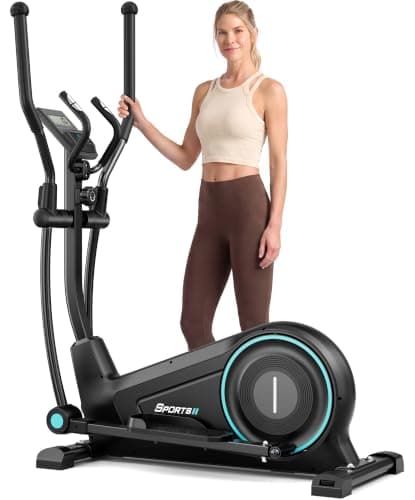
The THERUN Cross Trainer is a rear-drive magnetic elliptical selling for £269.99 on Amazon UK (14 October 2026), with an 8kg flywheel, 16 resistance levels and a 120kg user limit. The flywheel and the rear-drive layout are the good news. The 38cm stride is the bad news, and it decides who should buy this machine more than anything else on the spec sheet.
If you've read our Dripex magnetic cross trainer review, this listing will feel familiar. Stride, flywheel weight, resistance levels, user limit, console size, warranty and footprint all match line for line, down to the same "under 20dB" and "up to 6ft 4in" claims. We can't confirm the two come from the same factory, but the spec sheets are close enough that you should compare prices before picking either.
How we review
This review is research-based. We've worked from THERUN's Amazon UK listing and published specifications, owner feedback where it's available, and independent research on elliptical training. We haven't used this machine ourselves, so we flag claims we can't check rather than repeat them.
Buy it if you're under roughly 5ft 10in, weigh comfortably under 120kg and want quiet, low-impact cardio in a spare room or flat. The rear-drive layout and 8kg flywheel give it a smoother, flatter foot path than the front-drive budget machines that dominate this price.
Skip it if you're tall, heavy, or want an app to drive your workouts. There's no Bluetooth and no programmed sessions, so every resistance change is down to you.
It's in stock at £269.99 with limited units left at the time of writing:
Check price on Amazon£269.99Stride length controls whether an elliptical feels like walking or like shuffling on the spot. At 38cm (15in) the THERUN sits at the short end of home machines; plenty of people find 40 to 45cm comfortable, and gym ellipticals usually run 50cm or more.
THERUN says the machine suits users from about 4ft 9in to 6ft 4in. A 6ft 4in adult can certainly stand on it and move the pedals, but their natural step is much longer than 38cm, so each stride gets clipped short. Hips don't extend fully, the glutes do less, and once you push the pace the motion gets choppy. Our honest cut-off is around 5ft 10in. Above that, a 45cm to 50cm stride makes a bigger difference to how the machine feels than any other upgrade you could pay for.
The trade-off works in the THERUN's favour in one way: a short stride means a shorter machine. At 121cm long and 68cm wide it fits a box room or the end of a bedroom, though you'll want some clearance behind the rear flywheel housing and above your head, since the handlebars top out at 166cm and you'll stand on pedals raised off the floor.
An 8kg flywheel is a good number under £300. Heavier flywheels carry more momentum, which pulls the pedals through the top and bottom of the ellipse rather than leaving a flat spot where you shove them round. Budget machines with 3kg to 5kg wheels get that complaint a lot. Eight kilos won't feel like a £1,500 gym machine, but at a steady cadence it should feel continuous.
The flywheel sits at the back, and THERUN says the frame uses 8 precision bearings. Rear-drive designs generally trace a longer, flatter ellipse than front-drive ones, which tend to tilt the foot path into something closer to stair stepping.
Resistance comes from a magnetic brake with 16 levels. Magnets never touch the flywheel, so nothing wears and there's no grinding as the brake tightens. Expect the bottom third to feel like easy walking and the top few levels to be properly heavy for short intervals. At 41.6kg all-in, the frame is light enough that hard, fast efforts at the top levels may produce some sway before the brake runs out of bite; the adjustable stabilisers help, and so does a firm mat.
| Stride length | 38 cm / 15 in |
|---|---|
| Drive | Rear-drive |
| Flywheel | 8 kg |
| Resistance | 16 levels, magnetic |
| Max user weight | 120 kg |
| Console | 5.5 in LCD: time, speed, distance, calories, pulse, odometer, scan |
| Heart rate | Pulse sensors on the fixed handlebars |
| Extras | Device holder, transport wheels, adjustable stabilisers, 8 bearings |
| Size (listed) | Approx 121 x 68 x 166 cm (L x W x H) |
| Machine weight | Approx 41.6 kg |
| Warranty | 1 year |
| Price | £269.99 at the time of writing |
THERUN describes the frame as "light-commercial-grade" steel. That phrase has no fixed meaning, so read it as marketing; the figure that tells you more is the 120kg user limit, which is ordinary for a budget machine and lower than the 150kg you'll find on some rivals at the same price.
Expect it to arrive part-built in a heavy box. Assembly on machines of this type usually means bolting on the stabilisers, pedal arms, handlebars and console mast, and on similar machines it typically takes a couple of hours, ideally with two people. At over 40kg you'll want help lifting the main frame. Check the bolts on the pedal arms after the first week or so; a new knock or click on budget ellipticals is very often a pedal bolt that has settled.
The listing claims less than 20dB. We don't buy it. Twenty decibels is around the level of leaves rustling, and an elliptical with a person on it creates noise from the pedal linkages, the bearings and your feet shifting on the footplates, none of which the magnetic brake controls.
What's true is that magnetic ellipticals are about as quiet as home cardio gets. You'll hear a low hum and some mechanical noise, usually quiet enough for TV at normal volume, and far less than a treadmill's belt and footstrike. If you live above someone, a mat and properly levelled stabilisers will matter more than the brake does.
The 5.5in LCD shows time, speed, distance, calories, pulse and an odometer, with a scan mode that cycles between them. That's all it does. No Bluetooth, no Kinomap or Zwift, no preset programmes. Treat the calorie number as a way to compare one session with the next, because budget consoles estimate it from very little information.
Pulse comes from grip sensors on the fixed handles, so you have to let go of the moving arms to get a reading, and grip sensors tend to read erratically at high effort. A chest strap paired to a watch is the better option if heart rate zones matter to you. The device holder takes a phone or tablet, which is how most owners will fill the gap left by the basic console.
Low impact is the main reason. Your feet never leave the pedals, so there's no landing shock with every step. In a lab study of 30 adults, load through the whole foot on an elliptical stayed at roughly 70 to 81 percent of body weight even as resistance and incline went up (study on elliptical trainer parameters). Running, by contrast, puts several times your body weight through each footstrike.
That makes a machine like this a sensible way to work towards the NHS guideline of 150 minutes of moderate activity a week without battering your knees. If you're not sure how to structure sessions, our cross trainer workout guide has beginner and interval plans, and cross trainer muscles worked explains what the moving handlebars actually add.
Dripex magnetic cross trainer. The Dripex shares the 38cm stride, 8kg rear flywheel, 16 levels, 120kg limit and 1-year warranty. When we reviewed it, it cost £229.49. If it's still cheaper when you check, buy that one instead; we can't find anything on the THERUN listing that justifies a £40 premium.
Neezee 3-in-1 cross trainer. Same £269.99 price as the THERUN, with an 8kg flywheel, a 150kg limit, Bluetooth for Kinomap and Zwift and a 3-year warranty. The catch is that Neezee doesn't publish its stride length, so taller buyers are guessing. For everyone under about 5ft 9in, the Neezee is the better-equipped machine for the same money.
MERACH Long Stride. If you're over 5ft 10in, this is the direction to go. The MERACH has a 47cm stride, a 180kg capacity and self-generating power so it doesn't need a socket. It costs £519.99, nearly double, but the stride alone transforms how it feels for taller users.
JLL CT300. A well-known name, but the JLL CT300 has only 8 resistance levels, a 5.5kg flywheel and a 100kg limit. On paper the THERUN beats it on all three.
Here's the THERUN link again if it fits your height and space:
Check price on Amazon£269.99Every model we've covered, including long-stride machines for taller users, is in the cross trainers hub.
Not really. The listing says it suits users from about 4ft 9in to 6ft 4in, but the 38cm stride is short. Most people over roughly 5ft 10in will find the step choppy and cut off at the back, especially at a brisk pace. If you're tall, look for a stride of 45cm to 50cm, such as the 47cm MERACH Long Stride.
We doubt it. Twenty decibels is about the level of rustling leaves, and any elliptical with a person on it makes pedal, linkage and bearing noise. Magnetic resistance is genuinely quiet compared with a treadmill or rower, so expect a low hum rather than silence.
THERUN lists 120kg (about 18st 12lb). That's on the low side for the price; the Neezee 3-in-1 at the same £269.99 lists 150kg.
The listing doesn't state a power source for the console, and the resistance is magnetic with 16 levels rather than motorised programmes. Check the box contents or ask THERUN support before you buy if a nearby socket is a problem in your space.
Amazon lists it at roughly 121cm long, 68cm wide and 166cm tall, weighing around 41.6kg. It doesn't fold, though front transport wheels help you move it.
Cross trainer vs exercise bike compared on muscles, calories, joint impact, space, noise and price, with a straight verdict on which suits your home and goals.
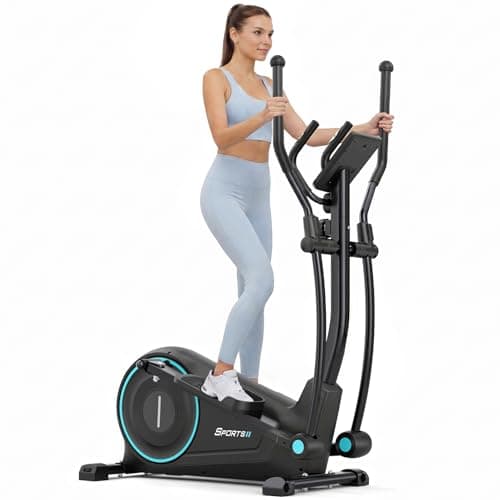
An honest Dripex cross trainer review: the 38cm stride, 8kg flywheel, 16 magnetic levels, 120kg limit, the quiet claims and who this £230 elliptical suits.
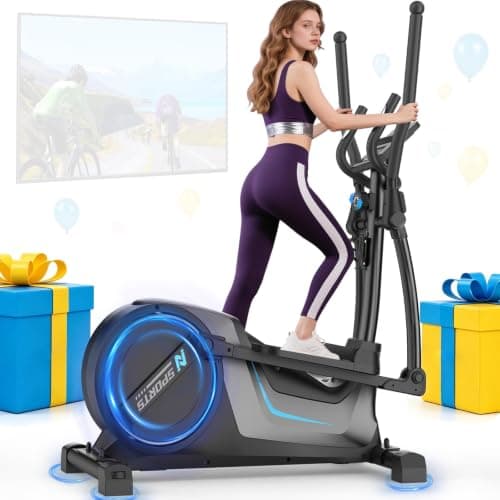
Our Neezee 3-in-1 cross trainer review: 16 magnetic resistance levels, the 8kg flywheel, Kinomap and Zwift support, 150kg limit, footprint and what the listing leaves out.
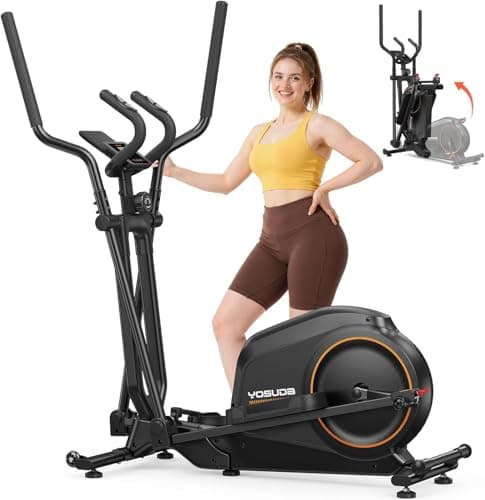
An honest YOSUDA foldable cross trainer review covering the 2 sq ft folded footprint, 38cm stride, 5.5kg magnetic flywheel, 16 resistance levels, the 175cm height guidance and the noise claim we don't believe.
Best Exercise is a participant in the Amazon EU Associates Programme, an affiliate advertising programme designed to provide a means for sites to earn advertising fees by advertising and linking to Amazon.co.uk. As an Amazon Associate we earn from qualifying purchases. This comes at no extra cost to you and never influences our independent reviews or rankings.