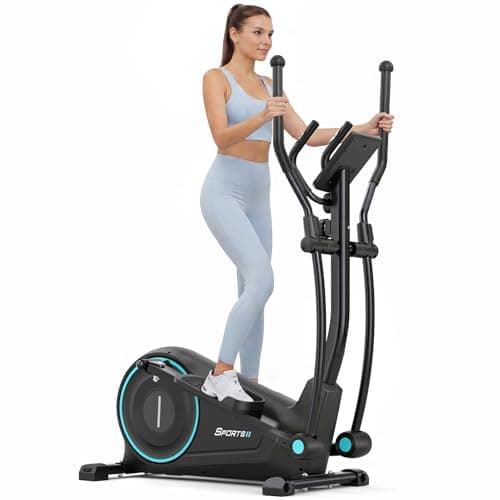
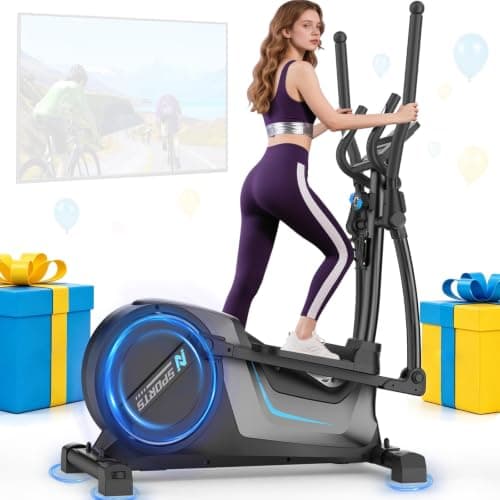
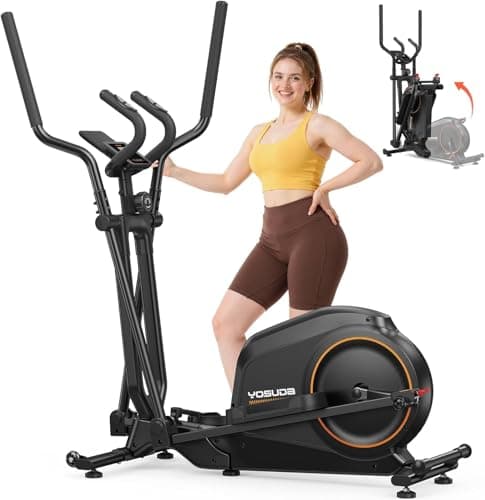
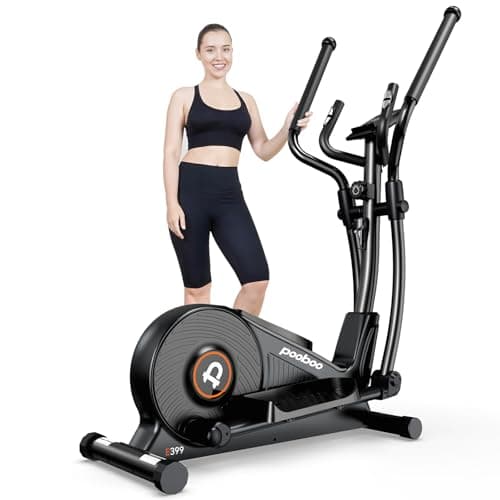
Dripex sells more than one cross trainer on Amazon UK, which makes searching for a review confusing. This one is the plain rear-drive elliptical: 8kg flywheel, 16 magnetic resistance levels, a 38cm stride, a 5.5in LCD and a 120kg user limit, at around £229.49 at the time of writing. Our verdict is that it's a decent budget machine with one hard limit. If you're under about 5ft 9in it gives you a smooth, quiet, low-impact workout for less money than most rivals; if you're taller, the stride will annoy you within a week, and the "suits users up to 6ft 4in" line on the listing doesn't change that.
It isn't the same product as the Dripex 3-in-1 cross trainer we reviewed earlier. That one is a cardio climber on a different parent listing, and the two feel quite different to use. We cover the differences below, because picking the wrong one is the easiest mistake to make here.
How we review
We haven't had this machine in our own hands. This review is based on Dripex's Amazon UK listing and specification, the general pattern of owner feedback on budget rear-drive ellipticals, and direct comparison with the other cross trainers we've covered at a similar price. Where the listing makes a claim we don't think holds up (the height range and the noise figure), we say so and explain why.
Who it suits, and who it doesn't
Buy it if you're roughly 5ft 9in or shorter, weigh comfortably under 120kg, and want quiet cardio in a flat or a spare room without spending £300 or more. It also makes sense for people coming back from a knee or hip niggle who need to build fitness without impact, because that's what an elliptical does best.
Skip it if you're tall, if you're near or above the weight limit, or if you want an app or a programmed workout to change the resistance for you. Nothing on this machine is connected, and the resistance is a manual dial.
For around £229.49 the price is the strongest argument:
Rear-drive layout gives a flatter, more walking-like pedal path than front-drive budget machines
8kg flywheel is heavier than most sub-£250 ellipticals carry
16 magnetic resistance levels with no friction pads to wear out
Quiet enough for a flat, with dual handlebars, pulse grips and a device holder
Cheaper than the Aeriflo M100 and Pooboo foldable by £70 to £120
Cons
38cm stride is short for anyone over about 5ft 10in, despite the 6ft 4in claim
120kg user limit is lower than most rivals
The under 20dB figure is a marketing number, not something you'll hear in practice
Basic LCD with no Bluetooth or app support
Only a 1-year warranty
The stride: what 38cm actually means
Stride length is the one spec that decides whether a cross trainer feels like walking or like shuffling on the spot, and 38cm (15in) sits at the short end of normal. Most adults find something around 40 to 45cm comfortable, while gym ellipticals generally run 50cm or longer.
Dripex states the machine "supports users up to 6'4"". Technically true, because a tall person can stand on it and move the pedals. But a 6ft 4in adult's natural walking step is far longer than 38cm, so the pedal path cuts every stride short. The hip never extends properly, the glutes do less work, and the motion turns choppy as the pace picks up. In our view the comfortable range ends at roughly 5ft 9in to 5ft 10in. We said the same thing about the 39cm Pooboo foldable, which makes a similar claim about users up to 6ft 5in.
The upside of a short stride is a smaller machine. The listing's dimensions convert to roughly 121cm long and 166cm tall to the top of the handlebars. It also gives the width as 121cm, which looks like the length copied across rather than a real figure, so measure your space against the length and allow some clearance behind the rear flywheel housing.
Flywheel, resistance and how it rides
Dripex quotes a 17.6lb (8kg) flywheel, and that's a good number at this price. A heavier flywheel stores more momentum, so it carries the pedals through the top and bottom of each stride instead of leaving a flat, dead spot where you have to shove them round. That dead spot is a frequent complaint about budget ellipticals with 3kg to 5kg wheels. Eight kilograms won't feel like a commercial machine, but it should feel continuous at moderate cadence.
The flywheel sits at the back. Rear-drive ellipticals usually give a flatter, more elliptical foot path than front-drive budget designs, which tend to tip the motion upward into something closer to stepping. That's the main riding difference between this machine and the Dripex 3-in-1.
Sixteen resistance levels come from a magnetic brake adjusted by a dial. Dripex describes it as an "internal" magnetic system and claims smoother, more even resistance than external designs. We can't verify that from a listing, and the practical point is simpler: magnetic resistance has no pads rubbing on the flywheel, so there's nothing to wear and very little noise. Expect the lower levels to feel easy and the top few to feel genuinely heavy for short intervals, with the light frame becoming the limiting factor before the brake does.
Dripex magnetic cross trainer key specs
Stride length
38 cm / 15 in
Drive
Rear-drive
Flywheel
8 kg / 17.6 lb
Resistance
16 levels, magnetic, manual dial
Max user weight
120 kg
Console
5.5 in LCD: time, distance, speed, calories, pulse
Heart rate
Pulse sensors on the fixed handlebars
Extras
Device holder, transport wheels, adjustable stabilisers
Approx size (listed)
121 cm long x 166 cm high
Warranty
1 year
Price
Around £229.49 at the time of writing
The "under 20dB" claim
The listing quotes noise below 20dB. We'd treat that as marketing rather than measurement. Twenty decibels is roughly the level of rustling leaves or a quiet recording studio, and an elliptical with a person on it produces pedal and linkage noise, bearing hum and the occasional knock from footfall on the frame. Whatever the brake does, those sounds don't go away.
What's true is that magnetic ellipticals are among the quietest home cardio machines you can buy, much quieter than a treadmill and quieter than an air or water rower. Expect a low hum you'll hear under a TV at normal volume; a flat below you shouldn't be troubled if the stabilisers are levelled and you use a mat. It's quiet. It isn't silent.
Console and everyday features
The 5.5in LCD shows time, distance, speed, calories and pulse. That's the whole list. There's no Bluetooth, no app and no programmed workouts, so intervals mean reaching for the dial yourself. Calorie figures on budget consoles are estimates based on very little information, so use them to compare one session against another rather than as a real total.
Pulse readings come from the grip sensors on the fixed handlebars. These need steady contact with both hands, which means you can't use them while working the moving arms, and they tend to read erratically at higher effort. A chest strap paired to a watch will be more reliable if heart rate matters to you.
The rest is practical: a device holder for a phone or tablet, anti-slip pedals, adjustable floor stabilisers and front transport wheels. It doesn't fold.
Why bother with an elliptical at all
Low impact is the whole case. Your feet stay on the pedals, so there's no landing shock, and a lab study found the foot carried roughly 70 to 81 percent of body weight on an elliptical even as resistance and incline went up (study on elliptical trainer parameters). Every running stride lands with several times body weight. The movement also sits closer to walking than cycling does, though it's still clearly its own pattern (study comparing elliptical, cycling and walking).
Dripex 3-in-1 (around £280). Different machine, different listing. The 3-in-1 is a cardio climber with a front flywheel, a 29cm horizontal stride, a stair-climb motion and a stronger 150kg limit. It works the glutes harder and suits people who like stepping. This rear-drive model gives a longer, flatter glide for less money. If you want a conventional cross trainer, this is the Dripex to buy; if you're heavier than 120kg, it isn't.
Aeriflo M100 (around £299.99). The Aeriflo M100 has the same 8kg flywheel and 16 levels but a 42cm stride, a 150kg limit and Kinomap and Zwift support over Bluetooth. Four extra centimetres of stride matters more than it sounds, because it's the difference between fine at 5ft 9in and fine at 5ft 10in or 5ft 11in. For about £70 more it's the better machine for most people, and the one we'd pick if the budget stretches.
Pooboo foldable (around £350). The Pooboo has a near-identical 39cm stride and a lighter 7.3kg flywheel, but it genuinely folds. You'd only pay the extra £120 if storage is the deciding factor.
For shorter users who want quiet, low-impact cardio for around £230, yes. The rear-drive layout and 8kg flywheel give a smoother pedal path than most machines at this price, and magnetic resistance keeps it quiet. The 38cm stride and 120kg user limit are the two things that rule people out.
What is the difference between this Dripex and the Dripex 3-in-1?
They're separate machines on separate Amazon listings. The 3-in-1 is a cardio climber with a front flywheel, a 29cm horizontal stride, a steep climbing motion and a 150kg limit. This one is a conventional rear-drive elliptical with a flatter 38cm stride, an 8kg flywheel and a 120kg limit. If you want a walking-style glide, this is the better Dripex; if you want a stair-climb feel, the 3-in-1 is.
Is a 38cm stride long enough for a tall person?
Not really. Dripex says it suits users up to 6ft 4in, and a tall person can physically use it, but a 38cm (15in) stride is short. It feels natural up to roughly 5ft 9in or 5ft 10in. Above that you'll be taking a clipped, shuffling step, and anyone over 6ft should look for 46cm or more.
Is the Dripex cross trainer really under 20dB?
Treat that as marketing. Magnetic resistance is genuinely quiet because nothing rubs, but 20dB is around the level of rustling leaves, and no elliptical with a person moving on it runs that quietly. Expect a low hum, some pedal and linkage noise and the thud of your own movement. It's fine for a flat; it isn't silent.
What is the maximum user weight on the Dripex cross trainer?
The listing gives 120kg (about 18st 12lb). That's lower than the 150kg of the Aeriflo M100 and the Dripex 3-in-1, so heavier users should pick one of those instead and leave some headroom below the limit.
Our Neezee 3-in-1 cross trainer review: 16 magnetic resistance levels, the 8kg flywheel, Kinomap and Zwift support, 150kg limit, footprint and what the listing leaves out.
An honest YOSUDA foldable cross trainer review covering the 2 sq ft folded footprint, 38cm stride, 5.5kg magnetic flywheel, 16 resistance levels, the 175cm height guidance and the noise claim we don't believe.
Five cross trainer workouts with exact timings and resistance cues, from a 20 minute beginner session to intervals and a reverse-stride glute session, plus form tips and common mistakes.
An honest pooboo foldable elliptical cross trainer review covering the 39cm stride, 7.3kg flywheel, 16 magnetic levels, folding frame, Kinomap support and the weight capacity figures that don't agree.
Best Exercise is a participant in the Amazon EU Associates Programme, an affiliate advertising programme designed to provide a means for sites to earn advertising fees by advertising and linking to Amazon.co.uk. As an Amazon Associate we earn from qualifying purchases. This comes at no extra cost to you and never influences our independent reviews or rankings.