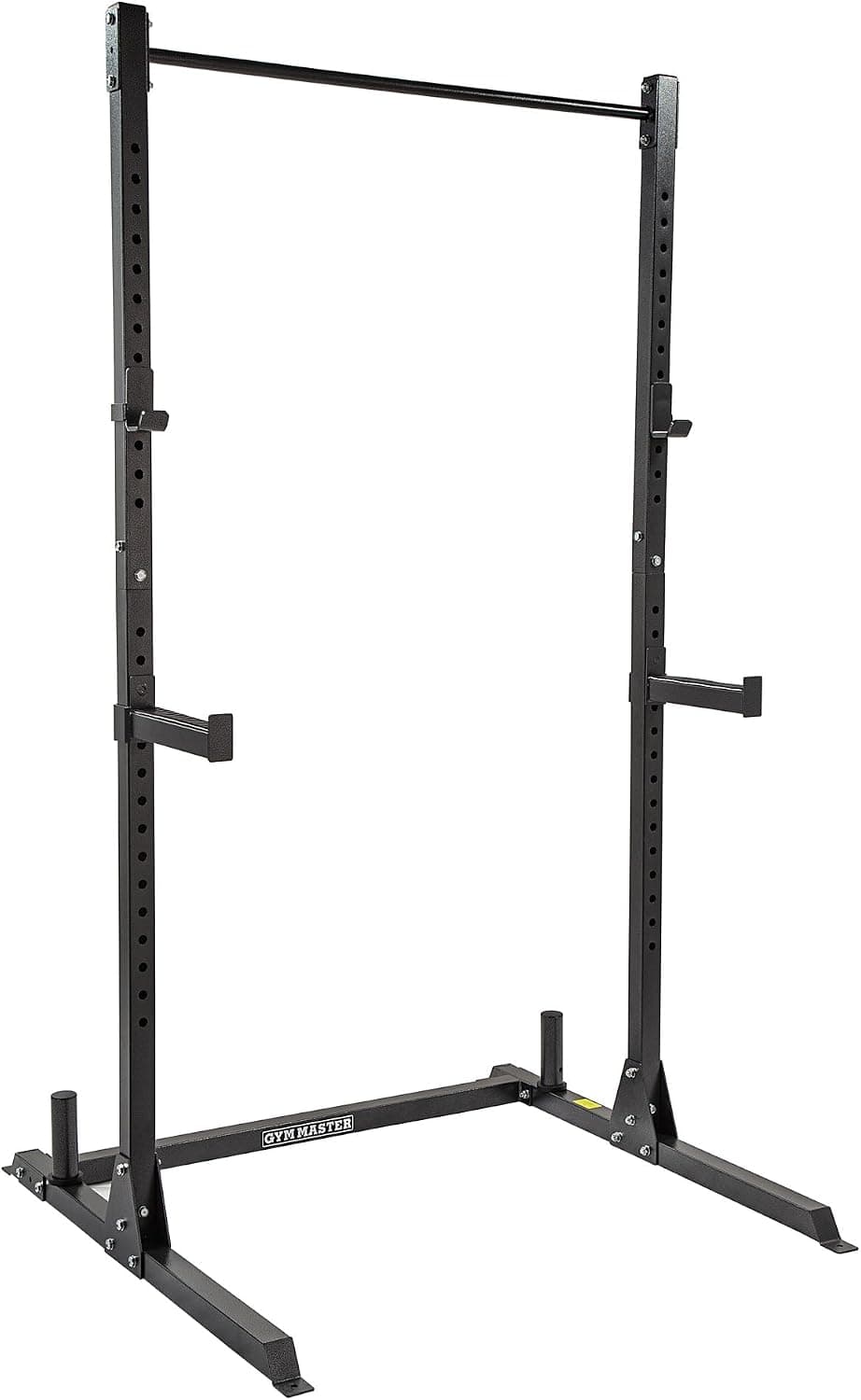
Home Gym
Best Squat Rack UK 2026: Squat Racks, Stands and Half Racks
The best squat racks in the UK for 2026, compared on weight rating, height range and spotters. Cheap squat stands, half racks and a full cage for home gyms at every budget.

By Mike Shilling, Recovery & Training Editor · Updated 13 August 2026
We may earn a commission from qualifying purchases made through links on this page, at no extra cost to you. This never affects our ratings.
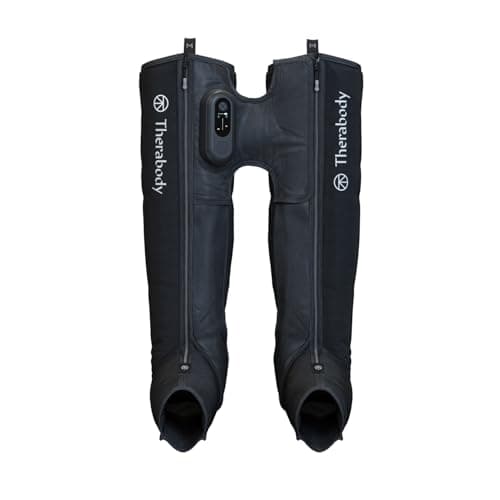
Therabody spent a decade convincing people that a percussive massager belongs in a kit bag, and the JetBoots are the same argument applied to compression. Every other recovery boot on the market ties you to a pump box by a hose. These do not: the pump, battery and controls live inside the boots themselves, they fold up roughly like a pair of trousers, and they ship with a drawstring backpack.
That's the whole pitch, and it's a better pitch than it sounds. Whether it's a £469 pitch depends entirely on how honest you're willing to be about what compression actually does.
How we review
This review is based on Therabody's published specifications, the recurring themes in verified owner reviews on Amazon UK, and the peer-reviewed research on intermittent pneumatic compression. We have not run our own multi-month test of this unit, so we report what shows up consistently rather than one person's impression. Specifications and prices were correct at the time of writing.
Runners and cyclists who travel to races, anyone whose living room has no sensible place to park a pump unit, and people who have already decided they want compression and would rather pay for the version they'll use. The portability is not a gimmick if you spend weekends in hotels.
It's the wrong buy if you want fine pressure control, if you need zone isolation to work on one calf, or if you're weighing compression against a first massage gun. The best massage gun guide covers cheaper ground that does more.
Pick up a set of traditional recovery boots and you're handling a control unit, two hoses and two cuffs, and everything has to be laid out on the floor near a plug. The JetBoots collapse that into two objects. There's a control panel with LED indicators built into each boot, four time intervals and four pressure levels, and no phone required.
The practical consequence is that sessions happen. You can sit on the sofa rather than on the floor next to the socket, shuffle to the kitchen without unplugging anything, and throw them in a bag for a marathon weekend where a pump box would have stayed at home. About 3 hours of runtime covers a week of use, and the ability to run them plugged in removes the one failure mode of every cordless device.
Weight is around 2.8kg for the pair, which is heavier than it sounds when it's on your back at an airport, but still packable.
| Design | Fully wireless, pump and battery built into the boots |
|---|---|
| Chambers | 4 overlapping, TruGrade pressure scaling |
| Pressure levels | 4 (mmHg range not published) |
| Time settings | 4 intervals |
| Battery | Around 3 hours, usable while charging |
| Weight | Approximately 2.8kg the pair |
| Included | Drawstring backpack |
| Price | Around £469 at the time of writing |
Four overlapping chambers inflate in sequence from foot to thigh, and the overlap is the part worth noting: chambers that meet at a hard boundary create a pressure gap at the join, which is where cheaper boots feel like they're pinching at the knee. Therabody's TruGrade system adjusts the pressure delivered in each chamber according to leg size, so a smaller calf gets proportionally less inflation rather than the same volume of air a larger leg receives.
That's sensible engineering. What frustrates me is the lack of published numbers. FIT KING will tell you its unit runs 40 to 150 mmHg across 12 steps. Therabody says four science-backed levels and leaves it there, which makes cross-brand comparison impossible and reads more like marketing than specification.
Compression boots feel excellent. The research is far less enthusiastic. A systematic review and meta-analysis pooling 17 studies and 319 participants found lower-limb intermittent pneumatic compression produced a trivial to small benefit for muscular function and a trivial to moderate effect on pain and soreness, with highly variable effects on markers of muscle damage (PubMed). A meta-analysis of pressotherapy for delayed onset muscle soreness landed in similar territory (PMC).
That means you're buying reduced perceived soreness and 20 pleasant minutes with your legs up, which is a legitimate thing to buy. It doesn't mean you'll train harder next week. Anyone expecting a performance return on £469 will be disappointed, and I'd rather say that plainly than sell the boots on a claim the literature won't support.
One safety point that applies to every brand: don't use compression if you have a suspected clot. The NHS guidance on deep vein thrombosis is the place to start if you have unexplained swelling, pain or warmth in one leg.
Owners consistently praise the setup time and the absence of cables, and consistently raise sizing. Get the inseam measurement right, because a cuff that's too short bunches behind the knee and the pressure distribution goes uneven. The zips are chunky and easy to work while seated, which is more than can be said for some rivals.
The four time intervals top out at a length that suits most protocols, and the auto shut-off means falling asleep in them isn't a problem. Noise is a low pump hum rather than the compressor rattle you get from budget units, so you can watch television over the top of it.
Cleaning is wipe-down only, and after a summer of use in shorts you'll want to do it more often than the manual suggests.
At £469 the JetBoots Prime sit above the FIT KING FT-109A at around £270, which gives you 12 pressure levels, a 40 to 150 mmHg range and zone isolation for £200 less, while being slightly less polished and slightly less portable. The Hyperice Normatec 3 is the other premium option and remains hose-tethered.
Buy the Therabody if portability and simplicity are what will get you using them. Buy the FIT KING if you want more control per pound. Both are better value than the £900 professional systems for anyone who isn't training twice a day.
If cordless convenience is what would make you actually use compression, yes. The absence of a hose and pump box changes the experience more than the specification sheet suggests, because you can sit anywhere, move around, and pack them in a bag for a race weekend. If you are buying on evidence of faster recovery, no; the research on pneumatic compression shows modest effects on soreness and little else, and cheaper boots deliver the same squeeze.
Therabody quotes around 3 hours of use per charge, which is six to twelve sessions depending on length. They can also run while plugged in, so a flat battery does not cost you the session. That is a meaningful practical advantage over cordless rivals that stop dead when the charge goes.
Prime is the simpler, cheaper model in the range with a one-touch control panel built into the boots, 4 chambers and 4 pressure levels. The step-up models add app control, more granular settings and extra features such as vibration or light therapy depending on the version. For most people the Prime does the job and the extra money buys settings you will rarely change.
Therabody does not publish an mmHg figure for the Prime, quoting 4 science-backed pressure levels handled by its TruGrade system, which scales pressure to the size of your leg across 4 overlapping chambers. That is less transparent than rivals such as FIT KING, which state a 40 to 150 mmHg range across 12 steps. In use the top level is firm without being uncomfortable for most people.
Check Therabody's size chart against your inseam rather than your height or shoe size, and if you are between sizes go up. Cuffs that are too tight bunch at the knee and apply pressure unevenly, which is the most common complaint about every brand of compression boot, not just this one.
Yes, for healthy legs, at 15 to 30 minutes a session. Avoid them entirely if you have a suspected blood clot, an open wound or skin infection on the leg, severe peripheral arterial disease or uncontrolled heart failure, and see a GP first about unexplained leg swelling.
The best squat racks in the UK for 2026, compared on weight rating, height range and spotters. Cheap squat stands, half racks and a full cage for home gyms at every budget.
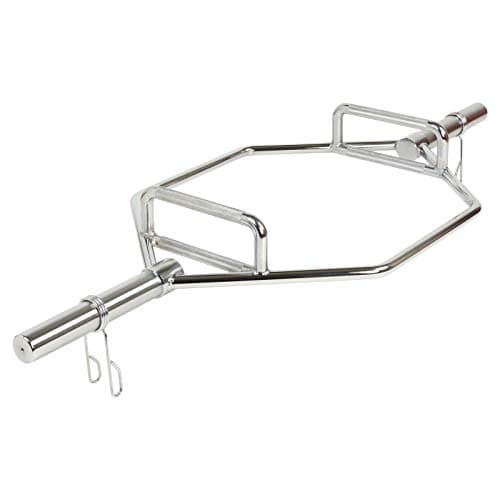
The best trap bars and hex bars in the UK for 2026, for home and garage gyms. Honest picks for deadlifts, shrugs and farmer's carries, from budget 1 inch shrug bars to premium open frames.
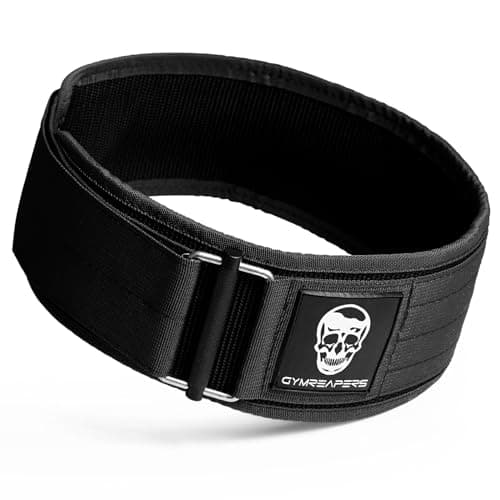
The best weight lifting belt for UK lifters in 2026, from an £18 leather belt to a 13mm lever belt. Thickness, buckle type and sizing compared for squats and deadlifts.
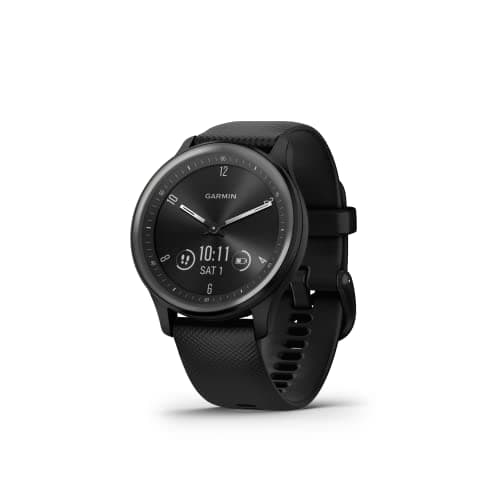
Garmin vivomove Sport review for UK buyers: analogue hands over a hidden OLED, Body Battery and Pulse Ox at £150, but no GPS, no Garmin Pay and a tiny screen.
Best Exercise is a participant in the Amazon EU Associates Programme, an affiliate advertising programme designed to provide a means for sites to earn advertising fees by advertising and linking to Amazon.co.uk. As an Amazon Associate we earn from qualifying purchases. This comes at no extra cost to you and never influences our independent reviews or rankings.