Home Gym
Cambered Bar Explained: Squat, Bench and Swiss Bar Types
What a cambered bar is, the three main types (cambered squat bar, bowed bench bar, cambered Swiss bar), what each one does, how much they weigh and how to buy one.

By Jacob Chambers, Founder & Lead Reviewer · Updated 25 July 2026
We may earn a commission from qualifying purchases made through links on this page, at no extra cost to you. This never affects our ratings.
Sunny Health & Fitness
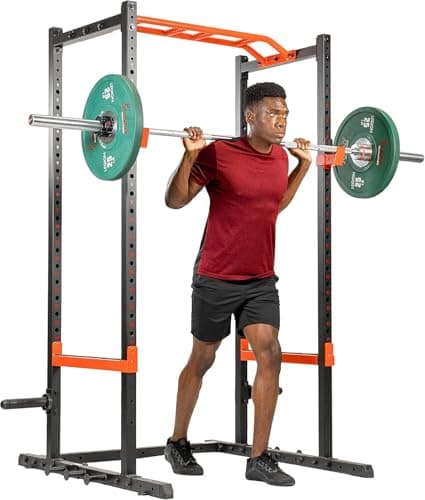
The Sunny Health & Fitness Power Zone Strength Rack is a full four-post power cage built for people kitting out a garage or spare-room gym who want to squat, bench and overhead press heavy without a training partner stood behind them. It's aimed at the lifter who has outgrown a pair of squat stands and wants proper safety bars, but who would rather not spend £600 or more on a Rogue. Sunny is a long-established US home-fitness brand, and this is one of their more sensible bits of kit for anyone lifting on their own.
Here's the short version. For around £250 you get a stable, genuinely heavy-gauge cage with adjustable J-hooks, spotter bars, a pull-up bar and band pins, which is a lot of usable rack for the money. It won't feel like a commercial cage up close, the assembly eats an afternoon, and the headline 455kg capacity is a whole-frame figure rather than a guarantee for every rep. As a first serious rack for a home lifter, though, it nails the part that matters: it keeps you safe under a loaded bar.
How we review
This review draws on verified owner reviews, hands-on write-ups from trusted equipment reviewers and Sunny's published specifications. We haven't bolted this exact unit into a garage for a year of testing, so we've stuck to the things owners report again and again, the praise and the gripes both, rather than leaning on any single opinion.
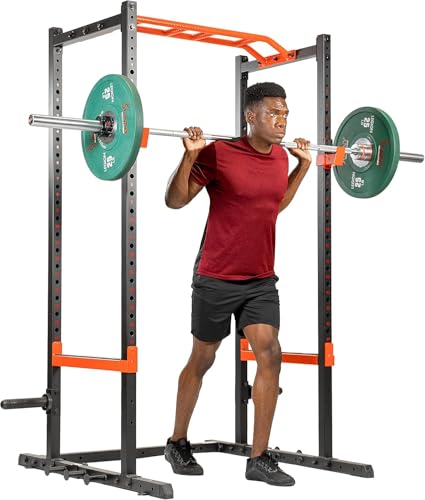
This cage earns its place if you train alone and lift enough that dropping a bar on yourself is a real risk. Squatting to depth, benching to your chest, pressing overhead: all of it gets safer inside a cage with the spotter bars set just below your working range. If you only do dumbbell work or light circuits, it's more steel than you need, and a simple squat stand would free up floor space. Beginners who plan to add weight over the next few years get the most from it, because the frame will still be relevant once you're squatting well above bodyweight. For the wider picture, our best power cage UK guide and best squat rack UK guide show where this sits against the alternatives.
Once it's together, the Power Zone feels solid. The uprights are thick-walled steel, and with a loaded bar sitting on the J-hooks there's very little of the sway you get from lightweight stands. Sunny doesn't require you to bolt it down, and most owners run it freestanding on rubber matting, but if you do explosive pulls or you kip on the pull-up bar, a couple of concrete anchors kill any rocking for good. The thing to check against your room is the footprint and the height: it wants a flat, solid floor, and the pull-up bar adds clearance you need overhead.
Assembly is the low point. There are a lot of bolts, the instructions are functional at best, and a second person makes lining up the uprights far less painful. The powder coat and welds are tidy for the money without being showroom-perfect, so you'll spot the odd rough edge if you go hunting for one. None of that changes how it holds a bar.
| Type | Four-post power cage / squat rack |
|---|---|
| Max frame capacity | Approx 455 kg (1000 lb) |
| Frame material | Heavy-gauge steel |
| J-hooks | Adjustable, included pair |
| Safety bars | Adjustable spotter bars, included pair |
| Pull-up bar | Integrated multi-grip, adjustable height |
| Resistance bands | Band pins included for banded work |
| Accessory mounting | Multiple holes up the uprights |
| Bar compatibility | Fits a standard 7ft Olympic barbell |
| Assembly | Bolt-together, home assembly required |
Racking a bar is straightforward once you've set the J-hook height, and the hooks are deep enough that you're not fishing around for them after a hard set. Squatting is what this frame does best: the uprights don't budge under a heavy back squat, the hook spacing suits a normal setup, and the safety bars mean you can push a set to genuine failure and just sit the bar down on the pins.
Benching inside the cage works if you own a flat bench that fits between the uprights, and the internal width takes a standard one with room to unrack. Set the safety bars to catch a failed press and you can bench alone without a hand-off, which is the whole point of buying a cage rather than stands. Up top, the pull-up bar is a real bonus rather than an afterthought, with enough grip positions for wide, close and neutral-ish hands, though taller lifters should confirm they can hang without brushing the ceiling.
At around £250 the Power Zone sits a long way under the obvious commercial names. A Rogue R-3 or a comparable Titan four-post cage runs well past £500 once shipping is in, and those cages are built to a higher standard with thicker steel and cleaner tolerances. What the extra money buys there is longevity under years of abuse and a deeper accessory range, not a safer squat today. For a home lifter, the Sunny does the same core job: it holds the bar, it catches the bar, and it lets you train hard on your own.
There's a strong case that strength training is one of the most useful things you can do for long-term health, and you don't need a £600 rack to get it. The NHS recommends muscle-strengthening work on at least two days a week covering all the major muscle groups, and regular activity is linked to a lower risk of heart disease, type 2 diabetes and several cancers. You also don't need heroic volume to make progress: one resistance-training study found meaningful strength gains from short, low-set sessions, which is exactly the kind of consistent training a home cage like this is built around. To complete the setup, pair it with a solid bar and bench from our best barbell UK guide and best weight bench UK guide.
Check price on AmazonRecommended reads
Sunny quotes a maximum of roughly 455kg (1000lb). Read that as a whole-frame rating rather than a promise for every single J-hook under a heavy single. For any realistic home working weight, including squats and presses well above bodyweight, it has plenty of headroom.
No, Sunny doesn't require it, and most owners run it freestanding on rubber matting with no drama. If you do explosive pulls or you kip hard on the pull-up bar, two concrete anchors through the base will stop any rocking. On a flat, solid floor with a loaded bar sitting in it, the cage stays planted on its own.
Yes. A 7ft Olympic bar rests across the J-hooks with the loadable sleeves sitting outside the uprights, which is normal for a four-post cage. A shorter women's or fixed bar works too. The one thing to check is your room width, so you have space to load plates on both ends.
For a solo home lifter it's one of the better-value ways to squat, bench and press safely. The spotter bars catch a failed rep, the frame doesn't sway under load, and the pull-up bar adds pulling work. Measure your ceiling height first, because the top bar needs clearance for hanging.
In the box you get adjustable J-hooks, a pair of adjustable safety spotter bars, an integrated multi-grip pull-up bar and resistance band pins. The uprights carry multiple mounting holes for adjusting everything. There's no lat pulldown or cable stack included, and bolting a third-party one on later isn't always tidy.
It doesn't match one on steel thickness, tolerances or finish, and it won't take the same abuse over decades. What it does is the same core job for less than half the price: hold the bar, catch the bar, keep you safe training alone. A Rogue R-3 buys you longevity and a bigger accessory ecosystem, not a safer squat this afternoon.
What a cambered bar is, the three main types (cambered squat bar, bowed bench bar, cambered Swiss bar), what each one does, how much they weigh and how to buy one.
What a landmine attachment is, the rack-mounted, plate-post and floor platform types, how to check bar and rack fit, safety tips, and the best exercises to do.
What a safety squat bar is, how much it weighs, how it changes your squat compared with a straight bar, who it suits and what to check before buying one in the UK.
What a Swiss bar (football or multi-grip bar) is, how much it weighs, why the neutral grip suits sore shoulders, the best exercises and what to check when buying.
Best Exercise is a participant in the Amazon EU Associates Programme, an affiliate advertising programme designed to provide a means for sites to earn advertising fees by advertising and linking to Amazon.co.uk. As an Amazon Associate we earn from qualifying purchases. This comes at no extra cost to you and never influences our independent reviews or rankings.