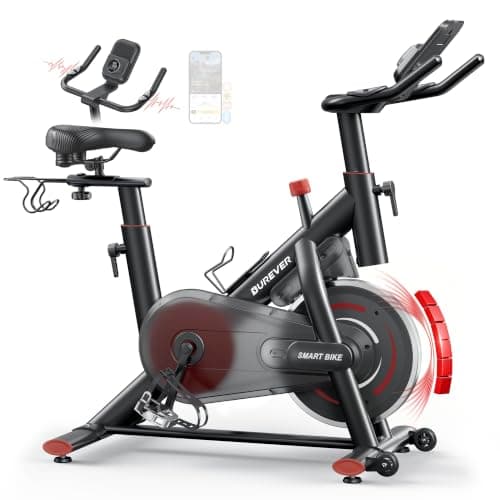
Exercise Bikes
Burever Exercise Bike Review: Touchscreen, 170kg Limit, Big Claims
Our Burever exercise bike review: the touchscreen goal console, 0-100% magnetic resistance, 170kg limit, Zwift support without a power meter, and who should buy it.

By Paul Kendrick, Cardio & Endurance Editor · Updated 27 July 2026
We may earn a commission from qualifying purchases made through links on this page, at no extra cost to you. This never affects our ratings.
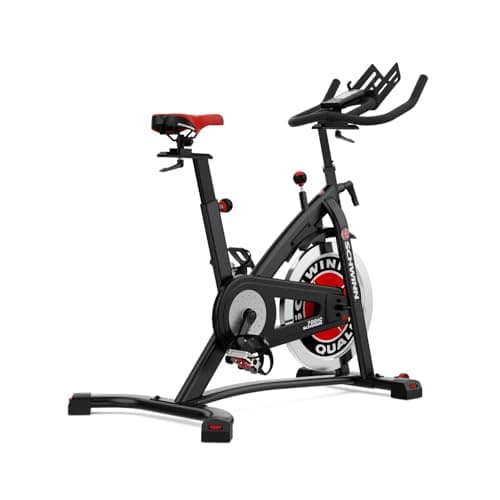
The Schwinn 700IC is an old-fashioned studio bike in the best sense. No touchscreen, no subscription built into the price, no automatic resistance. It gives you an 18.1kg flywheel, a silent belt drive, a friction lever and a small LCD, and then leaves you alone. At around £550 on Amazon UK it sits between the £200 bikes that wobble under a sprint and the £1,500 smart bikes that need an app to function.
Schwinn has been making indoor cycles for gyms for decades, and the 700IC (sold in some markets as the IC7) borrows the geometry and adjustability from those commercial machines. The compromises are all in the electronics, which is the right place for them if you are buying a bike to ride rather than a screen to watch.
How we review
This review draws on Schwinn's published specifications, verified owner reviews on Amazon UK, and coverage from established fitness testing outlets. We have not run our own long-term test of this specific unit, so we report the findings that recur consistently across sources rather than one-off impressions.
A rider who wants a proper studio bike feel and already has a tablet, a phone and maybe a heart rate strap. The 700IC handles standing climbs and out-of-the-saddle sprints without the frame walking across the floor, and the SPD pedals mean you can clip in properly rather than jamming trainers into a cage. Cyclists training indoors over winter will find the position adjustable enough to roughly match their road bike fit.
It is the wrong bike if you want structured, data-led training. Without power measurement or numbered resistance you cannot repeat an interval session precisely, and if that matters to you a Keiser M3i or a smart bike is the better spend. Our best spin bike UK guide covers both ends of that.
Flywheel weight is the specification everyone quotes and it is only half the story, but 18.1kg is genuinely heavy for a home bike and you feel it. The wheel carries momentum through the dead spots in your pedal stroke, so the ride is smooth rather than pulsed, and it makes standing climbs feel like climbing rather than like fighting a machine. Belt drive means no chain slap and no maintenance beyond an occasional wipe.
Resistance comes from a felt pad pressing down on the flywheel, controlled by a lever that also functions as the emergency stop if you push it hard. Because it is friction rather than magnetism, the adjustment is continuous: there are no levels, just more or less. That feels natural while riding and frustrating afterwards, because "a bit past halfway" is not a training log entry. The pad also wears over time and eventually needs replacing, which magnetic bikes never do.
Adjustability is where the commercial heritage shows. Seat and handlebars both move horizontally and vertically, and the handlebars offer several grip positions, so a rider can genuinely dial in a road-like fit rather than accepting whatever the bike gives them. A systematic review of indoor cycling found improvements in aerobic capacity, blood pressure and body composition across studies, with the caveat that the underlying evidence base is thin on randomised trials (Medicina, 2019). Whichever bike you buy, the riding does the work.
| Flywheel | 18.1 kg / 40 lb |
|---|---|
| Drive | Belt |
| Resistance | Felt pad friction, infinitely variable, lever with emergency stop |
| Pedals | Dual sided, SPD clips and toe cages |
| Console | LCD showing time, distance, calories, RPM and heart rate |
| Heart rate | 5 kHz wireless telemetry |
| Adjustability | Seat and handlebars, horizontal and vertical |
| Max user weight | 136 kg / 300 lb |
| Dimensions | 138.7 x 78 x 126.5 cm |
| Assembled weight | 46.7 kg |
| App | JRNY compatible |
The LCD is small and does the basics: time, distance, calories, RPM and heart rate. There is no watts figure, no resistance number and no gradient. If your training plan says "4 minutes at 250W", this bike cannot help you follow it.
The heart rate system is the more dated part. It reads 5kHz analogue telemetry, the standard from a decade ago, which means a modern Bluetooth chest strap will not pair with the console. You can still wear one and read it on your phone, and honestly that is what most riders do; our heart rate monitor guide covers straps that work well alongside a tablet.
JRNY is Schwinn's own app, with guided rides and adaptive coaching, and the media rack is positioned to hold a tablet at eye level. It works, though the bike cannot feed data into it the way a smart bike would, so JRNY sessions rely on you following instructions rather than the app watching your effort. Riding with the Peloton or Zwift app on a tablet is a common workaround, and a cheap cadence sensor clipped to the crank fills part of the data gap. Full specifications are on the official Schwinn product page.
Around £550 buys you commercial-grade geometry, a heavy flywheel and pedals you do not have to replace, with the money that would otherwise go into a screen left in your pocket. Against the Schwinn 800IC, the 700IC drops magnetic resistance and the larger console but keeps the frame quality, which makes it the better buy if you were never going to use the extras. Against the Keiser M3i, it loses badly on data and durability of the resistance system, and wins on price by a wide margin.
The felt pad is the thing to weigh up. Replacement pads are cheap and the job takes minutes, but it is a maintenance task magnetic bikes simply do not have, and heavy riders will get through them faster. If that irritates you on principle, spend more and buy magnetic. If you just want to ride hard three times a week and be left alone by software, this is a lot of bike for the money. More options are in our exercise bikes section and the smart exercise bike guide.
Regular indoor cycling is a straightforward way to hit the NHS target of 150 minutes of moderate activity a week without weather, traffic or daylight getting a vote.
It is a good traditional studio bike. The 18kg flywheel and belt drive give a heavy, road-like feel, the dual SPD pedals take cycling shoes or trainers, and the frame handles a 136kg rider without complaint. What it is not is a smart bike: there are no numbered resistance levels, no power meter and no data broadcast to Zwift.
No. It uses a felt friction pad pressing on the flywheel, adjusted by a lever that also doubles as the emergency brake. That gives infinitely variable resistance rather than numbered steps, which feels smooth but means you cannot dial in exactly the same setting twice. The pad is a wear item and will eventually need replacing.
Not directly. The console reads heart rate over 5kHz analogue and does not broadcast speed, cadence or power over Bluetooth, so third-party apps cannot see the bike. People do run the Peloton or Zwift app on a tablet on the media shelf and ride by feel, and adding a separate cadence sensor is a cheap workaround. Schwinn's own JRNY app is the supported route.
Dual-sided pedals with SPD clips on one face and toe cages with straps on the other, so you can ride in cycling shoes or ordinary trainers without changing anything. That is a genuine advantage over bikes that ship with cages only and expect you to buy pedals separately.
Roughly 139cm long by 78cm wide, standing about 127cm tall, and it weighs 46.7kg assembled. Front transport wheels let you tip and roll it. Leave a little clearance at the back for the flywheel guard and enough room either side to get on and off comfortably.
If you ride hard and often, yes. The 18kg flywheel, the SPD pedals and the four-way adjustable seat and bars are all a clear step up from £200 bikes, and the frame does not creep across the floor during a sprint. For casual riding two or three times a month, a cheaper bike does the job.
Our Burever exercise bike review: the touchscreen goal console, 0-100% magnetic resistance, 170kg limit, Zwift support without a power meter, and who should buy it.
Spin bike vs exercise bike compared on riding position, flywheel, resistance, comfort, noise and price, with a clear verdict on which suits your training.
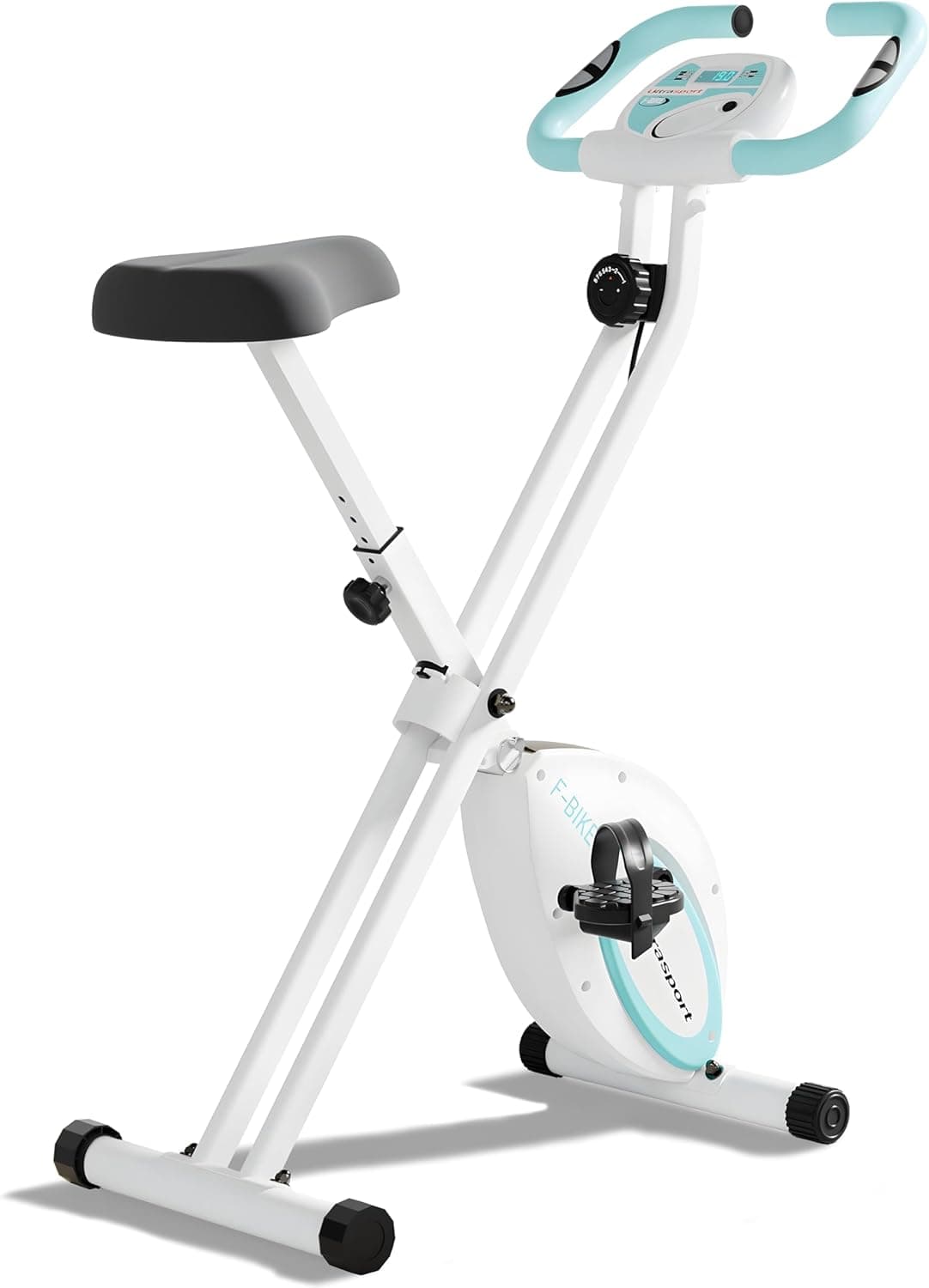
The best foldable exercise bike for UK homes, from budget mini pedallers to a 140kg-rated smart bike and a comfy recumbent. Folded sizes, weight limits and honest downsides.
Is Peloton worth it in the UK? We do the 1-year and 3-year maths on the Bike, Bike+, refurbished and rental options against a £400 bike with the app or Zwift.
Best Exercise is a participant in the Amazon EU Associates Programme, an affiliate advertising programme designed to provide a means for sites to earn advertising fees by advertising and linking to Amazon.co.uk. As an Amazon Associate we earn from qualifying purchases. This comes at no extra cost to you and never influences our independent reviews or rankings.