Outdoor Pull Up Bar: How to Choose, Install and Weatherproof One
By Jack Atkins, Home Gym Equipment Specialist · Updated 1 November 2026
An outdoor pull up bar is a steel bar fixed in your garden, either on concreted-in posts, strapped to a tree or post, or bolted to an exterior wall, and the material matters more than anything else on the spec sheet. Buy galvanised or stainless steel if it'll live outside permanently, or powder-coated steel if you're willing to touch up chips. Then fix it to something that can take a swinging 100kg load. Get those two things right and a garden bar will outlast most indoor kit.
The rest of this guide covers what's specific to outdoor use: rust, installation, what goes underneath and how to keep your grip when the British weather does its thing. If you're still deciding between styles, our pieces on the wall-mounted pull up bar and the free-standing pull up bar go deeper on those designs.
How we researched this
We haven't installed an outdoor bar for this guide. We compared manufacturer listings and install instructions, UK fencing and post-fixing guidance, and owner feedback on outdoor bars sold in the UK, then cross-checked grip advice against published research.
Steel finish: the one decision you can't undo
Rain isn't the real problem. Constant damp is, especially through a UK winter when the bar never fully dries between November and March. The finish decides how the steel copes.
Hot-dip galvanised steel is dipped in molten zinc, which bonds to the surface and corrodes slowly in place of the steel underneath. Scratches don't spread rust the way they do on paint, because the surrounding zinc keeps protecting the bare patch. It's what playground and street-workout frames tend to use, and it's the best choice for a bar you'll never bring in. The downside is looks (a dull grey that whitens over time) and a slightly rough feel some people dislike.
Powder-coated steel has a baked-on polymer layer. It looks smarter and comes in black, which is why most retail outdoor bars use it. It protects well until it chips, and then water creeps under the coating and rust spreads sideways where you can't see it. Pull-up bars take a lot of knocks from rings, carabiners and straps, so chips do happen.
Stainless steel barely needs thinking about once it's up, though it costs more and polished stainless gets slippery when wet. A brushed or knurled finish helps.
Avoid chrome-plated indoor bars outside entirely. Chrome over mild steel pits and flakes once moisture gets behind it, and a doorframe bar was never designed for a garden.
Installation options
Concreted-in posts
Two posts set in concrete with a bar between them is the sturdiest garden setup and the only one that'll handle muscle-ups and kipping without worry. You can buy galvanised kits or build your own.
Depth is where DIY builds go wrong. Fence-post guidance usually puts a third to a half of the post's above-ground height into the ground, going deeper in sandy or loose soil and shallower in firm clay. A fence panel mostly resists wind, though. A pull-up bar takes jerky, side-to-side loads every time someone swings, so treat that range as a minimum. For a bar sitting about 2.2m high, holes of roughly 75cm to 1m make sense, around 30cm wide.
Fast-setting post mix like Postcrete is convenient. Jacksons Fencing's guide describes filling the hole about a third with water, pouring in the mix and letting it set in roughly 5 to 10 minutes, with a minimum working temperature of 3°C. That's a set, not full strength. Plenty of builders prefer a conventional concrete mix for anything structural and leave it several days before hanging off it, which is the cautious call for a bar carrying your full bodyweight.
A few things that help:
Put 10cm or so of gravel in the bottom of each hole so water drains away from the post base instead of pooling.
Use a spirit level on both posts and a string line between them; a bar that's 2cm out of level is noticeable on every rep.
Call before you dig if there's any chance of buried cables or pipes, and keep clear of drains.
Leave room. You want at least 60cm clear in front and behind for swinging, more for muscle-ups.
Tree and post straps
Strap mounts wrap ratchet straps around a tree trunk, a thick branch or a sturdy post and hold a steel bracket against it. They need no digging and come off when you move house, which suits renters.
The Pullup & Dip outdoor package is the best-known example sold in the UK. It's powder-coated steel and mounts on a tree or post with straps, and the bar doubles as a dip station.
Be careful with trees, though. Only use a healthy, mature tree with a trunk well over the thickness of your thigh, never a dead or split limb, and never drill or screw into it. Straps rub the bark as you swing, so check underneath every few weeks and shift the mount slightly if the bark starts wearing. A tree also flexes, so a tree-mounted bar always feels a bit livelier than one on concrete posts.
Exterior wall mounting
A wall-mounted bar on solid brick works outdoors, and it's the most space-efficient option for a small garden or yard. Use stainless or galvanised fixings (zinc-plated indoor bolts will rust and stain the brickwork), drill into the brick itself rather than the mortar joints, and run a bead of exterior sealant around each fixing so water can't track into the wall. Don't mount onto rendered blockwork, a fence, a shed or a garage built from single-skin block without checking it can carry the load.
If the bar you've got is a general-purpose wall model, check the listing says it's rated for outdoor use. The Luckyone wall-mounted bar is one of the cheaper ones sold as suitable for indoor and outdoor use, with a six-hole bracket design.
Scaffold tube joined with key clamp fittings is the classic DIY route, and for good reason. Galvanised tube and clamps are cheap, weatherproof and easy to adjust, and you can build a rig with multiple bar heights, a dip station and ring anchors for less than most retail outdoor stations. The posts still need concreting in properly, and you'll want to tighten the clamp grub screws with an Allen key and recheck them after the first few weeks. Ordinary scaffold tube is 48.3mm across, which is a thick grip for most hands. Great for forearms, harder for high reps.
Ground spikes, the screw-in or hammer-in anchors used for gazebos and trampolines, don't belong under a pull-up bar. They're designed to stop things blowing over, not to resist a swinging adult.
What goes underneath
Grass is fine for the first month. After that, a bar you use most days wears a bald, muddy patch exactly where you land, and in winter that patch never dries.
Rubber is the long-term fix. Heavy rubber stable mats or interlocking tiles drain well, don't rot and take a dropped landing without fuss; look at our gym flooring guide for what thickness to buy. Play-grade bark chip, laid 10cm to 15cm deep over a weed membrane, costs less and gives a softer landing, though it scatters and needs topping up every year or so. Paving or decking is solid underfoot but punishes a slip off the bar, and wet decking is genuinely slippery.
Grip in British weather
A wet bar is the biggest outdoor safety issue, and you'll face it most mornings from October onwards thanks to dew alone. Keep a dry towel by the back door and wipe the bar down before every set.
Chalk helps, though the research is mixed in an interesting way. In one study of 19 climbers, chalk didn't change the measured friction between hand and hold, yet participants hung for longer with chalk (around 63 seconds versus 49 without). For pull-ups, longer hangs are what you're after. Apply chalk to dry hands only; on a wet bar it turns to paste.
Cold matters too. Bare steel at 2°C drains heat from your fingers quickly, and numb hands grip badly. Thin gloves or a foam grip sleeve are fine for basic pull-ups in winter, but take them off for anything where you'd fall hard if you slipped. And skip dynamic moves like the muscle-up entirely on a wet or frosty bar.
Year-round maintenance
None of this takes long, but outdoor bars punish neglect:
Monthly: check every bolt, clamp and strap for tightness, and give the bar a hard tug before you hang from it.
Every few months: look for chips in powder coat and touch them up with a matching metal paint before rust gets going. On galvanised steel, white powdery spots are normal zinc oxide and nothing to worry about.
Before winter: wire-brush and treat any rust spots, re-seal wall fixings and check post bases for movement or soil washing away.
Strap mounts: inspect webbing for fraying or UV fading, which weakens it, and replace straps that look tired.
A cover isn't essential for galvanised or stainless bars. On a powder-coated bar, a simple cover over the bar section keeps it drier and cuts down on the morning towel routine.
Choosing your setup
For permanence and every kind of training, concrete-in galvanised posts or a key clamp build win. Renters and anyone who wants zero digging should look at a strap mount on a sturdy tree or post. Got a solid brick wall and little floor space? A wall bar with stainless fixings is the neat answer.
Whichever you pick, starting from zero is normal. Assisted pull-ups with a resistance band looped over the bar get most people to their first strict rep, and an outdoor bar makes that daily practice easy to fit in. For indoor options and a wider shortlist, see our pick of the best pull up bars in the UK.
Yes, if it's built for it. Hot-dip galvanised or stainless steel bars cope with a British winter with almost no attention. Powder-coated bars also last outdoors, but only while the coating stays intact, so you need to touch up chips before rust gets underneath. A cheap indoor bar with thin paint will rust within a season.
How deep should outdoor pull up bar posts be concreted?
Fencing guidance generally puts a third to a half of the post's above-ground height into the ground, with the deeper end for sandy or loose soil. For a bar standing around 2.2m tall, that means holes of roughly 75cm to 1m. Pull-ups and kipping put sideways, swinging loads on the posts, so err deep rather than shallow.
Is it safe to put a pull up bar on a tree?
It can be, on a healthy, mature tree with a thick trunk or branch and a strap-based mount that doesn't screw into the bark. Never bolt into a tree you care about, avoid dead or cracked limbs, and check the straps and the bark under them every few weeks, because trees move and grow.
What should go under an outdoor pull up bar?
Grass wears into a muddy patch quickly under a bar you use most days. Rubber matting or interlocking rubber tiles give the best mix of drainage and cushioning, while a 10cm to 15cm layer of play-grade bark is cheaper and softer to land on. Paving works but is unforgiving if you drop off the bar.
How do you stop your hands slipping on a wet outdoor bar?
Wipe the bar with a dry towel before each set, use chalk on dry hands, and consider a bar with a knurled or textured finish. Some people fit a small rain cover over the bar between sessions. A wet, smooth chrome bar is the worst case and isn't safe for dynamic moves like muscle-ups.
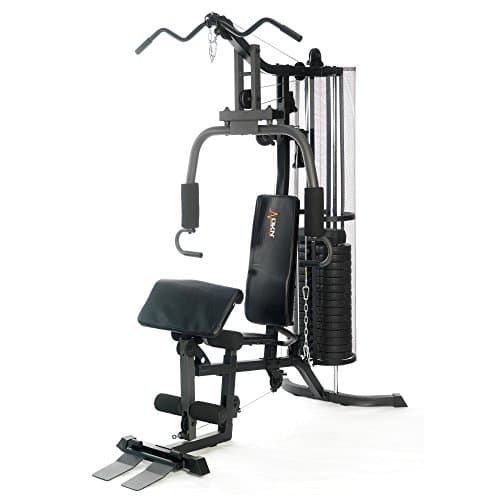
The best multi gyms in the UK for 2026, compared on stack weight, footprint and height: 45kg compact stations to 102kg weight stacks, Smith machines and cable cages. Footprints, user limits and who each one suits.
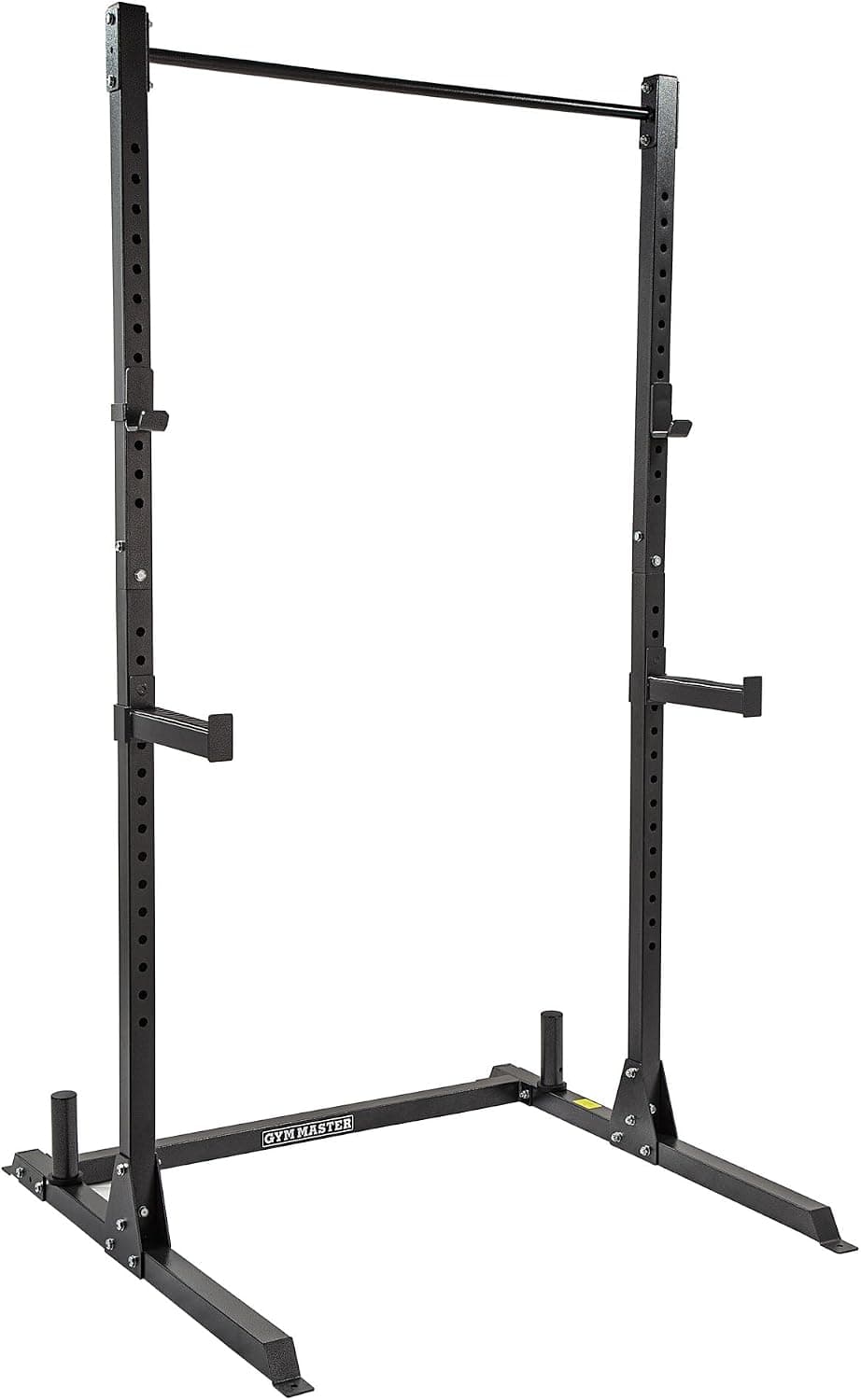
The best squat racks in the UK for 2026, compared on weight rating, height range and spotters. Home squat rack picks from £80 stands to a full cage, plus the room you need for each.
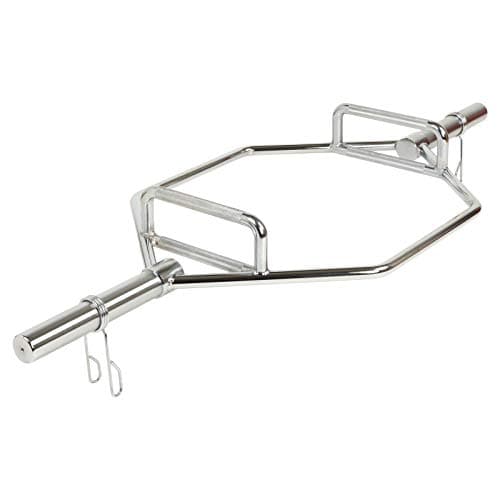
The best trap bars and hex bars in the UK for 2026, with the hex bar weight of every pick (21kg to 27kg for Olympic frames). Honest picks for deadlifts, shrugs and farmer's carries.
The best adult weighted blanket for UK sleepers in 2026, from a £23 8kg budget pick to a £95 cooling bamboo model. Honest picks for hot sleepers, heavier users and daytime use, plus how to choose the right weight and what the research shows.
Best Exercise is a participant in the Amazon EU Associates Programme, an affiliate advertising programme designed to provide a means for sites to earn advertising fees by advertising and linking to Amazon.co.uk. As an Amazon Associate we earn from qualifying purchases. This comes at no extra cost to you and never influences our independent reviews or rankings.