Wall Mounted Pull Up Bar: How to Choose and Fit One Safely
By Jack Atkins, Home Gym Equipment Specialist · Updated 1 November 2026
A wall mounted pull up bar bolts directly into a solid wall and gives you the steadiest, most versatile pull-up setup you can fit in a normal home, as long as you have the right wall and the right fixings. It suits anyone who trains pull-ups regularly, owns their home (or has permission to drill) and has a brick, concrete block or timber stud wall with at least 2.4m of ceiling height. If you rent, can't drill, or only have plasterboard, a doorway bar or a free standing pull up bar is the safer pick.
Who a wall bar suits (and who it doesn't)
There are four main ways to hang from something at home. Doorway bars are cheap and need no tools, but they lever against the frame, mark paintwork and rarely like kipping. Free standing stations and power towers need no drilling at all; the catch is the floor space (roughly 1m by 1.2m) and a frame that can rock on hard reps. Ceiling mounts are great in a garage with exposed joists and pretty much useless anywhere else.
Wall bars sit in the middle. You get a rigid, permanent bar that takes up almost no floor space, usually with a choice of wide, narrow and neutral grips, and most are rated well above the weight of a single adult. The price is a proper install, which is what most of this guide covers. Our best pull up bar UK roundup compares all four types side by side if you're still deciding.
Check your wall first
This decides everything. Knock on the wall and drill a small pilot hole somewhere hidden if you're unsure, and watch what comes out.
Solid brick. The best case. Red or orange dust and steady resistance usually means solid clay brick, which takes sleeve anchors or through bolts with no fuss. Drill into the brick itself, never the mortar joints; mortar is far weaker and the fixing can pull out of it.
Dense concrete block. Grey dust, hard going. Also excellent for sleeve anchors.
Lightweight aircrete block. Common in houses built from the 1980s onwards (brand names like Thermalite and Celcon). The drill goes in almost too easily and the dust is pale and powdery. Aircrete has low pull-out strength, so standard expanding anchors are a poor choice; use a resin anchor or a fixing made specifically for aircrete, and think twice before kipping on it.
Perforated or older soft brick. Many modern bricks have holes running through them, and Victorian bricks can be crumbly. Expanding anchors can crack these or spin in the void, so resin anchors are the answer here too.
Timber stud partition. Hollow sound between studs, solid where you hit one. You can mount here, but only into the studs, and ideally via a length of 18mm plywood or a 2x6 timber board screwed across at least two of them so the load spreads. UK studs are usually set 400mm or 600mm apart, which rarely lines up with the holes on a bar bracket, and that's exactly why a backing board helps.
Plasterboard on its own, or metal studs. Don't. Plasterboard has almost no pull-out resistance under shock loading, and thin steel studs flex. Rogue's own guidance for its Monster Lite wall rigs says it is not recommended to mount directly to metal studs or drywall without significant structural reinforcement, and calls for a stringer spanning multiple wood studs (Rogue Monster Lite Wall Mount Rig product guide). That's a commercial rig maker being cautious, and it applies just as much to a £50 bar.
Dot-and-dab walls
Lots of UK masonry walls have plasterboard stuck onto them with blobs of adhesive, leaving a 10mm to 25mm gap. The brick behind is fine, but long anchors are needed to reach it, and the board will crush as you tighten unless you fit a spacer or cut the board back where the bracket sits. Check the depth with your pilot hole.
Fixings: what to use and what to bin
The bar is only as strong as whatever holds it to the wall, and the bundled hardware is often the weakest part of the whole kit.
Sleeve anchors (M10 or M12) for solid brick and dense block. They expand inside the hole and grip along their length. Use the longest ones the wall thickness allows, typically 75mm to 100mm embedment.
Through bolts or resin studs where you can get at both sides, or where you want the strongest possible fixing in masonry.
Resin (chemical) anchors for perforated brick, soft brick and aircrete. Inject the resin into a mesh sleeve, push in a threaded rod, and wait for the full cure time printed on the cartridge before you hang from it. Rushing this is the most common way people pull a bar off the wall.
Coach screws (lag bolts), roughly 8mm to 10mm by 75mm or longer, for timber studs and backing boards. Pre-drill a pilot hole so you don't split the stud.
Bin the plastic wall plugs and short wood screws if your bar came with them. They're fine for a shelf, and that's where they belong.
Standoff distance: why 50cm+ matters
Standoff is the gap between the wall and the bar, and cheap bars cut corners here. Under about 40cm, a strict pull-up feels cramped, your knees knock the wall, and you end up subtly arching your body away from it, which changes the movement.
At 50cm to 60cm most adults can do strict pull-ups and chin-ups without touching anything. If you want kipping pull-ups, toes-to-bar or muscle-ups, go longer, 60cm or more, because the swing carries your hips and feet forward and back through a much bigger arc. A longer arm also multiplies the twisting force on the top fixings, so a long standoff and a weak wall is a bad combination. Check the listed depth before you buy; not every listing gives it, and that alone tells you something.
Mounting height and ceiling clearance
Two numbers matter. First, you need to hang at full stretch with your feet off the floor, so the bar should sit a few centimetres above your standing overhead reach. For most adults that lands around 2.1m to 2.3m. Shorter users can mount lower and bend their knees, which works fine for strict reps.
Second, you need headroom. A pull-up brings your chin over the bar and the top of your head roughly 25cm to 30cm above it. A standard UK ceiling is about 2.4m, so a bar at 2.2m leaves you around 20cm, which is tight for a tall lifter. Muscle-ups need your whole torso above the bar, which in practice means a garage or a high-ceilinged room. Measure before you drill, not after.
Reading load ratings
Most wall bars list a maximum load, often 150kg to 300kg. Treat that figure carefully.
It almost always refers to the steel frame under a static load. It says nothing about your wall or your fixings, and a fast kipping rep or a dropped landing into the hang can put far more force through the bar than your body weight alone. Pick a bar rated comfortably above your weight plus any weight vest you might use, and assume the real limit is set by the fixings and the wall. A 200kg rating bolted to aircrete with plastic plugs is not a 200kg bar.
Grip options
A straight bar does the job, but multi-grip bars are where wall mounts earn their keep. A wide overhand grip leans harder on the lats and lower traps, while an underhand chin-up grip brings in more biceps and chest. In an EMG study of 25 people, the biceps and pectoralis major were significantly more active in the chin-up and the lower trapezius more active in the pull-up, with the lats working hardest in both (Youdas et al., 2010).
Neutral (palms-facing) handles are the ones people with cranky elbows or shoulders tend to love, and they make a good middle ground. Look for neutral handles roughly shoulder width apart, plus angled grips at the ends if you like variety. Foam grips are comfortable at first but wear and slip once sweaty; knurled or textured steel lasts longer.
Two wall mounted bars worth a look
We haven't fitted these ourselves. We've compared the listings, specs and owner feedback, and both were in stock on Amazon UK when we checked.
The GYM MASTER Heavy Duty Wall Mounted Pull Up Bar is a 1.2m multi-grip frame and our pick for best wall mounted bar in the pull up bar roundup. It's powder-coated steel rated to 150kg, with band hoops at each end for assisted work. Owners do mention that it sits fairly close to the wall, so taller users may brush their knees, which is exactly the standoff trade-off above.
The DH FitLife 4-in-1 Wall Mounted Pull Up Bar lists a 200kg capacity and six grips, and comes with expansion anchors. Those suit solid brick or concrete; swap them for resin anchors on perforated brick or aircrete.
A wall bar means four to eight 10mm to 14mm holes, often through plaster into brick. Most tenancy agreements ban alterations without consent, and making good when you leave involves filling, sanding and repainting at minimum. Ask in writing, say exactly where it's going and offer to repair the wall on move-out. If the answer is no, a free standing station or a doorway bar avoids the whole conversation.
Safety checks before your first rep
Scan the wall with a detector for cables and pipes before drilling. Cables often run vertically above and below sockets and switches.
Use a spirit level. A bar that's off by a few millimetres twists your shoulders unevenly every rep.
Let resin cure fully, then torque the nuts to the anchor maker's figure. Don't overtighten sleeve anchors in brick; you can crack it.
Load test gradually: hang with your feet still touching the floor, then a full dead hang, then a few strict reps, before trying anything dynamic.
Recheck every bolt after the first week, then every month or two. Fixings settle, and a slight wobble is your early warning.
If any fixing spins, cracks the surrounding brick or shows movement when you hang, stop and refit it. New to pulling your own weight? Start with a dead hang and assisted pull-ups while the fixings bed in.
Not on the plasterboard itself. Plasterboard crumbles under the shock load of a pull-up, and even heavy-duty spring toggles are not designed for a person hanging and swinging. If the wall is a timber stud partition, you can mount into the studs, ideally through a timber backing board that spans at least two of them. Metal stud walls should be avoided unless a builder reinforces them.
What fixings should I use for a wall mounted pull up bar?
In solid brick or dense concrete block, use M10 or M12 sleeve anchors or through bolts. In perforated brick, older soft brick or lightweight block, use a resin (chemical) anchor with the correct mesh sleeve so the fixing grips the whole hole. In timber studs, use coach screws driven into the centre of the stud. Never rely on the plastic plugs and wood screws that sometimes come in the box.
How far from the wall should a pull up bar be?
For strict pull-ups and chin-ups, 50cm to 60cm from the wall to the bar is comfortable for most adults. Under about 40cm your knees, toes and face start brushing the wall. If you plan to do kipping pull-ups, toes-to-bar or muscle-ups, look for 60cm or more, because your body swings forward and back far more than in a strict rep.
How high should a wall mounted pull up bar be?
Set the bar so you can hang at full arm extension with your feet just off the floor, which for most adults puts it somewhere around 2.1m to 2.3m. Then check the ceiling: you want at least 25cm to 30cm between the bar and the ceiling for your head on a pull-up, and a lot more for muscle-ups.
Is a wall mounted pull up bar better than a doorway bar?
For most people, yes. A wall bar does not mark door frames, has no lever or wedge to slip, gives you a far wider choice of grips and usually carries a higher weight rating. The trade-off is drilling into masonry or studs, which a doorway bar avoids. Renters and anyone who cannot drill are better off with a doorway or free standing bar.
Can I install a wall mounted pull up bar in a rented flat?
Only with your landlord's written permission. A wall bar needs four to eight large-diameter holes, and making good after you move out means filling and repainting at the very least. Many landlords will say yes if you explain where it is going and agree to repair the wall, but get it in writing first.
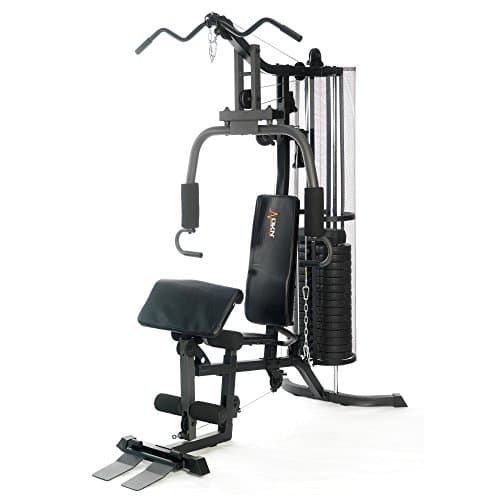
The best multi gyms in the UK for 2026, compared on stack weight, footprint and height: 45kg compact stations to 102kg weight stacks, Smith machines and cable cages. Footprints, user limits and who each one suits.
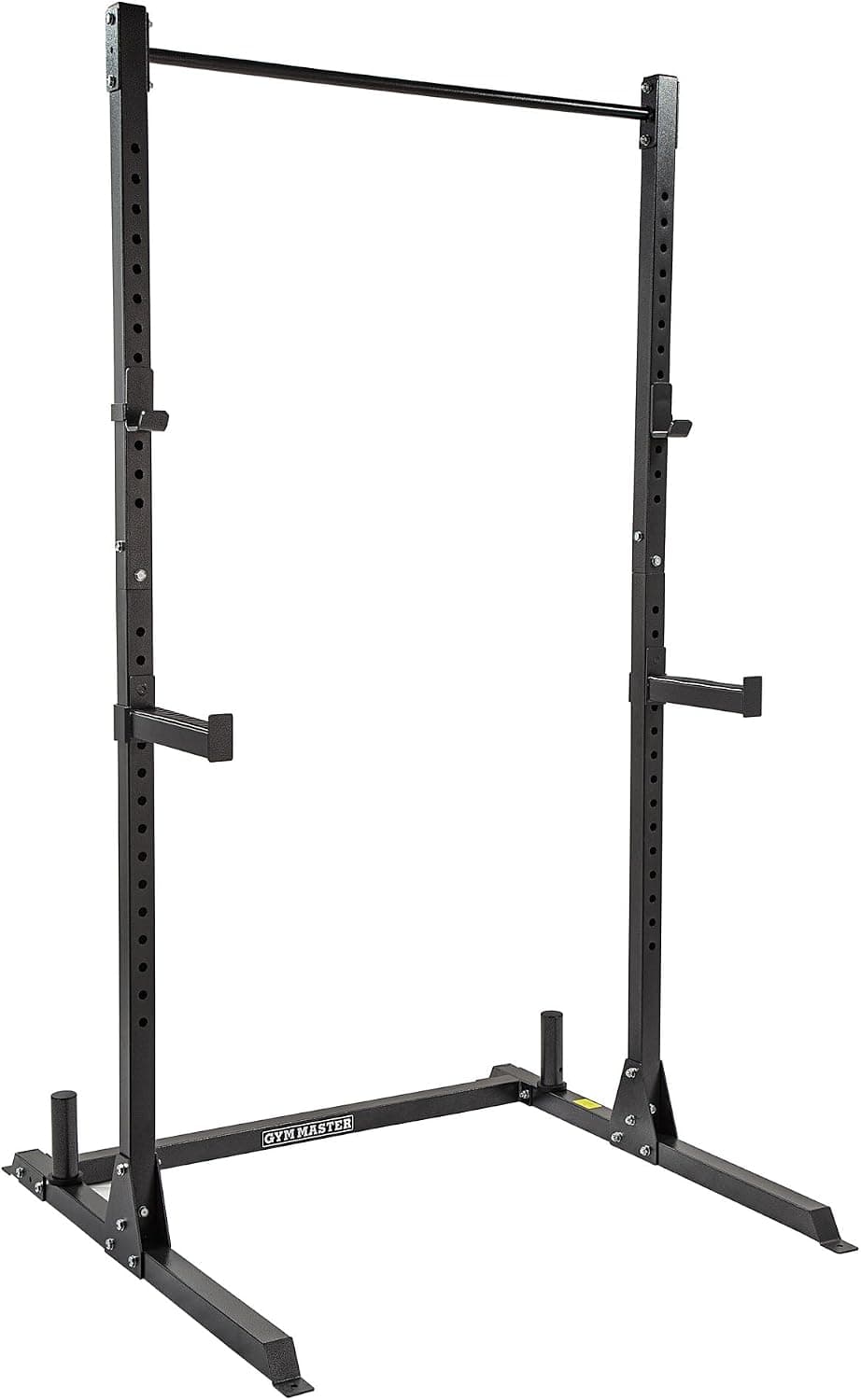
The best squat racks in the UK for 2026, compared on weight rating, height range and spotters. Home squat rack picks from £80 stands to a full cage, plus the room you need for each.
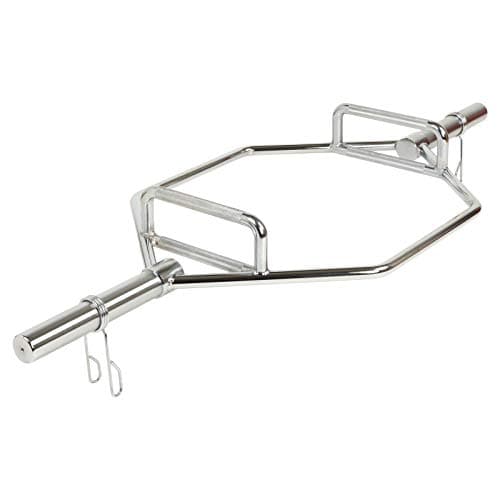
The best trap bars and hex bars in the UK for 2026, with the hex bar weight of every pick (21kg to 27kg for Olympic frames). Honest picks for deadlifts, shrugs and farmer's carries.
The best adult weighted blanket for UK sleepers in 2026, from a £23 8kg budget pick to a £95 cooling bamboo model. Honest picks for hot sleepers, heavier users and daytime use, plus how to choose the right weight and what the research shows.
Best Exercise is a participant in the Amazon EU Associates Programme, an affiliate advertising programme designed to provide a means for sites to earn advertising fees by advertising and linking to Amazon.co.uk. As an Amazon Associate we earn from qualifying purchases. This comes at no extra cost to you and never influences our independent reviews or rankings.