Exercise Bikes
Burever Exercise Bike Review: Touchscreen, 170kg Limit, Big Claims
Our Burever exercise bike review: the touchscreen goal console, 0-100% magnetic resistance, 170kg limit, Zwift support without a power meter, and who should buy it.

By Paul Kendrick, Cardio & Endurance Editor · Updated 28 September 2026
We may earn a commission from qualifying purchases made through links on this page, at no extra cost to you. This never affects our ratings.
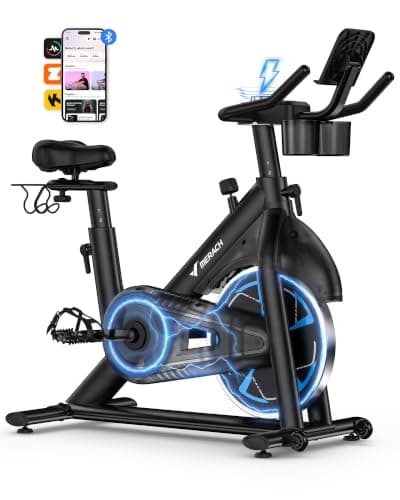
Most home exercise bikes need a socket, which quietly decides where they live. MERACH's newest magnetic bike doesn't: pedalling generates the power for the console and the resistance motor, so it can sit by a window, in a garage or in the middle of a spare room with no cable trailing across the floor. At £369.99 it's also MERACH's first bike to adjust its own resistance during app workouts.
We think it's a good bike with one headline feature that genuinely changes how you use it, and one spec (the 8kg flywheel) that's lighter than the price suggests.
How we review
This review is based on MERACH's Amazon UK listing and published specifications, our coverage of MERACH's other bikes and rowers, and general experience of magnetic indoor bikes. We haven't ridden this model. It's a new listing, so there's no long-term reliability record yet, and where MERACH's claims look generous we say so.
Anyone whose ideal spot for a bike has no plug nearby gets the most out of it. It also suits people who want structure without thinking: pick a class in the MERACH app and the bike handles the resistance changes, so you pedal and follow the cadence prompts.
Serious cyclists training in Zwift should look elsewhere. The bike connects to Zwift and Kinomap, but MERACH only claims adaptive resistance inside its own app, and a true smart trainer or a smart bike from our best smart exercise bike guide will control resistance from Zwift directly.
| Power | Self-generating, no mains cable |
|---|---|
| Resistance | Magnetic, auto-adjusting in MERACH app |
| Flywheel | 8kg, high-inertia |
| Drive | Belt |
| Noise (claimed) | Under 25dB |
| Max user weight | 150kg |
| Rider height | Approx 142cm to 193cm |
| Adjustment | 4-way seat, 2-way handlebars, ±45° saddle tilt |
| Apps | MERACH, Zwift, Kinomap, Apple Health, Google Fit |
| Price at time of writing | £369.99 |
The obvious win is placement. A lot of people end up putting their bike in a corner they don't like because that's where the socket is, then stop using it. With no cable you can face a window or the TV, and you can move the bike between rooms without hunting for an extension lead.
There's a small catch that every self-powered machine shares: the electronics only run while you pedal. Stop for a minute to grab water and the screen may sleep, which is a minor annoyance during structured intervals. It's worth knowing before you buy, not a reason to skip it.
This is the feature MERACH is really selling. During the app's guided classes and scenic routes, the bike moves the magnets for you as the session ramps up and down. That matters more than it sounds. Manual resistance knobs get neglected mid-workout; people drift to one comfortable setting and stay there, which turns a planned interval session into a steady plod.
If you want to follow structured sessions like the ones in our exercise bike HIIT workout, automatic changes remove the fiddling. Outside the MERACH app it's a normal manual bike, and MERACH's listing only promises that Zwift and Kinomap will receive your ride data.
A reinforced H-frame and a 150kg limit suggest a stable machine, and belt-driven magnetic bikes are the smoothest, quietest type available. MERACH quotes under 25dB. We'd expect a real room reading to be higher than that once you count the frame and your breathing, but belt plus magnets is the right recipe for flats.
The 8kg flywheel is the compromise. MERACH calls it high-inertia and precision-balanced, and for seated cardio it'll feel fine. Stand up and sprint, though, and a lighter flywheel carries less momentum between pedal strokes than the 13kg to 18kg wheels on many spin bikes around this price. If you ride out of the saddle a lot, a heavier bike from our best spin bike guide will feel more like the road.
The 4-way seat and 2-way bars cover a quoted 142cm to 193cm, and the ±45° saddle tilt is unusual at this price; it helps riders who get numbness on a flat saddle. That's a broad range, so a couple sharing the bike should both get a sensible position.
Cycling on a bike like this counts towards the NHS target of 150 minutes of moderate activity a week (NHS physical activity guidelines), and a bike you can put anywhere is more likely to get those minutes. If you're comparing it with MERACH's cheaper plug-in model, our MERACH magnetic exercise bike review covers the £240 option.
See today's MERACH self-powered bike pricearound £370The bike generates its own electricity as you pedal, so there's no mains cable. It powers the console, the Bluetooth link and the motor that moves the magnets. The upside is you can put the bike anywhere in the house; the downside is that the screen sleeps when you stop pedalling.
Yes, but only inside the MERACH app. During its guided classes and scenic rides the app raises and lowers the magnetic resistance to match the session. In Zwift or Kinomap, MERACH only promises data connection, so expect to change resistance yourself there.
For steady rides and intervals at home it's fine, especially with magnetic resistance smoothing the stroke. Spin-style bikes at the same price often carry 13kg to 18kg flywheels, which feel more like a road bike when you stand up out of the saddle, so heavy climbers may notice the difference.
MERACH says it fits riders from about 142cm to 193cm, with a 4-way adjustable seat, 2-way handlebars and a saddle that tilts 45 degrees either side. The maximum user weight is 150kg.
MERACH quotes under 25dB, which would be near-silent, and a belt drive with contact-free magnets is the quietest setup you can buy. We'd treat the exact figure as optimistic, but it's a sensible choice for upstairs flats and early mornings.
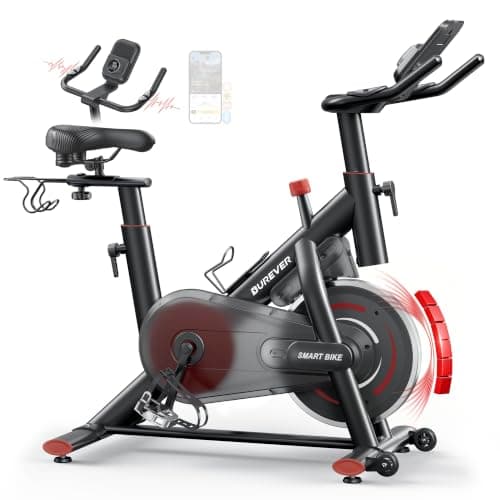
Our Burever exercise bike review: the touchscreen goal console, 0-100% magnetic resistance, 170kg limit, Zwift support without a power meter, and who should buy it.
Spin bike vs exercise bike compared on riding position, flywheel, resistance, comfort, noise and price, with a clear verdict on which suits your training.
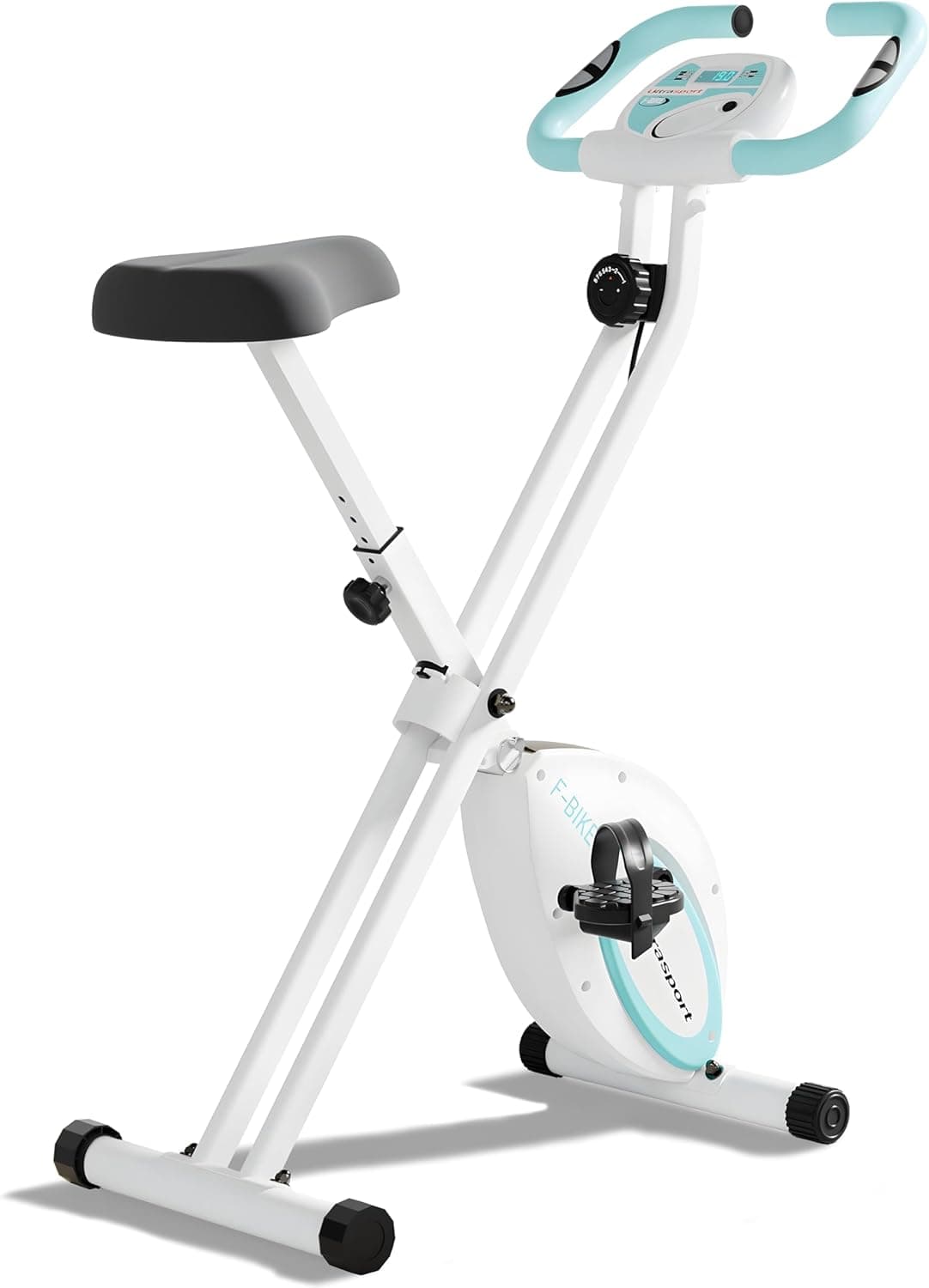
The best foldable exercise bike for UK homes, from budget mini pedallers to a 140kg-rated smart bike and a comfy recumbent. Folded sizes, weight limits and honest downsides.
Is Peloton worth it in the UK? We do the 1-year and 3-year maths on the Bike, Bike+, refurbished and rental options against a £400 bike with the app or Zwift.
Best Exercise is a participant in the Amazon EU Associates Programme, an affiliate advertising programme designed to provide a means for sites to earn advertising fees by advertising and linking to Amazon.co.uk. As an Amazon Associate we earn from qualifying purchases. This comes at no extra cost to you and never influences our independent reviews or rankings.