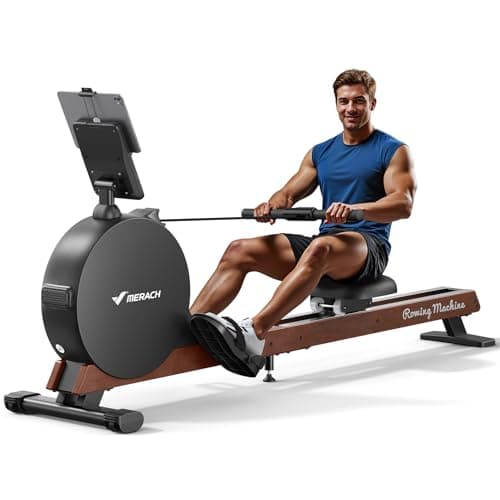
The MERACH 60kg Magnetic Rowing Machine is a wooden-framed home rower with 16 resistance levels you switch from buttons on the handlebar, app control that can change the load for you, and a headline claim of up to 60kg of resistance. It's a decent machine at around £339.99 at the time of writing, and it looks far nicer in a living room than the steel MERACH rowers do. But I'd buy it for the wood and the handlebar controls, not for the 60kg figure, which tells you much less than the box suggests.
This is a separate product from the other MERACH rowers we've covered. It isn't the cheaper folding MERACH magnetic rower, it isn't the MERACH wood water rower (which uses a water tank, not magnets), and it isn't the MERACH R15 Pro, which shares the handlebar buttons but quotes 40kg and uses a steel frame.
How we review
This review is based on MERACH's Amazon UK listing and product data, the specifications of the other MERACH rowers we've already reviewed, and published guidance from Concept2 on how rowing resistance and calories are measured. We haven't rowed this unit ourselves. It's also a fairly new listing, so there isn't yet a deep pool of long-term owner feedback; where the listing is silent on something that matters, we say so rather than guess.
MERACH says the 60kg system gives up to 90% more resistance than standard rowing machines. That sounds precise. It isn't, because nobody in the budget magnetic rower market agrees on how the kg figure gets measured: whether it's the force at the handle, at what handle speed, at what point in the stroke, or something calculated at the flywheel. Two brands can both print "60kg" and feel nothing alike.
What the number is good for is ranking MERACH's own range. This machine should be noticeably heavier at level 16 than the 40kg R15 Pro, and both should outmuscle the entry-level folding model. That's useful if you've outgrown a light rower and keep finding the top level too easy.
Compare that with how Concept2 does it. An air rower's resistance comes from how hard you pull against a fan, and the monitor measures how quickly the flywheel slows between strokes, which Concept2 calls the drag factor. It then calculates your real work from flywheel speed, which is why a 2,000m time on one Concept2 means the same thing on another. A magnetic rower's level 16 has no equivalent: it's a fixed brake setting, and the console doesn't turn your effort into watts. So the honest comparison is this: the Concept2 gives you a number you can trust, while the MERACH gives you a level that's heavy.
There's another catch with heavy magnetic settings. More resistance doesn't automatically mean a better workout; Concept2 itself warns against cranking its damper too high because it tires your muscles before your heart and lungs get the full benefit. The same logic applies here. Most useful sessions will live somewhere in the middle levels, and our guide to rowing machine resistance levels explains how to pick them.
About that 800 calories an hour
The listing says you can burn up to 800 calories per hour. Possible? For a heavy, well-conditioned rower pulling hard for a solid hour, yes. Typical? No.
Calorie counts on rowers are estimates, and even Concept2, whose monitor measures actual power, publishes a calorie correction formula because its console assumes a 79.5kg rower. The MERACH console doesn't show watts at all, so its calorie readout leans on stroke count, level and assumptions you can't see. Use it to compare your own sessions week to week rather than as a nutrition number. For context, the NHS guidelines ask adults for 150 minutes of moderate or 75 minutes of vigorous activity a week, and steady rowing covers either comfortably without you needing to chase 800 an hour.
Design and build
The wood is the main reason to pick this over a steel MERACH. A solid wood frame with wooden dual rails looks like furniture rather than gym kit, and that matters if the rower is going to live in a lounge or bedroom rather than a garage. Dual rails also keep the seat from twisting at the catch, which single-rail budget rowers struggle with once you push the stroke rate up.
At about 30kg it's a reasonably solid machine without being a nightmare to move, though at 187.7cm long, 48cm wide and 81.3cm tall at the front you need a proper floor space for it. The listing calls the rails "extended" but doesn't give a rail length or a maximum inseam. If you're over about 190cm, that's a genuine gap in the information and worth asking about before ordering.
The 29cm seat height is a small but real comfort point. It sits well above the near-floor seats on many cheap rowers, so getting on and off is easier for anyone with stiff knees or hips. The footrests are fixed rather than pivoting; that's normal at this price, though it means less adjustment for people with unusually large or small feet.
Rowing performance and controls
The 16 levels switch from handlebar buttons, which is the best feature MERACH has added to its rowers lately. On a dial-adjusted machine you either leave resistance fixed for intervals or reach down mid-piece and lose your rhythm. Buttons under your thumbs mean a 30 second hard effort at level 13 followed by 90 seconds easy at level 5 happens without breaking the stroke.
Magnetic resistance gives a smooth, even pull without the sharper bite at the catch of an air or water rower; some experienced rowers find that lifeless, but beginners usually find it easier.
Heavier settings punish bad technique, so it's worth getting the sequence right early. Research on ergometer rowing has found differences in trunk muscle activity between rowers with and without low back pain, which is a reminder that a sloppy stroke under load is where problems start. Drive with the legs, swing the back, then pull with the arms, and reverse it on the way forward. Our rowing machine technique guide walks through it step by step.
One thing to check: electronically switched resistance needs power from somewhere. The listing doesn't say whether this model plugs into the mains or generates its own power from the flywheel. MERACH sells both types elsewhere in its range, so confirm before you buy if your rowing spot has no socket nearby.
Display and app
The HD LED screen claims a 120 to 180 degree viewing angle, which mostly means you can read it from the seat without craning. Expect the usual budget rower metrics: time, distance, strokes, stroke rate and calories. There's no mention of watts or a 500m split, and that's the biggest gap for anyone who wants to track fitness properly.
The MERACH app is where the machine gets clever. Connect it and the resistance changes automatically to follow the workout programme, so a structured session runs itself while you focus on rowing. It also logs your sessions, which helps if you'd otherwise row at the same level forever.
Noise
MERACH quotes under 40dB, helped by the magnetic brake and what it calls a low-noise cable system. We can't verify the figure, but with no fan or water involved, magnetic rowers are the quietest type by a wide margin. The noise you'll actually hear is the seat on the rails and the cable winding back in, which makes this a sensible choice for flats and early mornings.
Assembly
The listing doesn't give an assembly time. Based on the rest of the MERACH range, expect to bolt the rails, stabilisers and console together yourself in well under an hour, and you'll want a second pair of hands for a 30kg wooden frame.
Who it's for
This suits someone who wants a quiet rower that looks decent on show, does interval or programmed sessions, and has found lighter magnetic rowers too easy at the top.
It's the wrong choice if you want comparable data. No watts, no drag factor, and a kg figure that doesn't translate across brands mean you can't line your results up against gym machines or online rankings. It's also the wrong choice if you need to fold it away, or if you're very tall and can't confirm the rail length.
Genuine cons
The 60kg claim is a marketing number, and the 90% comparison isn't defined. The calorie claim leans optimistic. The display skips the metrics serious rowers care about most. And the listing is thin on practical facts: no rail length, no user weight limit, no clarity on power. Together they mean buying more on trust than you would with a better-documented machine.
How it compares
Against the cheaper MERACH magnetic rower, you pay roughly £100 more here for the wooden frame, the heavier top end and handlebar controls. The cheaper one folds and suits small spaces better. If you don't care how the rower looks and won't do much interval work, save the money.
The MERACH R15 Pro is the closest sibling, with the same handlebar-button idea, a 40kg quoted peak and a steel frame for about £40 less. It's also lighter at around 20kg and stands upright. Pick the R15 Pro for value and storage, or this 60kg model for the wood.
The Concept2 Model D costs several times as much and is a different class of machine: air resistance, a monitor that reports watts and drag factor, and results that compare across every Concept2 in the world. If you're training for performance, it's still the one to save for. Our rowing machines hub lists the full field.
Pros
Solid wood frame and dual wooden rails look like furniture, not gym kit
Handlebar buttons change all 16 levels without breaking the stroke
Heavier top end than MERACH's 40kg models, for rowers who've outgrown light machines
App can auto-adjust resistance through structured workouts
Magnetic brake keeps it very quiet, with a quoted figure under 40dB
29cm seat is easier to get on and off than floor-level budget rowers
Cons
60kg is a manufacturer figure with no cross-brand meaning
800 calories an hour is optimistic for most users
No watts or 500m split on the display
Listing doesn't state rail length, user weight limit or power source
Is the MERACH 60kg rowing machine actually 60kg of resistance?
Not in any sense you can compare across brands. Magnetic rower makers don't use a shared test for their kg figures, so 60kg tells you this machine is heavier at level 16 than MERACH's own 40kg models, and very little beyond that. A Concept2 doesn't quote kg at all; it measures drag factor and your actual power output in watts.
Can you really burn 800 calories an hour on it?
Only if you're fairly big, fairly fit and rowing hard for the full hour. The console doesn't measure watts, so the calorie readout is an estimate. Treat 800 as a ceiling for a strong rower, not a typical figure. A steady 30 minute session for most people lands well under half that.
How is this different from the cheaper MERACH magnetic rower?
The cheaper MERACH magnetic rower is a lighter, folding frame at around £200 to £250. This one costs roughly £100 more and adds a solid wood frame and rails, a quoted 60kg top end and handlebar buttons for changing level mid-stroke. It's longer too, at about 188cm.
Is it quiet enough for a flat?
MERACH claims under 40dB, which is very quiet. Magnetic resistance has no fan or water to make noise, so the realistic sound is the seat rolling on the wooden rails and the handle cable. Upstairs neighbours will hear far less than they would from an air rower.
Does it fold away?
The listing doesn't mention folding, and at 187.7cm long with a wooden frame you should plan for the full footprint. Check the current Amazon listing or ask MERACH before buying if storage matters.
What's the weight limit?
The listing we checked doesn't state a maximum user weight. MERACH's other rowers are typically rated around 150 to 160kg, but don't assume; confirm the figure for this exact model before you order, especially if you're a heavier rower.
What an air rowing machine is, how fan resistance and the damper really work, why gyms use them, the downsides (noise, size) and what to look for before you buy.
What a magnetic rowing machine is, how eddy-current resistance works, the real pros and cons versus air and water, and what to check before you buy one.
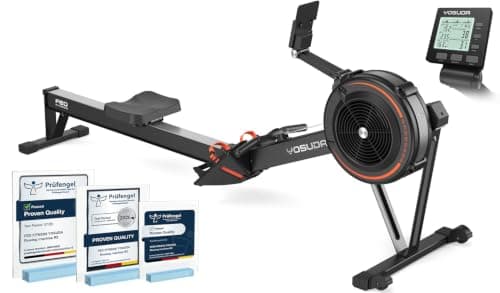
Our YOSUDA R2 air rowing machine review covers the 32-blade fan, 10-level damper, self-powered monitor, 158kg limit and how it compares with a Concept2.
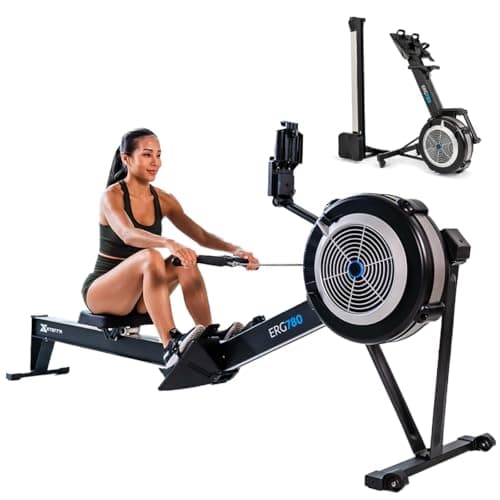
Our Xterra ERG780 air rower review covers the 10-level damper, Bluetooth FTMS app support, noise, monitor accuracy, folding storage and how it compares with a Concept2.
Best Exercise is a participant in the Amazon EU Associates Programme, an affiliate advertising programme designed to provide a means for sites to earn advertising fees by advertising and linking to Amazon.co.uk. As an Amazon Associate we earn from qualifying purchases. This comes at no extra cost to you and never influences our independent reviews or rankings.