Rowing Machines
Xterra ERG780 Review: A Folding Air Rower at Half Concept2 Money
Our Xterra ERG780 air rower review covers the 10-level damper, Bluetooth FTMS app support, noise, monitor accuracy, folding storage and how it compares with a Concept2.

By Paul Kendrick, Cardio & Endurance Editor · Updated 19 September 2026
We may earn a commission from qualifying purchases made through links on this page, at no extra cost to you. This never affects our ratings.
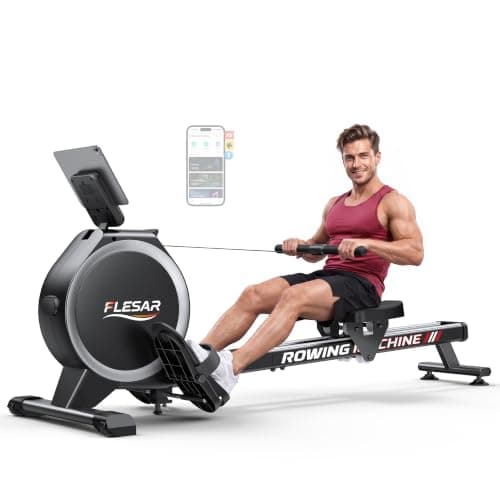
Flesar is a small brand on Amazon UK, and this 2026 magnetic rower sits right in the busiest part of the market: around £190, 16 resistance levels, an app, a steel frame. What sets it apart on paper is a two-year warranty and dual rails at a price where single beams are still common.
We think it's a fair buy for users of average height. The one spec that should give you pause is the rail length, and we'll get to it.
How we review
We based this review on Flesar's Amazon UK listing and product images, cross-checked against the dimensions Amazon holds for the item, and on how belt-driven magnetic rowers behave as a category. We haven't rowed this machine ourselves. With around 35 ratings on the listing, nobody can say much yet about long-term reliability, so we don't.
It suits a rower under about 5ft 11in who wants a quiet machine for steady cardio, likes the idea of Kinomap routes on a tablet, and values a longer warranty over extras like a folding frame. Heavier users do reasonably well here too, since the 160kg limit beats several rivals at the price.
Taller rowers should skip it. The Sunny Health & Fitness extended-rail rower costs about £30 more and exists precisely to fix the short-rail problem. And if you want finer resistance steps and a 500m split for the same money, the Superun 32-level rower is worth a look.
| Resistance | Magnetic, 16 levels |
|---|---|
| Drive | Belt |
| Monitor | LCD, 7 metrics including time, distance, calories, strokes and strokes per minute |
| Apps | FitShow, Kinomap (Bluetooth) |
| Rail | Dual steel rails, 101cm |
| User height | Up to 190cm (manufacturer claim) |
| User weight | 160kg |
| Dimensions | About 155 x 51 x 62cm |
| Machine weight | About 17.5kg |
| Assembly | About 85 percent pre-assembled, around 30 minutes |
| Warranty | 24 months |
Flesar gives the rail length as 101cm and says the machine fits people up to 190cm. We don't think both hold comfortably. Seat travel decides whether your legs can straighten at the finish, and on a rail this short a tall rower tends to run out of track before the drive is complete, then compensates by rounding forward at the catch. The Dripex magnetic rower has a 124cm rail and we already flagged that as tight for anyone near the top of its range.
That matters beyond comfort. Low back pain is the most common complaint among rowers (International Journal of Sports Physical Therapy scoping review, 2023), and a cramped, rounded catch is exactly the position that loads the lower back badly. If you're 5ft 10in or under, the 101cm rail is unlikely to bother you. Above 6ft, buy something longer.
The resistance comes from magnets moving closer to the flywheel as you turn the dial, and the belt drive keeps it smooth and quiet. Sixteen steps is the standard at this price. It's enough to split a session between an easy warm-up and some hard intervals, though each click is a bigger jump than on a 32-level machine. If you're unsure where to set it, our guide to rowing machine resistance levels explains why most people row too heavy and how to pick a number.
The noise claim is where we'd push back. Flesar says the machine runs under 25dB, which is roughly whisper level, and no rower with a seat on rollers and a belt spooling in and out is that silent. It will still be far quieter than an air rower, and fine late at night in a flat.
Flesar describes a seven-metric LCD but only names five: time, distance, calories, strokes and strokes per minute. We couldn't confirm a 500m split from the listing, and that's a real gap if you want to follow structured plans, since most are written around split and stroke rate. Our rowing machine HIIT workouts can be done by time and stroke rate alone, so it isn't a dealbreaker.
Bluetooth pairs the rower with FitShow and Kinomap. Kinomap is the more useful one, with filmed water routes and structured sessions for a tablet sitting in the holder, but the full library needs a subscription. Treat the apps as a bonus and judge the machine on the hardware.
The frame is steel with twin rails under the seat, rated to 160kg. At around 17.5kg the whole machine is light enough to move alone. The listing doesn't mention folding or upright storage, so plan for a floor footprint of roughly 155 by 51cm.
The two-year warranty is the standout. Most rowers from Amazon-first brands at this price offer one year, and Flesar adds free replacement parts. We'd still keep your order confirmation, because a small brand's warranty is only as good as its responsiveness.
Rowing spreads the work across most of your body. An EMG study on an indoor rower found all eight lower-limb muscles it measured were active during the stroke (Sensors, 2020), and your back and arms take over at the finish. Our breakdown of rowing machine muscles worked goes phase by phase. For general health, 150 minutes of moderate activity a week meets the NHS guidelines for adults, and five half-hour rows cover it without the impact of running.
Check the Flesar price on Amazonaround £190It's a solid budget magnetic rower. At around £190 you get 16 resistance levels on a belt drive, dual steel rails, a 160kg user limit, Bluetooth for Kinomap and FitShow, and a 24-month warranty. The weak point is a 101cm rail, which is short for tall users, and the listing has only around 35 ratings so far.
Flesar lists FitShow and Kinomap. Kinomap is the better known of the two and runs video routes and structured sessions for rowers, but its full library sits behind a subscription. FitShow is a simpler tracking app. Neither is required, because the LCD monitor works on its own.
Flesar says it suits users up to 190cm. With a 101cm rail we'd treat that figure cautiously, because rowers with long legs need seat travel to reach full extension at the finish. If you're over roughly 180cm, a machine with a longer rail is the safer buy.
That's the manufacturer's figure and we'd take it loosely. Twenty-five decibels is close to a whisper, and even a well-made magnetic rower makes seat roller and belt noise. It will be much quieter than an air or water rower, which is what matters in a flat.
Flesar says it arrives about 85 percent assembled and takes around 30 minutes to finish with the tools and video instructions supplied. The whole machine weighs about 17.5kg, so one person can manage it.
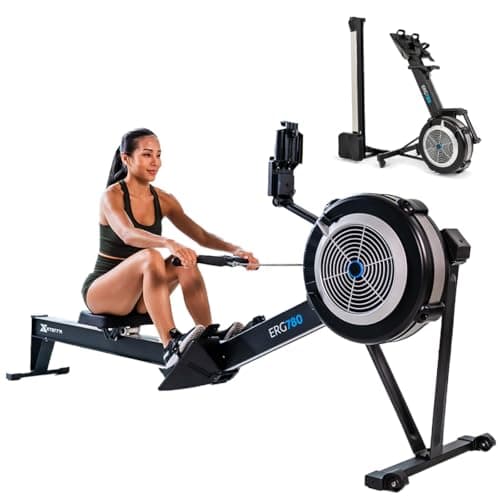
Our Xterra ERG780 air rower review covers the 10-level damper, Bluetooth FTMS app support, noise, monitor accuracy, folding storage and how it compares with a Concept2.
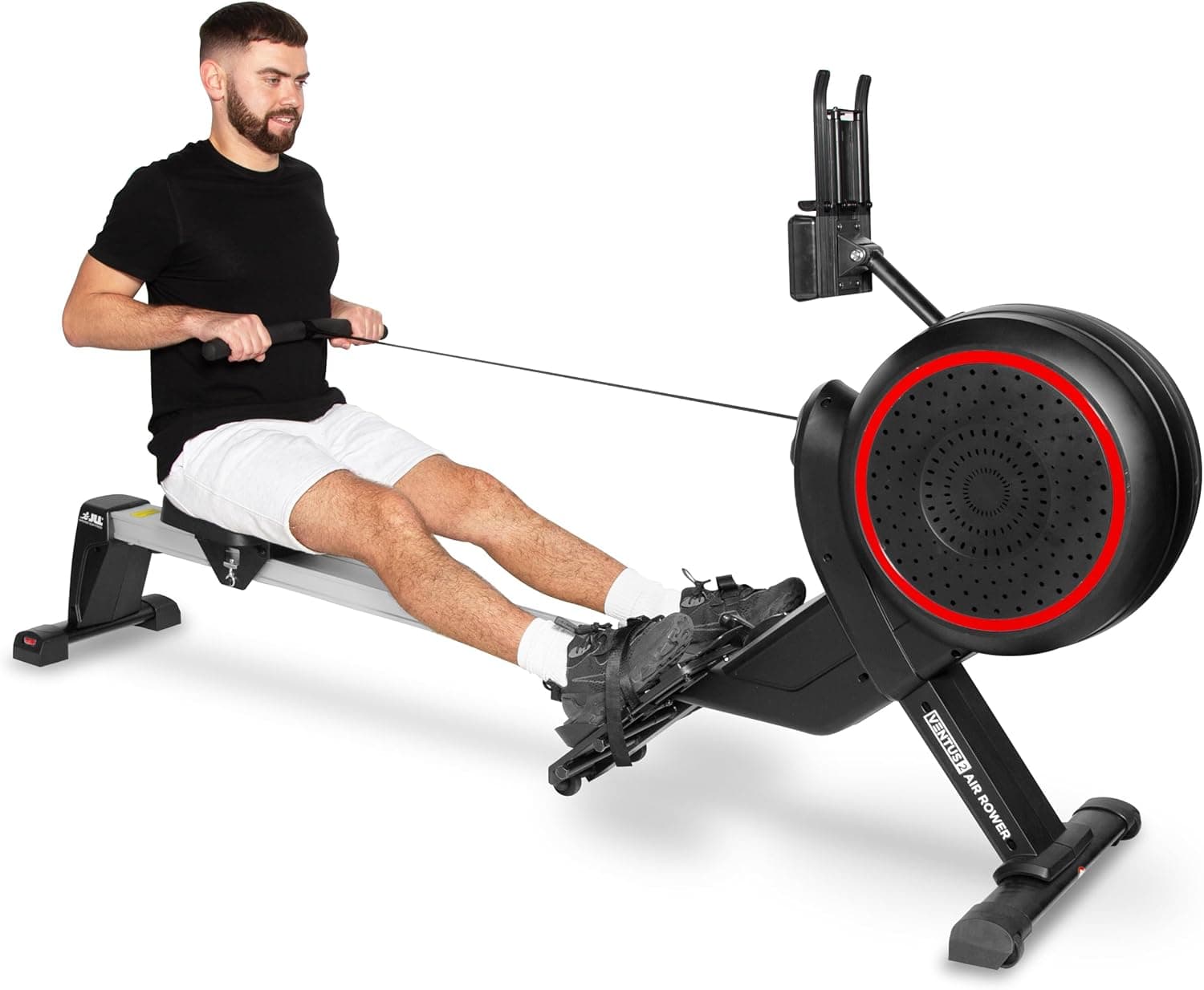
The best foldable rowing machines in the UK for 2026, compared on folded footprint, rail length and weight limit. Picks from JLL, DMASUN, YPOO, Viavito and MERACH for every budget.
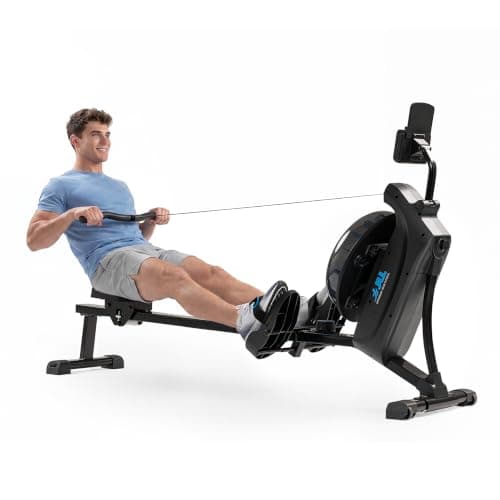
An honest JLL water rowing machine review of the dual resistance rower: the 60 degree tank, 16 magnetic levels, 130cm rail, 150kg capacity, SunnyFit app and who it suits.
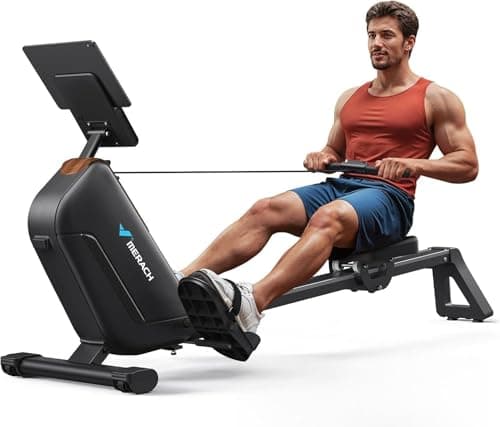
An honest MERACH R15 Pro review: 40kg peak electromagnetic resistance, 16 levels adjusted from the handlebar, a 130cm rail, 158kg capacity and who this £300 rower suits.
Best Exercise is a participant in the Amazon EU Associates Programme, an affiliate advertising programme designed to provide a means for sites to earn advertising fees by advertising and linking to Amazon.co.uk. As an Amazon Associate we earn from qualifying purchases. This comes at no extra cost to you and never influences our independent reviews or rankings.