Exercise Bikes
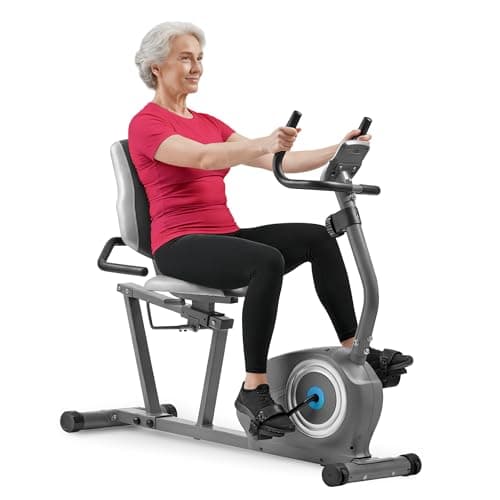
JLL Recumbent Exercise Bike Review: Comfortable, Quiet, a Little Light
An honest JLL recumbent exercise bike review covering the wide padded seat, 4kg flywheel, 8 magnetic levels, SunnyFit app, pulse sensors and who should buy it.

By Paul Kendrick, Cardio & Endurance Editor · Updated 20 July 2026
We may earn a commission from qualifying purchases made through links on this page, at no extra cost to you. This never affects our ratings.
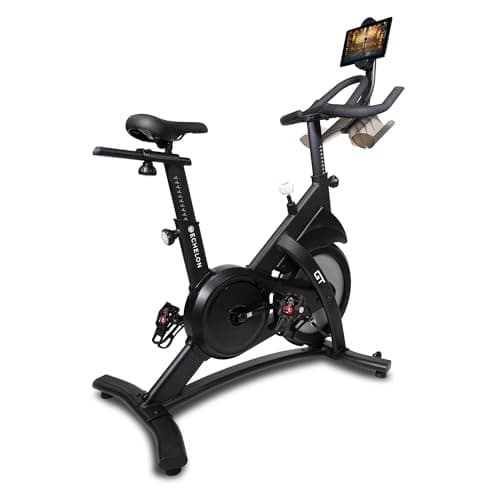
The Echelon Indoor Cycle GT is the brand's mid-range connected spin bike, sitting above the entry-level Sport and below the screen-equipped EX models. At around £700 on Amazon UK it is aimed squarely at people who want the class-based, leaderboard-driven indoor cycling experience without paying flagship money for a built-in display. Instead of a screen, you mount your own tablet or phone, and Echelon's app supplies the classes.
The headline verdict is that this is a well-built, quiet, sensibly specified bike whose value depends almost entirely on a decision you make after you buy it. If you take out the Echelon Fit membership and genuinely use the classes several times a week, the GT is good value and a lot of fun. If you do not, you have bought a competent but fairly ordinary magnetic spin bike for a price that buys a very good non-connected one. That is the whole review in two sentences, and it is the thing most listings gloss over.
How we review
This review is based on research rather than a months-long hands-on endurance test of this exact unit. We cross-checked Echelon's published specifications, read through verified owner reviews on Amazon UK and elsewhere, and compared the GT against rival smart bikes in the same price bracket. We report the complaints that come up repeatedly rather than one-off opinions, and we flag where a manufacturer claim and real-world experience diverge. Prices and membership costs change, so check current figures before buying.
The GT makes sense for someone who wants structured, instructor-led cycling at home and already owns a decent tablet. If you are motivated by a leaderboard, a voice telling you what to do and a class schedule, this is exactly the format that gets people onto a bike four times a week rather than twice a month. Regular cycling of this kind is a genuinely effective way to hit the recommended 150 minutes of moderate activity a week, and there is strong evidence linking that habit to better heart health (British Heart Foundation on physical activity and heart health).
It is the wrong bike for three groups. Anyone who wants to ride Zwift or other third party training apps should look elsewhere, because the GT does not broadcast standard power. Anyone unwilling to pay a monthly membership should buy a cheaper bike and use a free app. And serious cyclists chasing accurate power numbers for structured training will find the estimated output here too rough for the job. Our best spin bike UK guide covers alternatives across all three cases.
The frame is the best part of the bike. At 39kg with a powder-coated steel construction it feels planted, and levelling feet deal with an uneven floor. Getting out of the saddle for a standing climb does not produce the alarming lateral sway you get on sub-£300 spin bikes, which is the single clearest sign of where the money went.
Resistance is magnetic and manual, controlled by a knob with 32 marked levels. Magnetic resistance means no friction pad to wear out and no pad-on-flywheel rasp, so the bike is genuinely quiet. In a flat or a house with sleeping children this matters more than almost anything else on the spec sheet. The 32 levels give fine enough gradation that you can find a sensible effort for anything from a warm-up to a sprint, though the top few levels are heavy enough that most riders will never use them.
The 7kg flywheel is the specification that draws the most criticism, and it is a fair criticism on paper. Heavier flywheels carry momentum and feel more like riding a road bike. Echelon offsets this by placing the flywheel forward and relying on magnetic drag for the feel, and the result is better than the number implies: smooth and consistent, if slightly lighter and more "gym bike" than "road bike" at low cadence. If that distinction matters to you, spend your money on flywheel weight instead of app content.
Adjustment is comprehensive. The seat moves up, down, forward and back, and the handlebars adjust for height, so riders from roughly 150cm to 195cm should find a position. The included pedals take toe cages on one side and SPD cleats on the other, which is the right choice at this price.
| Resistance | 32 levels, manual magnetic |
|---|---|
| Flywheel | 7 kg, forward placement |
| Max user weight | 136 kg / 300 lb |
| Bike weight | Approx 39 kg |
| Dimensions | Approx 109 x 61 x 145 cm |
| Display | None included, rotating mount for devices up to 12.9 in |
| Connectivity | Bluetooth to the Echelon Fit app |
| Pedals | Dual sided, toe cage and SPD |
| Adjustment | Seat up/down and fore/aft, handlebars up/down |
| Warranty | 1 year standard, extended for Premier members |
Specifications are as published by Echelon at the time of writing.
This is the part that decides whether the GT is a good buy for you.
The Echelon Fit app is genuinely good. There are live and on-demand classes across a wide range of lengths and styles, the instructors are competent and motivating, and the leaderboard is effective at making you work harder than you otherwise would. It also covers off-bike content, which is where the rotating tablet mount earns its keep. Metrics are tracked and can be pushed to Strava, Apple Health and Fitbit.
The catch is that it is a recurring monthly charge, and over a few years the membership can cost more than the bike did. That is not a scandal, it is the business model, and it is the same one Peloton and most connected fitness brands use. But it changes the maths completely. Before you buy, work out the total cost over three years including membership and compare that against a non-connected bike plus a cheaper general fitness app.
Two related honesty points. First, the resistance does not adjust itself, so a class instructor calling for level 22 requires you to turn the dial yourself. It works fine, but it is not the hands-off experience some buyers expect from a "smart" bike. Second, the power and calorie figures come from an estimate based on resistance level and cadence, not a strain-gauge power meter. They are consistent enough to track your own progress against, and not accurate enough to compare with anyone else's numbers or to base structured training on.
At around £700 the GT sits in a competitive part of the market. Against the Echelon EX-5s you save a lot of money by supplying your own tablet, at the cost of the integrated screen and the tidier setup. Against a plain magnetic spin bike at £300 to £400 you are paying roughly double for the connected ecosystem, the better frame and the higher user weight limit. Against a proper smart trainer setup for Zwift, the GT loses on app freedom and power accuracy but wins comfortably on convenience and on not needing a bike.
Where it is unambiguously good value: as a well-made, very quiet, generously adjustable bike for someone who will use the classes. Where it is not: for anyone who plans to cancel the membership after the free trial. Our best smart exercise bike UK guide and the best exercise bikes under £1000 round-up both cover the alternatives, and there is more in the exercise bikes section.
Check price on AmazonYou need the Echelon Fit membership to access the live and on-demand classes, the leaderboard and most of the performance tracking, and that is a recurring monthly cost on top of the bike. You do not need it to pedal. Without a membership you get a functional magnetic spin bike with a manual resistance knob and a tablet holder, which is a perfectly usable bike but not what you paid a premium for.
No. The GT has a rotating mount that holds a phone or tablet up to 12.9 inches, and your own device acts as the console. That keeps the price down considerably compared with screen-equipped smart bikes, but it means you need a decent tablet and the mount has to hold it steady while you sweat on it.
It is on the light side, and heavier flywheels do give a smoother, more road-like feel at low cadence. In practice the GT rides better than the number suggests because Echelon places the flywheel forwards and pairs it with magnetic resistance rather than a friction pad. It is fine for classes and intervals. If you want that heavy, grinding out-of-the-saddle feel, look at bikes with a 15kg to 20kg flywheel.
No. Resistance is changed manually with the knob, across 32 levels. Instructors call out target levels during classes and you turn the dial yourself. Auto-adjusting resistance is reserved for Echelon's pricier models and rivals such as the higher-end smart bikes, so if hands-off resistance matters to you, this is not the bike.
Not properly. The GT broadcasts over Bluetooth to the Echelon Fit app, but it is not a standard FTMS or ANT+ power-broadcasting trainer, so third party apps generally cannot read accurate power from it. Some people ride Echelon bikes while following other apps for the class content and simply ignore the metrics, but if open app compatibility is your priority, buy a bike that explicitly supports it.
The bike measures roughly 109cm long by 61cm wide by 145cm tall, so allow about 1.2 by 1 metre of floor plus room to get on and off. It has transport wheels but at 39kg it is not something you will happily wheel in and out of a cupboard every day.
An honest JLL recumbent exercise bike review covering the wide padded seat, 4kg flywheel, 8 magnetic levels, SunnyFit app, pulse sensors and who should buy it.
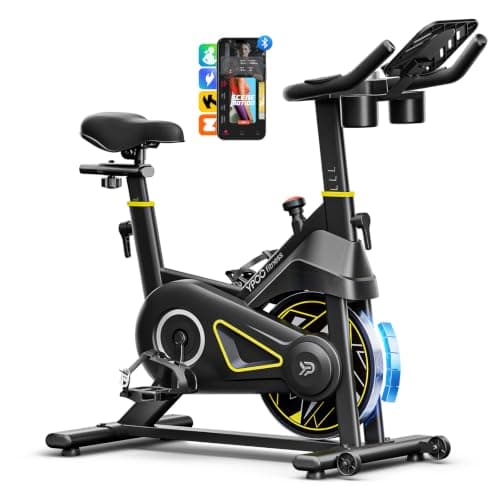
An honest YPOO X3 exercise bike review: magnetic belt drive, a free app with Kinomap and Zwift, a 136kg limit, and the marketing numbers worth ignoring.

Are exercise bikes good for cardio? Yes, they're an affordable, low-impact way to burn calories and improve fitness. Here are the pros, cons and best home bikes.
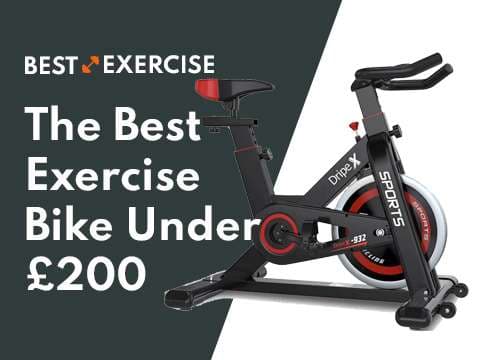
The best exercise bikes under £200 in the UK. Compare the Dripex, Mobiclinic, WINNOW and more on build, resistance and comfort to find your match.
Best Exercise is a participant in the Amazon EU Associates Programme, an affiliate advertising programme designed to provide a means for sites to earn advertising fees by advertising and linking to Amazon.co.uk. As an Amazon Associate we earn from qualifying purchases. This comes at no extra cost to you and never influences our independent reviews or rankings.