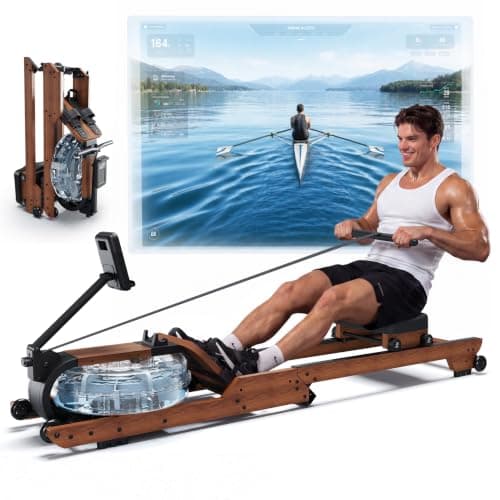
A wooden water rower for about £200 sounds like it should come with a catch, and it does, just not the one you'd expect. The Dripex 14L Wooden Water Rower (£202.29 when we checked Amazon UK on 17 September 2026, in stock, with around 400 ratings) gets the important part right: a paddle spinning in a tank of real water, so the stroke gets heavier as you pull harder. The compromises sit in the materials, the tank size and the rail.
One point of confusion to clear up first. We've already reviewed a different Dripex water rowing machine, a steel-framed model that has since gone unavailable. This is a separate product with a rubberwood frame, a 14 litre tank, a 12-blade impeller and a double rail, so don't read that review's scores across to this one.
How we review
This review is based on Dripex's published Amazon UK listing, the live price, stock and rating count on Amazon UK, and how the design compares with water rowers we've already covered. We haven't rowed this machine ourselves. Where Dripex makes a claim we can't check, we call it a claim, and where it leaves something out, we say that too.
Buy it if you want the feel and the look of a water rower but your budget stops around £200, and you'd rather store the thing upright against a wall than dedicate a room to it. It suits steady 20 to 40 minute sessions a few times a week, and the double rail plus 150kg limit covers most adults.
Look elsewhere if you're heavier than about 140kg (you want some margin under the limit), taller than roughly 190cm, or you want to fine-tune resistance mid-workout. A magnetic rower does the last one far better, and our guide to which type of rowing machine is best explains the trade-off properly.
Pros
Real water resistance that scales with effort, at a price closer to a basic magnetic rower
Double rail with steel reinforcement under a rubberwood frame
Folds vertically and rolls on four wheels, so it doesn't own the floor
Tablet and phone holder, plus adjustable foot straps and a 33 x 26cm padded seat
Around 400 Amazon ratings, which is a reasonable body of owner feedback for a £200 machine
Cons
Baseline resistance only changes by adding or draining water, which is slow and fiddly
The tank needs purification tablets and occasional attention
Rubberwood is softer and plainer than the ash, oak or walnut of premium rowers
The 125cm track could feel short for very tall rowers
Bluetooth app support is advertised, but no apps are named
150kg capacity is lower than many magnetic rivals and the YOSUDA's 182kg
Water sloshes audibly, and a filled machine is heavy to tip and roll
Dripex 14L Wooden Water Rower key specs
Resistance
Water, 14L tank
Impeller
12-blade (marketed as bionic)
Resistance adjustment
Stroke intensity, plus water volume
Frame
Rubberwood with reinforced steel
Rail
Double rail, 125cm track
Max user weight
150kg
Seat
Padded, 33 x 26cm
Connectivity
Bluetooth (apps not named)
Extras
Tablet/phone holder, adjustable foot straps
Storage
Rail folds vertically, four wheels
Dimensions
Approx 182 x 44 x 35cm
Colour
Wood brown
Price checked
£202.29, 17 September 2026
The water, the blades and what 14 litres means
Water rowers work on simple physics: drag through water rises steeply with speed, so an easy stroke feels light and a hard drive bites straight away. A magnetic rower, by contrast, holds whatever load you set however hard you pull. The Dripex gets this right because it can't really get it wrong; if there's water and a paddle, the effort-led feel comes free.
Dripex leans on the 12-blade "bionic" impeller as a selling point. More blades should, in principle, give a smoother catch with less of a dead spot at the start of the drive. Nobody has independently measured that on this machine, though, so read "bionic" as branding rather than engineering.
The 14 litre tank matters more. It's smaller than the 22 litres in the YOSUDA wood rowing machine, and less water generally means a lighter ceiling on resistance. For fitness rowing at moderate intensity that's rarely a problem, since your own stroke rate does most of the work. Strong, heavy rowers doing hard intervals may find the top end a bit soft.
Changing that baseline is where water rowers frustrate people. There's no dial, so you drain some out or pump more in, and Dripex doesn't publish a fill range in the listing. Go by the markings on the tank, adjust in small amounts, and expect to settle on a level and leave it for weeks.
Rubberwood, not oak
Wooden water rowers get bought partly as furniture, so the timber isn't a trivial detail. Rubberwood is a real hardwood used widely in tables and kitchen worktops, and it's cheaper than the solid ash, oak, cherry or walnut that WaterRower builds with. It's lighter in colour, less dense and a bit easier to dent. Dripex backs it with a reinforced steel frame, which should do more for stiffness than the wood species does.
Up close, it won't pass for a WaterRower Classic, and at roughly four to five times the price the WaterRower shouldn't look the same. The honest comparison is with the oak-built TOPIOM water rower, which costs more but gets you closer to that heirloom look. If the wood grain is half the reason you want a water rower, spend the extra there.
Fit, rail length and storage
The 125cm dual-rail track is fine for the majority of home rowers. As a rough guide, rail length only becomes a real limit above about 190cm, where long legs can run out of slide before the shins reach vertical at the catch. That shortens the stroke and moves work away from the legs, which do most of the pulling in a good stroke. If you're in that bracket, the YOSUDA's 186cm rail is the safer bet.
Folded, the rail stands vertically and the machine rolls on four wheels. The catch is weight: 14 litres of water is 14kg on top of the frame, so tipping it up is a deliberate two-handed job rather than a one-handed flick. Pick a storage spot close to where you row.
Maintenance, noise and the missing app list
Standing water grows algae, so every water rower needs treatment. WaterRower tells its own owners to add two purification tablets every four to six months, and while Dripex's schedule may differ, that's a sensible benchmark: a few minutes, a couple of times a year, plus a top-up if the level drops. Keep the tank out of direct sun, which speeds algae up. It's minor, but a magnetic rower asks for nothing.
Noise is the other half. You'll hear a steady swoosh and slosh on every stroke; plenty of people like that sound, but it's louder than a good magnetic flywheel and could carry through a thin floor late at night.
Then there's Bluetooth. The listing says it connects to fitness apps without naming a single one, so you can't check compatibility before you buy. Buy the Dripex for the rowing, and treat the tablet holder as somewhere to prop Netflix or a written plan.
A cheap machine won't fix a poor stroke, though. Spend your first couple of weeks on sequencing (legs, then body swing, then arms) using our rowing machine technique guide, and the water will reward a clean drive with a heavier, more satisfying pull.
Is this the same Dripex water rower you reviewed before?
No. Our earlier Dripex water rowing machine review covers a steel-framed model (ASIN B0DZ68FYQ2). This one is a separate machine: a 14 litre tank, a 12-blade impeller and a rubberwood frame on a double rail. They share a brand and a resistance principle, and that's about it.
How do you change the resistance on the Dripex wooden water rower?
Mostly by how hard you pull, because water pushes back harder the faster the blades move through it. To change the baseline load you add or remove water from the tank. Dripex's listing doesn't publish a recommended fill range, so follow the markings on the tank itself and change the level in small steps, rowing a few minutes between each.
Is rubberwood as good as the oak or ash on a WaterRower?
It's a softer, cheaper hardwood, commonly used in furniture, and it's perfectly serviceable for a rowing frame, especially with the steel reinforcement Dripex mentions. It won't have the density or finish of solid ash, oak or walnut, and it's more likely to dent if you knock it. At around £200 against roughly £1,000, that's a fair trade.
Is the 125cm rail long enough for tall rowers?
For most people, yes. Rail length starts to matter somewhere above about 190cm, because a short track can stop long legs reaching a full, compressed catch. If you're that tall, compare against the YOSUDA, which lists a 186cm rail, before buying.
Which apps does the Dripex wooden water rower connect to?
The listing says it connects to fitness apps over Bluetooth but doesn't name any. Don't buy it on the promise of a specific app. Treat the tablet holder as a place to prop a video or a training plan, and anything app-based as a bonus if it works.
How much maintenance does the water tank need?
Not a lot, but more than a magnetic rower. You add purification tablets periodically to stop algae and cloudiness, top up after any evaporation, and keep the tank out of direct sunlight. WaterRower, for comparison, tells owners to add two tablets every four to six months.
What an air rowing machine is, how fan resistance and the damper really work, why gyms use them, the downsides (noise, size) and what to look for before you buy.
What a magnetic rowing machine is, how eddy-current resistance works, the real pros and cons versus air and water, and what to check before you buy one.
Our YOSUDA R2 air rowing machine review covers the 32-blade fan, 10-level damper, self-powered monitor, 158kg limit and how it compares with a Concept2.
Best Exercise is a participant in the Amazon EU Associates Programme, an affiliate advertising programme designed to provide a means for sites to earn advertising fees by advertising and linking to Amazon.co.uk. As an Amazon Associate we earn from qualifying purchases. This comes at no extra cost to you and never influences our independent reviews or rankings.