Home Gym
Best Squat Rack UK 2026: Squat Racks, Stands and Half Racks
The best squat racks in the UK for 2026, compared on weight rating, height range and spotters. Cheap squat stands, half racks and a full cage for home gyms at every budget.

By Jack Atkins, Home Gym Equipment Specialist · Updated 13 August 2026
We may earn a commission from qualifying purchases made through links on this page, at no extra cost to you. This never affects our ratings.
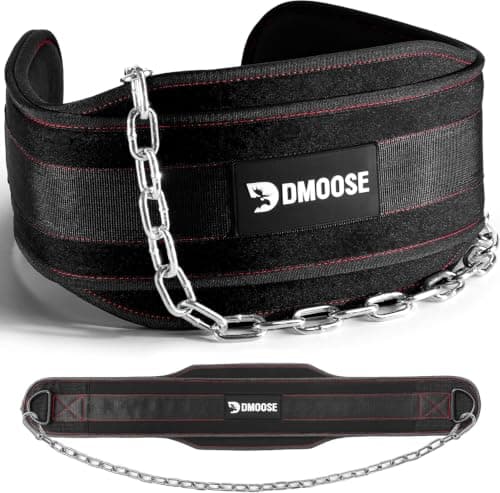
A dip belt is the cheapest meaningful upgrade to a home pull up bar or dip station. Once you can rattle off twelve clean dips, bodyweight stops driving progress, and the belt is what turns a bodyweight movement back into a strength lift you can load a kilo at a time. It's a strap, a chain and two carabiners, so there isn't much to get wrong, yet the cheap ones cut into your hips and the chains on some of them are shorter than the marketing suggests.
These are the ones worth buying on Amazon UK right now, sorted by who each suits.
How we chose
We researched the best-selling and best-reviewed dip belts on Amazon UK rather than running our own long-term test of every belt. We compared padding width, belt material and stitching, chain length and gauge, stated load rating and owner feedback, and we picked across the price range so there is a sensible option whether you want a £12 starter belt or one that will still be fine at bodyweight plus 60kg. Prices and specifications were correct at the time of writing and change often.
Weighted dips are worth the trouble. EMG work comparing bench, bar and ring dips found peak triceps activation of roughly 0.83 mV on the bench, 1.04 mV on the bar and 1.05 mV on the rings, which is why the bar dip is treated as the proper progression from the bench version (PMC). Add load on top of that and you have one of the best upper body pressing movements available without a bench.
One caution before the picks. The dip is not a free lunch: there are documented cases of pectoralis major rupture during parallel bar dips, generally at the bottom of a deep rep under load (PubMed). Don't chase depth and weight at the same time.
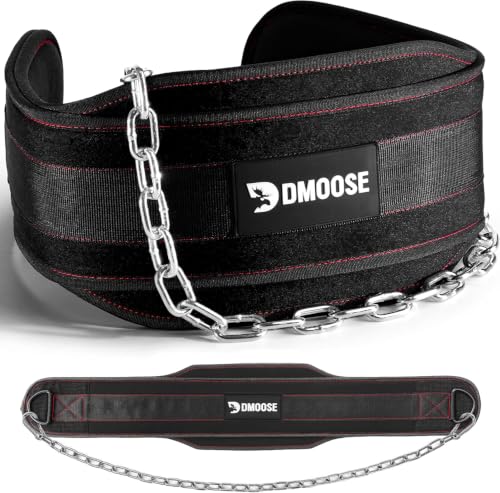
The DMoose is the belt I'd point most people towards, and it's the one that keeps turning up in gyms for good reason. The back panel is thickly padded and 6 inches deep, so the load spreads across your lower back instead of concentrating on a strip of nylon, and the strap itself is heavy nylon with reinforced stitching at the D-rings. That last detail is where cheap belts die.
The steel chain is rated to 350lb, which covers anyone who is not competing in weighted calisthenics, and the carabiners are proper screw-free clips that snap shut with some authority. At 33 inches of belt it fits a wide range of waists as a universal size.
Honest cons: the chain is on the shorter side compared with the RDX below, so if you're stacking four or five 20kg plates you'll find the plates sitting high and close to your body. And the padding, while generous, is foam rather than the anatomically shaped back panel you get on the PULLUP & DIP. For £25, it does everything most people need. Pair it with a solid dip station and you have a complete upper body pressing setup.
Check price on Amazon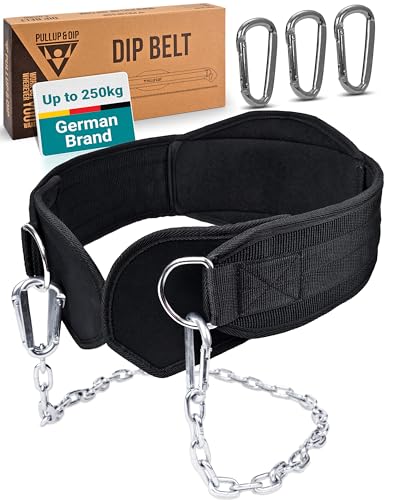
If you're going to spend a lot of time hanging heavy plates off your hips, this is the belt that will annoy you least. The German brand shapes the back panel anatomically rather than cutting a straight rectangle, and it's 15cm wide across the lumbar region with reinforcement through the padding, so the load stays spread even when you're past bodyweight plus 40kg. The company tested it to 250kg.
The detail I like most is small and slightly odd: sewn neoprene flaps that sit between the chain and your clothing. Anyone who has put a hole in a decent pair of shorts because a carabiner caught the fabric mid-rep will understand why that matters. You also get a 100cm chromed steel chain, which is longer than most, plus three carabiners so you can run different chain lengths for dips, pull ups and belt squats without rethreading.
The catch is price. At around £30 it's the most expensive belt here, and the extra buys comfort and finish rather than a higher load rating than the RDX. If you train weighted pull ups two or three times a week, it earns the difference. If you're adding 10kg once a fortnight, it doesn't.
Check price on Amazon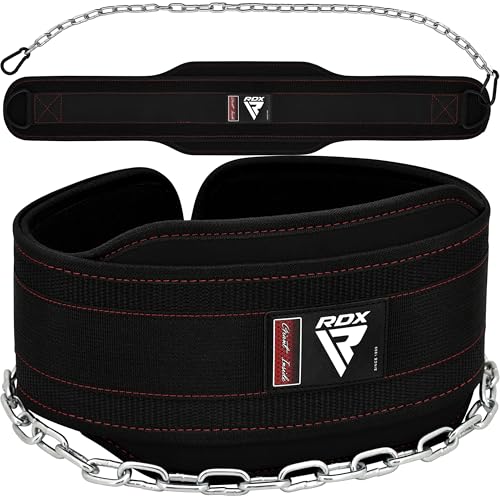
RDX has built its business on boxing kit, and the dip belt carries the same slightly over-engineered attitude. The chain is 7-gauge stainless steel, 36 inches long, extending to about 40 inches once the coated D-rings and dual carabiner clips are in play, and it's rated to 600lb. That chain length is the reason to buy it: with four plates threaded on, they hang low and clear of your legs rather than bunching against your hips.
Back support is 6-inch EVA foam dual padding running 32 inches along the belt, and the double-sided adjustability means you can balance the belt properly rather than having all the slack on one side.
What's not to love: the belt is bulkier than the DMoose and takes a moment longer to get seated correctly, and the EVA foam is firmer, which some people prefer and others find less forgiving than the DMoose's softer padding. The 600lb figure is also chain capacity rather than a promise about the stitching. For anyone loading serious weight on dips, this is the one with the most headroom.
Check price on Amazon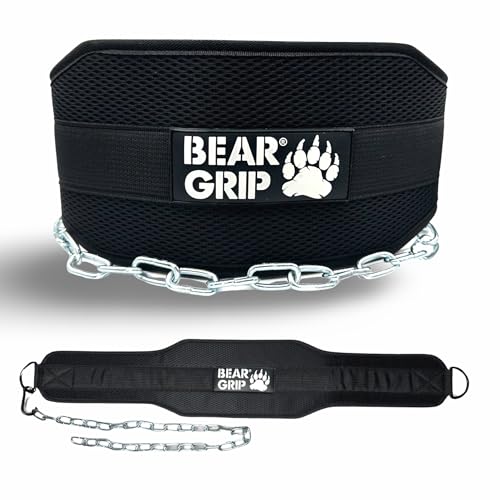
BEAR GRIP is a British gym accessories brand and this belt sits neatly between the budget options and the £25 to £30 tier. Construction is double-layered with reinforced stitching, the shape is contoured to the waist rather than cut straight, and the steel chain handles plates, kettlebells or dumbbells without complaint.
At roughly £20 you're getting most of the DMoose's practical benefit for a fiver less, which is a reasonable trade if your loads are modest. It's the belt I'd suggest for someone who has just started adding weight and isn't sure how far they'll take it.
The honest limitations: BEAR GRIP doesn't publish a load rating, the padding is thinner than the RDX or PULLUP & DIP, and the chain is standard length rather than generous. None of that matters at bodyweight plus 20kg. All of it starts to matter at bodyweight plus 50kg. Good pairing with a doorway or wall-mounted pull up bar.
Check price on Amazon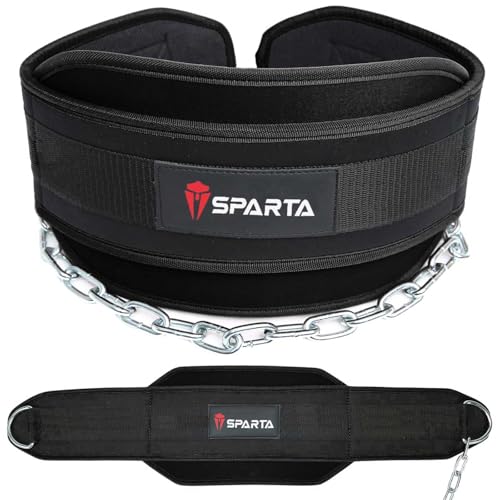
Around £12 buys you a working dip belt, and for a lot of people that's exactly the right amount to spend. The Sparta belt is a 6-inch tapered nylon design with a 34-inch chain, a carabiner, a D-ring and reinforced stitching, and it's fully adjustable across waist sizes. Thread your plates on, clip up, do your dips.
It does the job. What it doesn't do is spread load like the padded belts above, so once you're hanging more than about 20kg you'll feel the edges of the belt against your hips more than you'd like. The hardware is also lighter gauge than the RDX chain, and the finish is basic.
If you're testing whether weighted training is for you, or you want a second belt to leave at the office gym, this is the low-risk way in. Most people who stick with weighted dips upgrade within a year, which at this price is fine. Hang some weight plates off it and get on with it.
Check price on AmazonMatch the belt to the load you actually plan to hang from it:
Load it sensibly. Start at 5kg, add 2.5kg when you can hit your target reps on all sets, and don't let the extra weight turn a controlled dip into a bounce out of the bottom. The ACSM's position stand on resistance training progression is the boring, effective template: small increments, applied consistently, beat jumping 10kg because the plates were sitting there.
For most people the DMoose Dip Belt is the sensible buy. It is thickly padded across the lower back, uses a heavy nylon strap with reinforced stitching and a steel chain rated to 350lb, and it sits at around £25 which is the going rate for a belt you will not need to replace. If comfort under very heavy loads matters more than price, the PULLUP & DIP belt is better made and worth the extra fiver.
The good ones quote between 250lb and 600lb, which is far more than almost anyone will ever hang from one. RDX rates its 7-gauge steel chain to 600lb and PULLUP & DIP has tested its belt to 250kg. In practice the chain is rarely the weak point; the stitching where the D-rings meet the belt is, which is why reinforced stitching matters more than a headline number.
Only once bodyweight stops being hard. If you can do three sets of 12 clean dips or 10 strict pull ups, adding load is the most direct way to keep progressing, and a belt is far more comfortable than pinching a dumbbell between your ankles or wearing a rucksack full of plates. Below that level, spend the £25 on something else and keep working on reps.
A dip belt for dips, pull ups and chin ups, because the load hangs from your hips and does not restrict your shoulders or torso. A weighted vest for press ups, running, walking and anything where a swinging weight between your legs would be a nuisance. They solve different problems and a belt is far cheaper per kilo of load.
Thread the chain through the centre hole of your weight plates, clip both ends to the D-rings so the plates hang in front of your hips, and set the chain short enough that the plates do not swing into the floor at the bottom of a rep. Keep the padded section across your lower back rather than your waist. Start with 5kg, not 20kg, because the first weighted rep always feels heavier than the maths suggests.
Yes, and belt squats done from a raised platform are one of the better ways to train legs without loading your spine. You need two boxes or a raised frame to stand on so the plates can hang between your feet, and a longer chain helps. It is a useful option if your lower back is beaten up from deadlifting.
The best squat racks in the UK for 2026, compared on weight rating, height range and spotters. Cheap squat stands, half racks and a full cage for home gyms at every budget.
The best trap bars and hex bars in the UK for 2026, for home and garage gyms. Honest picks for deadlifts, shrugs and farmer's carries, from budget 1 inch shrug bars to premium open frames.
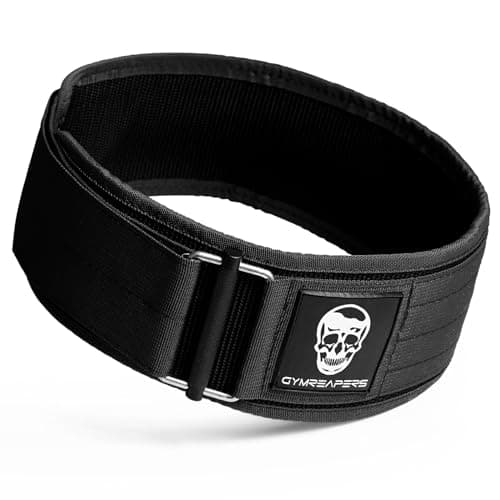
The best weight lifting belt for UK lifters in 2026, from an £18 leather belt to a 13mm lever belt. Thickness, buckle type and sizing compared for squats and deadlifts.
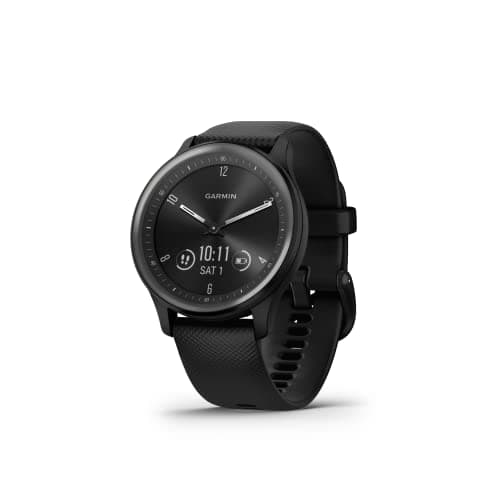
Garmin vivomove Sport review for UK buyers: analogue hands over a hidden OLED, Body Battery and Pulse Ox at £150, but no GPS, no Garmin Pay and a tiny screen.
Best Exercise is a participant in the Amazon EU Associates Programme, an affiliate advertising programme designed to provide a means for sites to earn advertising fees by advertising and linking to Amazon.co.uk. As an Amazon Associate we earn from qualifying purchases. This comes at no extra cost to you and never influences our independent reviews or rankings.