Nutrition
Active Calories vs Total Calories: What Your Watch Means
Active calories vs total calories explained: what Apple Watch, Garmin, Fitbit and Whoop count, how accurate they are, and how many to eat back for weight loss.

By Declan Hallwood, Nutrition & Supplements Editor · Updated 14 August 2026
We may earn a commission from qualifying purchases made through links on this page, at no extra cost to you. This never affects our ratings.
Citrulline is the ingredient that gives a pre-workout its pump, and it is also the ingredient most likely to be underdosed on the label. Your body converts it to arginine, arginine feeds nitric oxide production, and nitric oxide widens blood vessels so more blood reaches working muscle. That is the theory, anyway. The research is scrappier than the supplement industry would like you to believe, but the raw powder costs so little in the UK that the risk-to-reward maths still works out. Here are the citrulline supplements worth buying on Amazon UK, and the dose that actually matters.
How we chose
We researched the citrulline powders and capsules currently in stock on Amazon UK rather than testing every one ourselves. Our shortlist weighs cost per gram of active citrulline, ratio transparency, third-party testing and how the powder mixes, alongside owner feedback. Prices and stock were checked on 14 August 2026 and will move, so check the current listing before you buy.
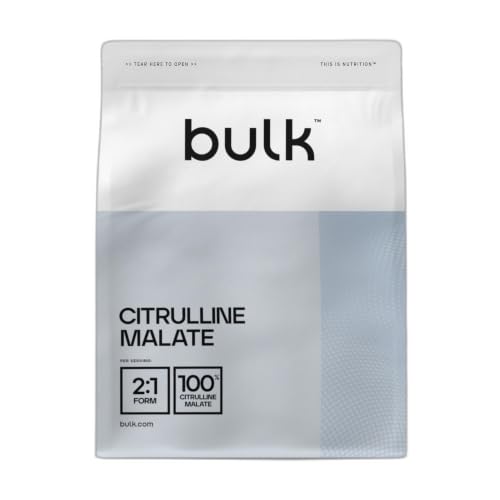
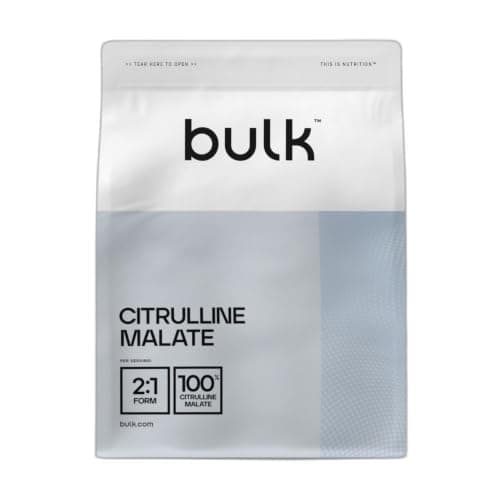
Bulk is a Colchester-based brand that has been selling unflavoured amino acids since long before pre-workout became a category, and its citrulline malate is the default pick for anyone who cares about cost per dose. The 500g bag sits at around £10, which buys roughly 62 servings at the 8g dose used in most research. Work that out and you are paying about 17p a session for the same ingredient that a branded pre-workout charges £1.50 for.
It is a 2:1 ratio, so 8g gives you about 5.3g of citrulline and 2.7g of malic acid. Unflavoured means genuinely unflavoured, which in this case tastes sour and slightly bitter, so plan on hiding it in squash or a flavoured pre-workout rather than water. The other honest downside: a resealable bag of loose powder needs a scoop and a set of scales if you want the dose right, and eyeballing it gets sloppy fast.
Check price on Amazon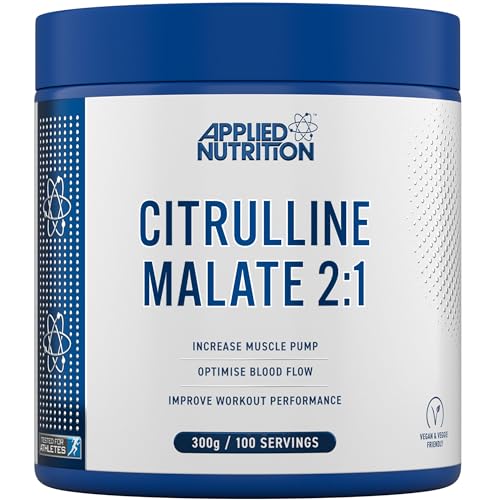
Applied Nutrition builds this one for people who already have a supplement drawer. The 300g tub is dosed at 3000mg per serving with 100 servings listed, and it is unflavoured specifically so it can go into an existing shake without ruining it. Around £15 puts it above Bulk per gram, though you get a proper screw-top tub and a scoop rather than a bag.
One caveat that matters: a 3g serving of citrulline malate is well below the 6g to 8g used in the studies, so read the label as a measuring convention rather than a recommendation, and take two or three scoops if you want a research-level dose. Applied Nutrition is Informed Sport tested across much of its range, which is the reason to pay the premium if you compete under drug testing.
Check price on Amazon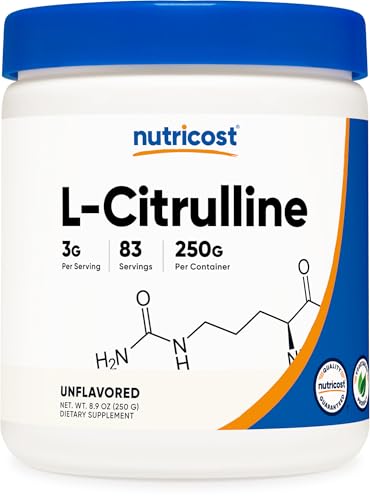
If you would rather skip the malic acid entirely, Nutricost sells straight L-citrulline base at 3g per serving in a 250g tub for around £24. That is the most expensive option here per gram, and it is still the right buy for two types of people: anyone whose stomach dislikes malate, and anyone who wants to know exactly how much citrulline they swallowed without doing ratio arithmetic.
Nutricost third-party tests its powders and produces in a GMP compliant facility, which is more transparency than most Amazon supplement brands offer. The powder is non-GMO, gluten free and vegetarian. It mixes better than citrulline malate too, since malic acid is the part that makes the sour, gritty texture.
Check price on Amazon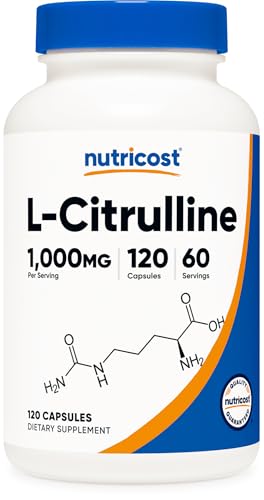
Capsules solve the two problems powder creates, which are the taste and the scales, and they create a new one: you need a lot of them. At 500mg per capsule, a genuine 3g dose is six capsules and a research-level 6g dose is twelve. The 120-capsule bottle costs around £11 and lasts twenty servings at the lower end of that range.
Buy these if you travel, if you train straight from the office, or if you have tried unflavoured amino powder once and never again. Skip them if cost per gram is your deciding factor, because it is not close. The capsules are gelatin rather than vegetarian, which rules them out for vegans.
Check price on Amazon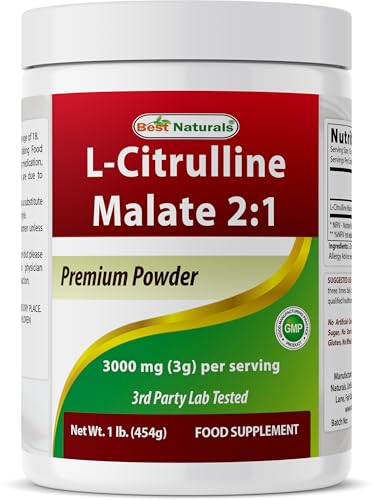
A pound of powder is 454g, which lands this between the Bulk bag and the Applied Nutrition tub on both size and price at around £15. Best Naturals is a US brand, third-party lab tested, made in an FDA-registered GMP facility, and the powder is non-GMO and gluten free.
The reason to pick it over Bulk is stock: Amazon UK listings for imported supplement brands come and go, and having a second unflavoured 2:1 option that is genuinely available matters when your usual bag is out. Availability has been thinner on this one, so check the listing rather than assuming.
Check price on AmazonCitrulline malate is L-citrulline bonded to malic acid, usually in a 2:1 ratio by weight. Malic acid is an intermediate in the Krebs cycle, and the original argument for including it was that it helps with energy production and lactate clearance, though the human evidence for that specific claim is thin.
What matters practically is the arithmetic. An 8g dose of 2:1 citrulline malate contains about 5.3g of citrulline; a 6g dose of pure L-citrulline contains 6g. Compare products on pence per gram of citrulline, not pence per gram of powder, and the picture usually flips towards the malate versions because they are so much cheaper per tub.
Watch for the 1:1 ratio products, which give you more citrulline per scoop but are far less common, and for blends that just say "citrulline malate" without stating a ratio at all. If a brand will not tell you the ratio, you cannot calculate your dose.
Take 6g to 8g of citrulline malate, or 3g to 6g of pure L-citrulline, about 45 to 60 minutes before you train. That window exists because plasma citrulline and arginine peak roughly an hour after ingestion, and swallowing it in the car park is too late to matter.
The dose is where most pre-workout formulas fall down. Plenty list citrulline proudly on the front and then bury 1g or 2g in a proprietary blend, which is a fraction of what any study used. Big names do it too; when we went through the label for our C4 pre workout review, the pump ingredients sat in a blend with no individual doses printed at all. Buying a bag of unflavoured powder and adding it to whatever you already drink is the cheapest fix in supplementation, and it costs less than 20p a session.
A note on stomach comfort
Citrulline malate is acidic and some people get mild gut discomfort at 8g, particularly on an empty stomach. Start at 4g, spend a week there, then move up. If the malate is the part that bothers you, switch to pure L-citrulline rather than giving up on the ingredient.
Here is where honest reporting matters more than a sales pitch. A 2022 systematic review and meta-analysis in Nutrients pooled the aerobic trials and found no significant benefit of citrulline supplementation on aerobic performance outcomes, whether taken acutely or over one to sixteen days. A 2023 trial in the Journal of Functional Morphology and Kinesiology gave trained men and women a full 8g of pure L-citrulline and found no improvement in bench press performance, isometric force or muscle oxygenation.
The strength and power literature is friendlier, with pooled analyses finding small improvements in reps to failure, but a 2021 critical review in the European Journal of Applied Physiology concluded that the efficacy of citrulline malate for exercise performance remains ambiguous, citing inconsistent methods and poor quality control over citrulline-to-malate ratios in commercial products.
So: a small effect at best, most likely on high-rep resistance work and perceived soreness, and quite possibly nothing at all for your 10k time. At 17p a dose that is still a reasonable bet. At £40 for a tub of branded pump powder, it is not.
Anyone whose training basics are not in place. Citrulline is a rounding error next to sleep, protein intake and progressive overload, and the money is better spent on creatine, which has far stronger evidence behind it. If you take blood pressure medication or nitrates, talk to your GP first, because citrulline works on the same nitric oxide pathway and the interaction is real rather than theoretical.
If the pump is what you are after and citrulline has not delivered, beetroot powder attacks nitric oxide from the dietary nitrate side instead and has a better evidence base for endurance work.
Bulk Citrulline Malate 2:1 is the one most people should buy. It is unflavoured, mixes into whatever you already drink before training, and at roughly £10 for 500g it works out at about 17p per 8g dose. Nothing else on Amazon UK matches that cost per gram from a brand with this much of a track record.
For training purposes they deliver the same active ingredient, so the honest answer is that it barely matters. Citrulline malate 2:1 is roughly two thirds citrulline by weight, which means an 8g scoop gives you about 5.3g of actual citrulline. Pure L-citrulline is cheaper per gram of active ingredient once you do that maths, but it is usually more expensive per tub. Buy whichever is cheaper for the citrulline you end up swallowing.
Most studies use 6g to 8g of citrulline malate, or 3g to 6g of pure L-citrulline, taken 45 to 60 minutes before training. Anything under 3g of citrulline malate is unlikely to do much, which is a problem with plenty of pre-workout blends that list citrulline near the bottom of the label.
The evidence is mixed and weaker than the marketing suggests. A 2022 meta-analysis in Nutrients found no significant benefit for aerobic performance, and a 2023 trial using a full 8g dose of pure L-citrulline found no improvement in bench press or isometric force. Reviews of high-intensity strength work tend to find a small effect on reps to failure and soreness. Treat it as a cheap marginal gain, not a step change.
Training days are enough for performance. Some of the more promising research uses daily doses for a week or more before testing, so if you have bought a big bag there is no harm in taking it daily, and blood pressure research generally uses a chronic protocol. There is no loading phase to worry about the way there is with creatine.
Yes, and most pre-workout products already combine all three. Citrulline works on blood flow, creatine works on phosphocreatine stores and caffeine works on the central nervous system, so they do not compete. Mixing unflavoured citrulline malate into a flavoured pre-workout is the cheapest way to fix an underdosed formula.
Active calories vs total calories explained: what Apple Watch, Garmin, Fitbit and Whoop count, how accurate they are, and how many to eat back for weight loss.
The best multivitamin UK buyers can get right now, compared on nutrient forms, dose and price, plus what changes for seniors and over 50s and the honest evidence on who benefits.
How much water should you drink with creatine? The honest answer: mix each 3 to 5g dose in 250 to 350ml, then drink to normal needs. Loading, cramps and dehydration myths explained.
Creatine gummies vs powder, with real UK prices per 5g dose. Gummies cost 4 to 10 times more and some fail lab tests. Here's when each one actually makes sense.
Best Exercise is a participant in the Amazon EU Associates Programme, an affiliate advertising programme designed to provide a means for sites to earn advertising fees by advertising and linking to Amazon.co.uk. As an Amazon Associate we earn from qualifying purchases. This comes at no extra cost to you and never influences our independent reviews or rankings.