Cross Trainers
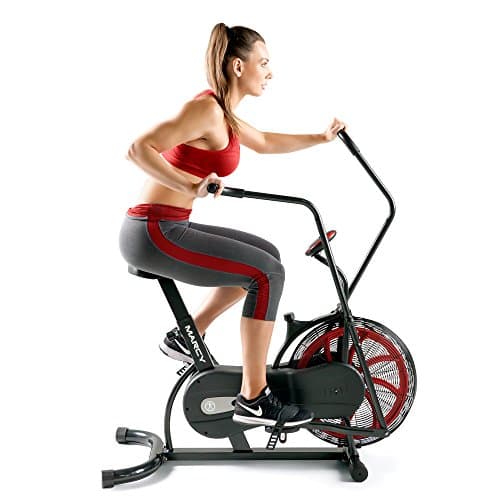
Marcy NS1000 Review: A Compact Fan Bike With Moving Arms
Our Marcy NS1000 cross trainer and exercise bike review: air resistance, dual action arms, 7 seat heights, 110kg limit and basic LCD, plus who should buy it.

By Jacob Chambers, Founder & Lead Reviewer · Updated 22 August 2026
We may earn a commission from qualifying purchases made through links on this page, at no extra cost to you. This never affects our ratings.
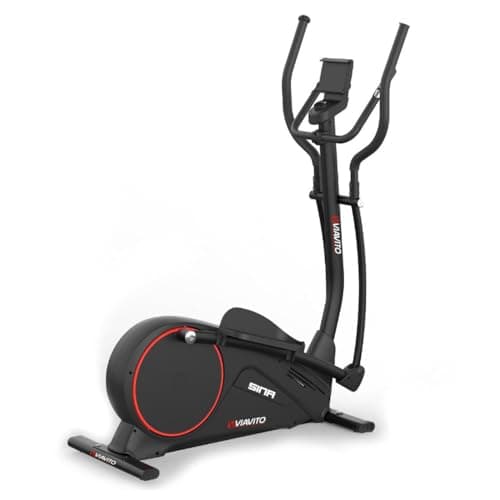
Cross trainers under £400 usually fail in one of two ways: the stride is so short that you end up jogging on the spot, or the frame flexes enough that you spend the session bracing rather than training. The Viavito Sina avoids both, and that is basically the whole review. It is a mid-budget machine that behaves like a more expensive one, at the cost of a few features you will not miss.
The numbers that matter are a 9kg flywheel, a 38cm stride and 47kg of frame. That combination buys smoothness and stability, which is where cheap ellipticals fall down. Viavito lists it at £499 direct; it has been sitting closer to £349 on Amazon, which moves it from fair value to good value.
How we review
This review is built from Viavito's published specifications, recurring findings across independent UK fitness equipment testers, and patterns in verified owner feedback rather than any single opinion. We have not run this exact unit through a long-term test of our own, so we report what is consistently and repeatedly said about it, including the complaints.
Low impact is the honest selling point. Measured joint loading during elliptical exercise produces smaller vertical reaction forces and lower loading rates than walking or running, which is why physios keep recommending them to people with grumbling knees. The same research is worth reading properly, because it also found the reduced impact comes with greater hip flexor and knee extensor demand; you are not getting something for nothing, you are trading one kind of load for another.
For most home users the practical upshot is that you can do your 150 weekly minutes on a cross trainer without the joint cost that running imposes, and you get the upper body involved as a bonus.
Stride length is the specification that separates a usable cross trainer from an irritating one, and 38cm is where a machine stops feeling like a stepper. Taller owners report a proper elongated motion rather than the tight, bouncy circle you get on 30cm budget machines. It is not commercial-gym long, and if your reference point is a Life Fitness elliptical you will notice the difference within a minute, but for home training it clears the bar comfortably.
The 9kg flywheel does the smoothing. Momentum carries you through the dead spot at the top and bottom of each revolution, so the pedals do not stall or surge, and the whole thing feels considerably more expensive than it is. Combined with the machine's weight, there is no rocking or creaking when you accelerate.
Resistance is where the Sina quietly outclasses its price bracket. Thirty-two computer-controlled magnetic levels means each step is small; you can add one notch for a 60 second push and take it straight back off, which is exactly how interval training should feel. The top handful of levels will test a fit user, so there is somewhere to progress to.
| Flywheel | 9 kg |
|---|---|
| Stride length | 38 cm (15 inches) |
| Resistance | 32 computer-controlled magnetic levels |
| Console readouts | Time, speed, distance, RPM, calories, pulse, watts |
| User profiles | 4 |
| Connectivity | Bluetooth, iConsole+ and Kinomap compatible |
| Heart rate | Hand sensors plus wireless chest strap receiver (strap not included) |
| Dimensions | 132 x 55 x 170 cm |
| Machine weight | 47 kg |
| Maximum user weight | 120 kg |
| Warranty | 2 years parts and labour |
| Price | £499 RRP, around £349 on Amazon |
Specifications are taken from Viavito's own product listing.
Set aside an evening. The manual is adequate rather than good, the hardware bags are labelled but not generously, and one stage in the middle involves holding a heavy arm in place while starting bolts, which is the point at which a second pair of hands stops being optional. Most owners report 90 minutes to two hours. Nothing about it is difficult; it is simply long.
The console is the machine's most dated element and its least important. An LED display with a turning knob, showing time, speed, distance, RPM, calories, pulse and watts, does everything a home cross trainer console needs to do. Watts is the readout worth caring about, because it lets you repeat a session honestly instead of guessing from a resistance number. The tablet holder above it is well placed and takes a full-size tablet without wobbling, which is more than some pricier machines manage.
Hand pulse sensors deserve their usual warning: treat them as decorative. If heart rate matters to your training, pair a chest strap to the wireless receiver.
See today's Viavito Sina priceThis is the machine for someone who wants low-impact cardio at home, has room for something that will not fold away, and would rather spend £349 once than £199 twice. It rewards regular use with smooth, quiet, controllable sessions, and the frame will outlast several budget rivals.
It is the wrong machine if you need to fold and stash it, if you weigh over 120kg, or if you want a touchscreen and built-in classes. Anyone weighing a cross trainer against other cardio should read our comparison of rowing machines versus cross trainers first, since the two suit quite different people. Alternatives at both ends of the budget sit in the best cross trainer guide, and the cross trainers section has more reviews, including the cheaper JLL CT300 and the entry-level Reebok ZR8 cross trainer.
Reasonably, yes. The 38cm (15 inch) stride is longer than most machines under £400 and owners over six feet report a comfortable, natural motion rather than the choppy pedalling you get on budget ellipticals. It still falls short of the 18 to 20 inch stride on gym machines, so if you are 6ft 4in and used to a commercial cross trainer, expect a shorter step than you are accustomed to.
The machine weighs 47kg, which is substantial for a home elliptical and part of why it feels stable. Transport wheels at the front let one person tip and roll it across a hard floor, but lifting it, or getting it upstairs, needs two people. Assembly is likewise a two person job for the awkward middle stage.
It connects over Bluetooth and works with the iConsole+ and Kinomap apps, which cover scenic video routes and structured sessions. It does not integrate with Zwift. Treat app support as a useful extra rather than a reason to buy, because the console works perfectly well on its own.
More useful than it sounds. The steps are small, so instead of a jarring jump between levels you can nudge the load up one notch during an interval and feel a real but manageable change. The top few levels are genuinely hard for most fit users, so there is headroom to grow into.
Quiet. Magnetic resistance and a 9kg flywheel mean there is no fan roar and no belt slap, just a low mechanical hum and the sound of your own footfalls. Owners in flats and shared houses consistently rate it as living-room friendly, which is not something you can say about most air rowers or budget treadmills.
Only if you want reliable readings. The fixed handlebars carry hand pulse sensors, and like every hand sensor on every machine they are approximate at best and useless once your hands are sweaty. The console has a wireless receiver, so a compatible chest strap gives you proper data.
Our Marcy NS1000 cross trainer and exercise bike review: air resistance, dual action arms, 7 seat heights, 110kg limit and basic LCD, plus who should buy it.
Cross trainer vs exercise bike compared on muscles, calories, joint impact, space, noise and price, with a straight verdict on which suits your home and goals.
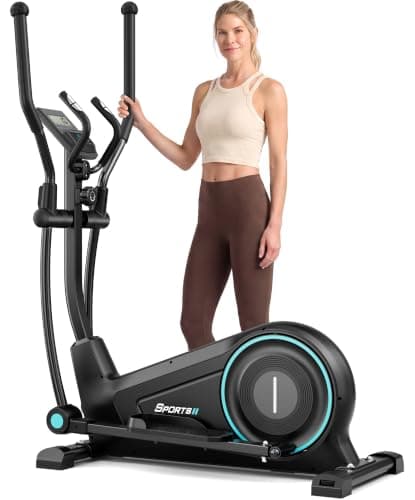
THERUN cross trainer review: 8kg flywheel, 16 magnetic levels and rear drive for £269.99, plus its short 38cm stride, 120kg limit and doubtful 20dB claim.
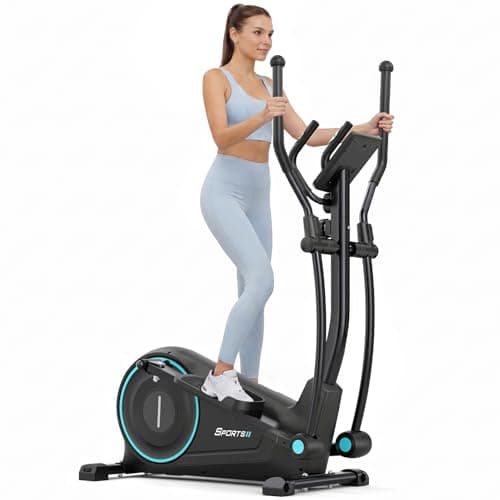
An honest Dripex cross trainer review: the 38cm stride, 8kg flywheel, 16 magnetic levels, 120kg limit, the quiet claims and who this £230 elliptical suits.
Best Exercise is a participant in the Amazon EU Associates Programme, an affiliate advertising programme designed to provide a means for sites to earn advertising fees by advertising and linking to Amazon.co.uk. As an Amazon Associate we earn from qualifying purchases. This comes at no extra cost to you and never influences our independent reviews or rankings.