Cross Trainers
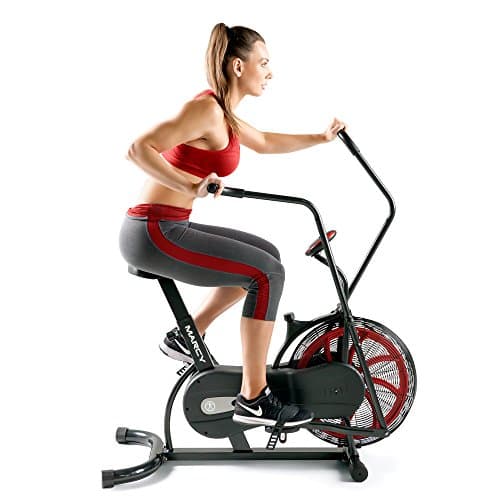
Marcy NS1000 Review: A Compact Fan Bike With Moving Arms
Our Marcy NS1000 cross trainer and exercise bike review: air resistance, dual action arms, 7 seat heights, 110kg limit and basic LCD, plus who should buy it.

By Jack Atkins, Home Gym Equipment Specialist · Updated 27 July 2026
We may earn a commission from qualifying purchases made through links on this page, at no extra cost to you. This never affects our ratings.
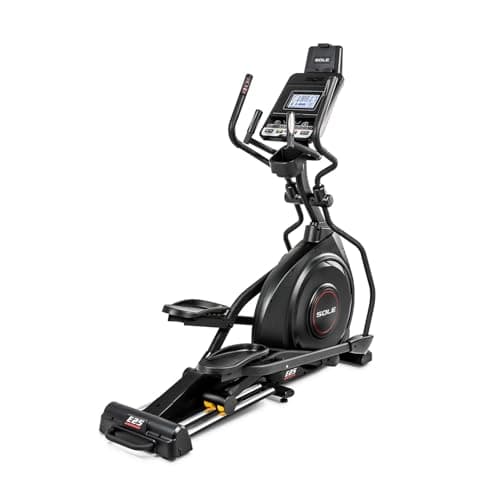
The Sole E25 is a cross trainer built to a commercial specification and sold at a domestic price, which is Sole Fitness's whole pitch as a brand. It costs around £1,299 in the UK, weighs 95kg, carries users up to 158kg and comes with five years of parts cover. Those numbers put it in a different category from the £400 ellipticals that dominate Amazon UK, and after digging through the specs and owner feedback, the extra money mostly goes where it should: into the frame, the flywheel bearing and the brake system rather than into a touchscreen.
What you sacrifice is glamour. There is no 22 inch display, no subscription platform with celebrity trainers, no automatic anything. You get a 7.5 inch LCD, twenty resistance levels, twenty incline levels and a machine that will still be working in fifteen years.
How we review
This review is based on Sole Fitness's published UK specifications, verified owner reviews, and coverage from established fitness testing outlets. We have not run our own long-term endurance test of this exact unit, so we report only findings that appear consistently across sources, including the criticisms.
Somebody who has already decided cardio at home is a permanent part of their life, and who wants to buy once. Runners nursing knee or hip problems get particular value, because elliptical training removes the impact of foot strike entirely while still loading the legs and lungs. It also suits households where two people of different heights share a machine, since the 51cm stride is comfortable across a wide range without adjustment.
It is overkill for occasional use. If a cross trainer is going to see twenty sessions a year, spend a third of this and put the difference somewhere else; our best cross trainer UK guide covers those options.
Sole's reputation rests on how its machines feel underfoot, and the E25 earns it. The 9kg flywheel is modest on paper, but flywheel weight alone is a poor proxy for smoothness; where the mass sits and how well the bearings are made matters more, and Sole spends money there. The result is a stride with no dead spot at the top and no clunk at the bottom, and pedals set slightly inward to reduce the hip splay that makes cheaper ellipticals uncomfortable after twenty minutes.
Resistance comes from an eddy current brake, which slows a metal flywheel using a magnetic field with nothing touching anything. Twenty levels, adjusted either from the console or from quick-touch controls on the handlebars, and the changes land instantly rather than after a two second delay. There is nothing to wear out, which is a large part of why the warranty is as long as it is.
The powered incline is the feature I would miss most. Ramping it up rotates the emphasis from quads towards glutes and hamstrings without changing anything else, so one machine gives you several genuinely different sessions. Combined with the twenty resistance levels, there is enough range here to keep progressing for years.
| Stride length | 51 cm / 20 in, fixed |
|---|---|
| Flywheel | 9 kg / 20 lb |
| Resistance | 20 levels, computer-controlled ECB magnetic |
| Incline | 20 levels, powered |
| Console | 7.5 in LCD |
| Programs | 10 (manual, 5 preset, 2 user, 2 heart rate control) |
| Max user weight | 158 kg / 348 lb |
| Dimensions | 177 x 60 x 177 cm |
| Machine weight | 95 kg / 209 lb |
| Warranty (home use) | 5 years parts, 3 years labour |
| Connectivity | SOLE+ app, Kinomap, Bluetooth heart rate |
The usual claim about cross trainers is that they spare your joints, and broadly that holds: your feet never leave the pedals, so there is no foot strike and none of the vertical loading that comes with running. Research measuring joint loading during elliptical exercise found lower vertical pedal reaction forces than level walking, but also noted that this comes with greater hip flexor and knee extensor moments (Medicine and Science in Sports and Exercise, 2007).
Translated: it is easier on the impact-sensitive structures and not a free ride for the muscles around the knee and hip. Anyone rehabilitating a specific knee problem should take advice rather than assuming an elliptical is automatically safe. For general low-impact cardio in someone with grumbling joints, it remains one of the best options available, and hitting the NHS target of 150 minutes of moderate activity a week is far more achievable on a machine that does not hurt afterwards.
The 7.5 inch LCD is backlit, readable from the pedals and shows time, speed, distance, pace, incline, resistance, calories and heart rate at once. Ten programs cover manual, five presets, two user-defined slots and two heart rate control programs that adjust resistance to keep you in a target zone. That last feature is more useful than it sounds if you train by heart rate; a chest strap is optional and pairs over Bluetooth, and the hand pulse sensors on the fixed grips work for a rough figure.
SOLE+ adds video classes and syncs data out to Fitbit, Strava, Google Fit, Apple Health and MapMyFitness. Kinomap gives you real-world route videos. Neither is required and neither is bundled hardware, which is a philosophical difference from NordicTrack machines like the RW300 where the subscription is the point.
What it will not do: fold, move easily, or impress a visitor with its screen. Full specifications are published on the official Sole Fitness UK product page.
Three times the price of a mid-range home elliptical buys you a machine with roughly three times the mass, a brake system with no wear parts, and a warranty that says Sole expects it to last. Amortised over ten years, £1,299 is about £130 a year, which compares well with almost any gym membership. Against the Bowflex Max Trainer M6, the E25 gives a longer, more natural stride and better durability; the Bowflex gives a more intense, compact HIIT-focused workout in less floor space.
The honest counterargument is that most people do not need this much machine. If you are unsure whether you will stick with cross training, buy something cheaper, prove the habit, and upgrade later. Browse the alternatives in our cross trainers section or across the home gym guides.
If you are keeping a cross trainer for the long haul, yes. At around £1,299 it costs three times what a mid-range home elliptical does, and the difference shows up in the 95kg frame, the 158kg user capacity and a warranty of 5 years on parts. Anyone who will use it twice a month is buying far more machine than they need.
51cm, or 20 inches, which is fixed rather than adjustable. That suits most adults between roughly 5ft 2in and 6ft 2in. Taller users who want a longer, more running-like stride should look at Sole's E35 or E95, which stretch to 56cm.
Yes, 20 levels of powered incline adjusted from the console, which is unusual at this price. Raising the ramp shifts emphasis onto the glutes and hamstrings, and it is the single most useful feature for stopping cross trainer sessions turning into the same 30 minutes forever.
No. The 7.5 inch LCD console runs 10 programs on its own, including two heart rate control programs, with no subscription and no account. The SOLE+ app and Kinomap add classes and virtual routes if you want them, and SOLE+ can push your data to Strava, Apple Health, Fitbit and Google Fit. None of it is required.
It is 177cm long, 60cm wide and 177cm tall, and it weighs 95kg. Add about 60cm of clearance behind and a metre of ceiling height above your own head. It does not fold. Transport wheels help you shuffle it, but realistically this machine lives where you build it.
Very. The eddy current brake system has no friction pads to wear or squeal, and owners consistently describe it as quiet enough for early mornings in a flat. The loudest thing about it tends to be your own feet on the pedals.
Our Marcy NS1000 cross trainer and exercise bike review: air resistance, dual action arms, 7 seat heights, 110kg limit and basic LCD, plus who should buy it.
Cross trainer vs exercise bike compared on muscles, calories, joint impact, space, noise and price, with a straight verdict on which suits your home and goals.
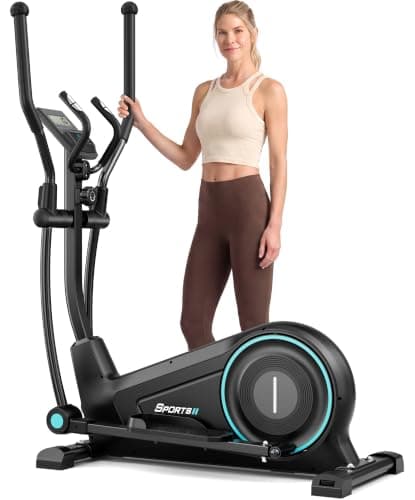
THERUN cross trainer review: 8kg flywheel, 16 magnetic levels and rear drive for £269.99, plus its short 38cm stride, 120kg limit and doubtful 20dB claim.
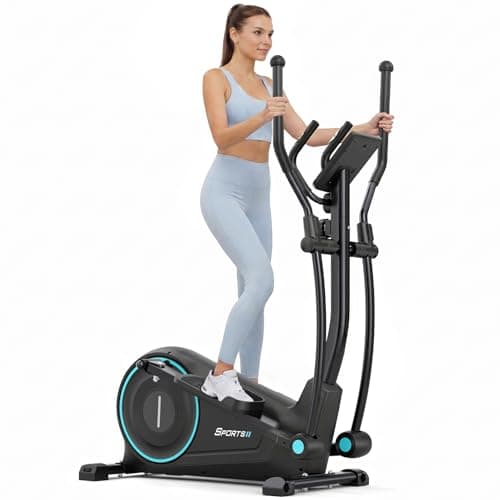
An honest Dripex cross trainer review: the 38cm stride, 8kg flywheel, 16 magnetic levels, 120kg limit, the quiet claims and who this £230 elliptical suits.
Best Exercise is a participant in the Amazon EU Associates Programme, an affiliate advertising programme designed to provide a means for sites to earn advertising fees by advertising and linking to Amazon.co.uk. As an Amazon Associate we earn from qualifying purchases. This comes at no extra cost to you and never influences our independent reviews or rankings.