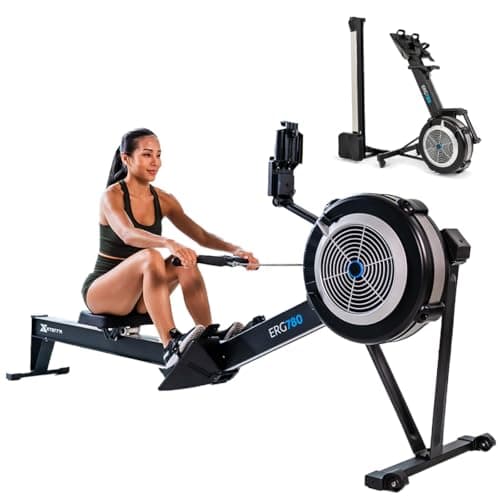
Rowing Machines
Xterra ERG780 Review: A Folding Air Rower at Half Concept2 Money
Our Xterra ERG780 air rower review covers the 10-level damper, Bluetooth FTMS app support, noise, monitor accuracy, folding storage and how it compares with a Concept2.

By Paul Kendrick, Cardio & Endurance Editor · Updated 20 September 2026
We may earn a commission from qualifying purchases made through links on this page, at no extra cost to you. This never affects our ratings.
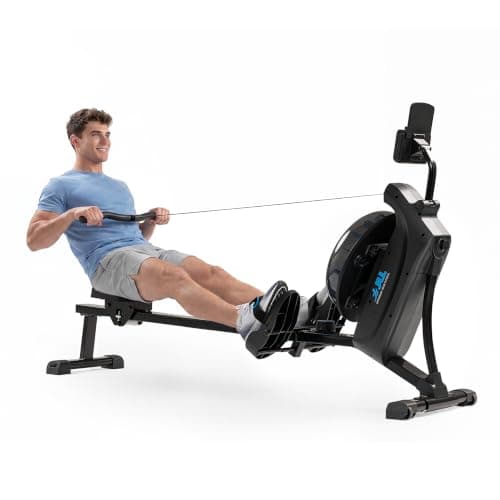
JLL has been selling home gym kit out of Birmingham since 2012, mostly treadmills and exercise bikes, and this rower is its attempt at the water category without the £900 that a WaterRower asks. The pitch is dual resistance: a 60 degree water tank for the stroke feel, plus a 16-level magnetic brake so you can change the load without touching the water. At £299.99 it sits in an odd gap, above the cheap magnetic rowers and well below the wooden water machines people actually lust after.
The short version is that the dual resistance matters less than JLL wants it to, and the frame matters more. A 130cm rail with a 112cm inseam at this price is unusual, and the 150kg user capacity is above what most £300 rowers manage. Those two numbers are why I would buy it. The magnetic brake is a pleasant extra rather than the headline.
How we review
This review draws on JLL's published specification, verified owner feedback on Amazon UK, and our own experience with the budget water rowers this machine competes against. We have not put a months-long endurance test through this exact unit, so where owners disagree we have said so rather than picking the flattering version.
Tall rowers on a budget, mainly. If you are over 6ft and you have been squeezed onto a 110cm rail, the extra 20cm here changes the stroke from cramped to normal. It also suits anyone who wants the water sound at home and has written off the £900 machines. What it does not suit is a first-floor flat with someone underneath, because a water tank sloshing at 26 strokes a minute is nothing like a quiet magnetic flywheel. Our best water rowing machine UK guide covers what you get if you spend more.
Check price on Amazon£299.99Two systems act on the same drive: water in the tank, plus a magnetic brake you set from 1 to 16. Water resistance is self-regulating, meaning it climbs sharply with how hard you pull, so an easy stroke stays easy and a hard one bites. Magnetic resistance is fixed at whatever level you choose, regardless of effort.
Combining them gives you something useful that a pure water rower cannot do. On a recovery day you can hold 22 strokes a minute at a low magnetic level and the machine stays light, whereas a plain water rower forces you to either row lazily or pull hard. The flip side is that the two systems never quite feel like one. Wind the magnets up past level 10 and the stroke starts to feel braked rather than fluid, which is exactly the sensation water rowers exist to avoid. Most owners seem to find a level somewhere between 4 and 8, set it once, and forget the dial.
| Resistance | 60 degree water tank plus 16-level magnetic brake |
|---|---|
| Slide rail | 130 cm |
| Maximum inseam | 112 cm |
| Suits user height up to | 210 cm (JLL figure) |
| User weight capacity | 150 kg |
| Machine weight | Approx 35 kg |
| Footprint | Approx 196 x 51 x 108 cm |
| Monitor | Adjustable LCD: time, distance, calories, strokes, SPM |
| Modes | Manual, Program, Race |
| App | SunnyFit via Bluetooth |
| Storage | Tilts upright on transport wheels |
The catch is the good part. With the tank filled to the middle line there is real weight at the front of the stroke, and the drive feels connected in a way that a cheap magnetic rower never does. The 130cm rail means a 6ft 2in rower can reach full compression without the seat running out of track, which is the complaint that dominates reviews of shorter budget machines.
Seat comfort is ordinary. The pad is broad and lightly cushioned, fine for 20 minutes and noticeably less fine at 45. Foot plates are wide with the usual ratchet straps, and they hold well enough that I would not bother upgrading them. The handle is padded and sits at a sensible height at the catch, which matters more than people expect: a handle that sits too low pulls you into neck extension as you speed up, and cervical range of motion does shift measurably with stroke rate (pilot study on cervical spine kinematics during ergometer rowing). If your neck aches after intervals, check your finish position before you blame the machine. Our rowing machine technique guide walks through the sequence.
Noise is the honest weak point. Water rowers are loud by design, somewhere in the region of a dishwasher on a full cycle, and adding magnets does nothing to quieten the tank. Downstairs neighbours will know when you train.
The LCD is the generation that tells you time, distance, calories, strokes and stroke rate, then stops. No watts, no drag factor, no 500m split as a headline figure. For general fitness that is enough. If you want to train to numbers, a Concept2 Model D is the machine that does it properly, and it costs three times as much.
The app is SunnyFit, which is Sunny Health and Fitness's platform rather than anything JLL built. That is worth knowing because it strongly suggests a shared OEM frame with Sunny's own dual-resistance rowers, and you should judge spare parts availability accordingly. JLL's UK support is the reason to buy from them rather than an unbranded import; their rowing machine range lists the warranty terms.
Assembly takes about 40 minutes from the box, and the tank fills with a syphon after the frame is built. Do not fill it first.
Check price on Amazon£299.99At £300 this competes with the good magnetic rowers rather than the wooden water ones, and that is the comparison to make. A MERACH magnetic rower at a similar price is quieter, folds smaller and gives you a more consistent load. This JLL gives you the water feel, a longer rail and a higher weight limit, and takes the noise as the cost. Rowing itself is the draw either way: it is low-impact, it works most of the body at once, and the NHS asks adults for muscle-strengthening work on at least two days a week alongside cardio, which a rower covers in one session.
If you are still deciding between machine types, rowing machine versus cross trainer is the comparison most people are actually weighing, and the rest of the category sits in our rowing machines hub.
Yes, there is a proper sealed tank with paddles that you fill yourself, and the stroke makes the swooshing sound you would expect. What makes it unusual is the 16-level magnetic brake working alongside the tank, so resistance does not depend purely on how hard you pull. Purists will call that a compromise. For anyone who wants a light recovery row without dropping the stroke rate, it is handy.
JLL quotes a 130cm slide rail and a 112cm inseam, which it says suits users up to 210cm. In practice anyone under about 195cm will have plenty of rail left. It is one of the longer rails you will find at £300, and it is the single best reason to pick this over a shorter budget rower.
You fill it yourself once, using the supplied syphon and the fill lines on the tank. More water means a heavier catch. Most people settle somewhere in the middle and leave it, then use the magnetic levels for day-to-day adjustment rather than draining and refilling.
It does not fold in half like a magnetic rower. It tilts upright on its end and rolls on built-in wheels, so the storage footprint is roughly 51cm wide by a bit over half a metre deep, standing about two metres tall. You need the ceiling height for that, which small flats sometimes do not have.
Bluetooth to SunnyFit, which is Sunny Health and Fitness's app rather than a JLL one. That tells you something about where the frame comes from, but the app itself is fine, with trainer-led sessions and scenic routes. You are not locked into a subscription to use the machine.
If you want the water sound and the fuller catch, yes. If you only care about a quiet, repeatable workout in a flat with neighbours below, no. A water tank is louder than a magnetic flywheel by a wide margin, and at this price a straightforward magnetic rower will give you a smoother, quieter session.
Our Xterra ERG780 air rower review covers the 10-level damper, Bluetooth FTMS app support, noise, monitor accuracy, folding storage and how it compares with a Concept2.
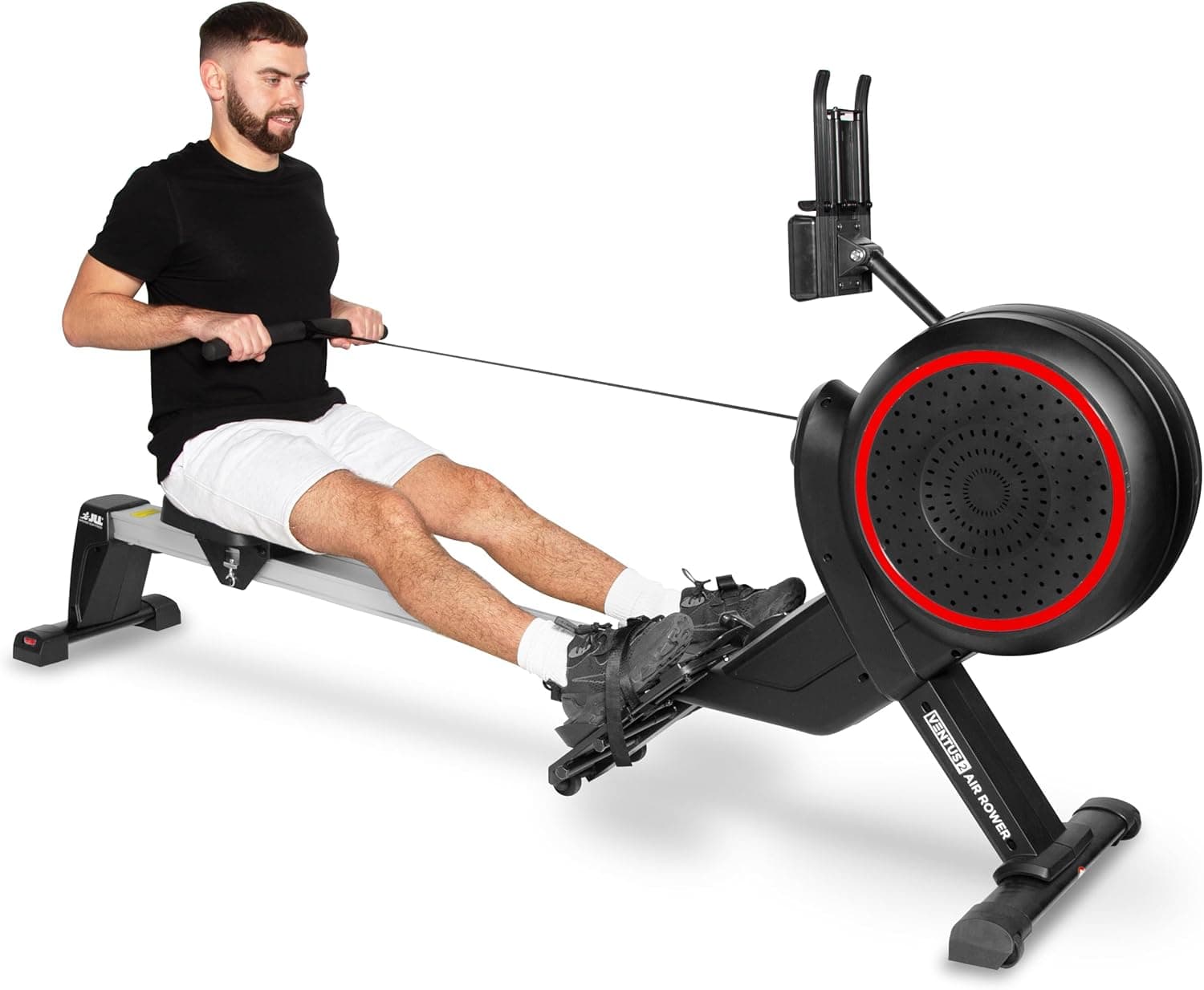
The best foldable rowing machines in the UK for 2026, compared on folded footprint, rail length and weight limit. Picks from JLL, DMASUN, YPOO, Viavito and MERACH for every budget.
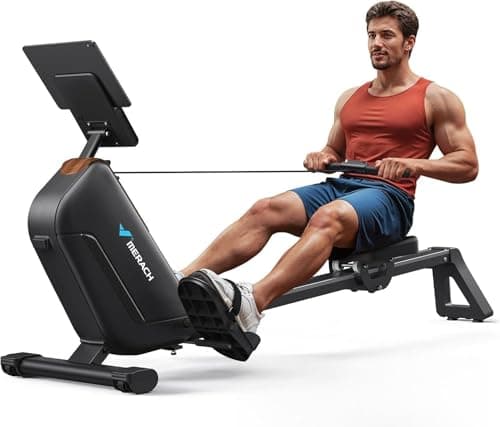
An honest MERACH R15 Pro review: 40kg peak electromagnetic resistance, 16 levels adjusted from the handlebar, a 130cm rail, 158kg capacity and who this £300 rower suits.
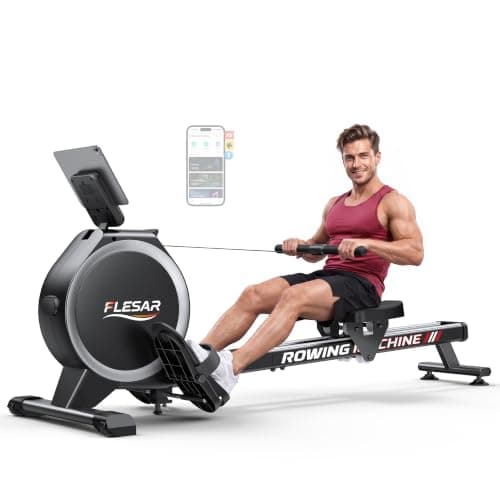
An honest Flesar rowing machine review: 16 magnetic levels, Kinomap and FitShow support, dual rails, a 160kg limit and the short 101cm rail that tall rowers need to know about.
Best Exercise is a participant in the Amazon EU Associates Programme, an affiliate advertising programme designed to provide a means for sites to earn advertising fees by advertising and linking to Amazon.co.uk. As an Amazon Associate we earn from qualifying purchases. This comes at no extra cost to you and never influences our independent reviews or rankings.