Treadmills
UMAY 20% Incline Treadmill Review: Steep Walking for £240
An honest UMAY 20% incline treadmill review: 3.5HP, 14km/h, a 108 x 40cm belt and a 180kg rating for around £240, plus the listing claims we'd question.

By Paul Kendrick, Cardio & Endurance Editor · Updated 26 October 2026
A curved treadmill is a non-motorised treadmill with a concave, slatted running surface that you power entirely with your own legs. There's no motor and no speed button; you speed up by moving towards the front of the curve and slow down by drifting back, which makes it brilliant for sprints and intervals but awkward for slow, steady walking. Real ones from Woodway, Assault and TrueForm cost thousands, weigh as much as a small motorbike and are loud, so for most people buying for a home, a good motorised incline treadmill is still the smarter purchase. Here's how they work, what the research shows and who they genuinely suit.
Picture a shallow U shape. The running surface dips in the middle and rises at the front and back, and instead of a continuous fabric belt it's made from dozens of rubber-coated slats mounted on bearings, a bit like a tank track.
When you stand at the lowest point, gravity holds you more or less still. Step forward onto the rising front section and each footstrike pushes the slats backwards and down the slope, so the belt speeds up underneath you. Stay forward and you keep accelerating. Ease back towards the bottom of the dip and the belt slows, and if you stand still it stops.
That's the whole control system. Speed follows your position on the curve, which means the treadmill matches you rather than you chasing a speed the console has set. Most models have a small battery or self-generated console that shows pace, distance and time, plus some have a resistance setting that makes the belt harder to turn. If you want a feel for what those pace figures mean, our treadmill speed to pace converter translates kph into minutes per kilometre and mile.
Not the same as a cheap manual treadmill
Search Amazon for a non-motorised treadmill and you'll mostly find flat, folding belt machines for £100 to £300. Those use a fixed or slightly inclined flat deck and a friction belt you have to drag round, which feels heavy, clunky and nothing like running. They are not curved treadmills. If a listing doesn't show a slatted, concave deck, it isn't one.
The headline claim is that a curved treadmill burns more calories at a given speed, and that one holds up.
A crossover study from High Point University put 10 athletic adults on a non-motorised curved treadmill and a standard motorised treadmill at identical speeds (Smoliga et al., 2015). Running at about 8kph cost an average of 10.7 METs on the curve against 7.3 METs on the motorised machine, and walking at roughly 4.8kph came out at 5.9 versus 3.4 METs. That's somewhere around 45% to 75% more work for the same speed. Perceived effort only rose a little, though, and when the participants picked their own easy and moderate paces blind, they chose noticeably slower speeds on the curve.
A 2022 pilot study on the Assault AirRunner found the same direction of travel: higher oxygen uptake, heart rate and carbohydrate use at matched speeds, with heart rate still elevated five minutes after stopping (Morrow et al., 2022). It only had four participants, so treat it as supporting evidence rather than proof.
Why the gap? On a motorised treadmill the belt does part of the job of carrying your foot backwards. On a curve you supply all of that force, and you're effectively running up a gentle slope to stay at the front.
The practical takeaway matters more than the numbers. If you run by feel, you'll slow down on a curve, and some of that extra calorie cost disappears. It's a harder machine at the same speed, not a magic fat-burner.
Sprinting feels natural. You can go from a jog to a flat-out sprint in two or three strides, then back off just as quickly, without stabbing at buttons or waiting for a motor to catch up. That's why university labs use the Woodway Curve for sprint testing; one study found a 30-second curved treadmill sprint was reliable after two familiarisation sessions and tracked closely with the classic Wingate bike test (Gonzalez et al., 2013).
No motor to burn out or plug in. There's no electricity bill, no motor controller to fail and no need to sit it near a socket. Maintenance mostly comes down to checking the slats and bearings occasionally.
Higher intensity at a given pace suits HIIT and conditioning work, and the self-paced nature means you're never thrown off the back if you fade. There's also a hint that it's easier on your legs. A 2021 study of 27 recreational runners recorded lower impact accelerations at the shin and head on a curved treadmill than on a motorised one at matched speeds, even though stride length and cadence barely changed (Encarnación-Martínez et al., 2021). It's a single study, so treat it as promising rather than settled. Good mechanics still matter, so brush up on treadmill running form either way.
The price is the big one. Expect roughly £2,000 to £6,000 or more for a genuine curved treadmill from an established brand, and commercial models push higher. For the same money you can buy a top-end motorised machine like the Sole F80 or the NordicTrack Commercial 1750 and have change left.
Then there's weight. Most real curved treadmills weigh somewhere in the region of 130kg to 180kg, they don't fold and they're long. Getting one up a flight of stairs or into a spare bedroom is a two or three-person job, and you'll want to think about floor loading in an upstairs room.
Slow walking is surprisingly hard. Holding a steady 4kph takes constant micro-adjustments, and because you're doing all the work it feels more like a brisk hike than a stroll. People who want to walk while working or recover with easy miles usually give up on the curve.
Noise catches people out. The slats clatter, especially at sprint speed, and that rumble travels through floors in a way a cushioned motorised deck doesn't.
Finally, there's a learning curve (sorry). The first few sessions feel odd, you'll drift backwards when you tire, and holding a precise target pace takes practice. Even the 2013 lab study needed two familiarisation trials before results settled down.
A curved treadmill makes sense if you fall into one of these groups:
Most home buyers, honestly. If your main goals are steady running, long easy miles, weight loss or incline walking, a motorised treadmill does those jobs better for a fraction of the price. It holds a pace for you, it's quieter, many models fold, and steep incline gives you a lot of the extra calorie burn people hope to get from a curve. Our pick of the best incline treadmills is a good starting point, and if you're torn between machines entirely, StairMaster vs treadmill compares the two for fat loss and leg work.
Walkers in particular should skip the curve. So should anyone in a flat, an upstairs room or a house where noise matters.
Check the deck first: a proper curve with rubber-topped slats on sealed bearings, not a flat belt. Then look at the frame weight and user limit, since a heavier frame usually means a steadier ride at sprint speed. A resistance setting is worth having if you want sled-style pushes. Look for a console that shows pace and distance accurately without needing mains power, and confirm the warranty covers slats and bearings for several years. If you can, try one at a gym first; ten minutes on a curve will tell you more than any spec sheet.
A curved treadmill is a non-motorised treadmill with a concave running surface made of rubber-topped slats. There's no motor: your feet drive the belt, and you control speed by where you stand on the curve. Move forward and you speed up, drift back and you slow down. Well-known examples include the Woodway Curve, Assault AirRunner and TrueForm Runner.
Yes, at the same speed. In a 2015 crossover study, running at a matched pace cost about 10.7 METs on a non-motorised curved treadmill against 7.3 METs on a standard motorised one, and walking showed a similar gap. A smaller 2022 pilot study on the Assault AirRunner also found higher oxygen uptake and heart rate at matched speeds. The catch is that people naturally choose slower speeds on a curve, so the gap narrows if you run by feel.
Genuine curved treadmills from Woodway, Assault, TrueForm and similar brands typically cost somewhere between £2,000 and £6,000 or more, depending on the model and whether it's a commercial spec. Anything sold for a few hundred pounds as a manual treadmill is almost always a flat, cheap belt machine, which is a very different product.
Not especially. Walking at a steady, slow pace takes constant small adjustments to stay in the right spot on the curve, and the extra effort makes a gentle walk feel harder than it should. If walking or incline walking is your main goal, a motorised incline treadmill is the better buy.
There's some early evidence for it. A 2021 study of 27 recreational runners measured lower impact accelerations at the head and shin on a curved non-motorised treadmill than on a motorised one at the same speeds, while heart rate and perceived effort were higher. That's one study on healthy runners, though, so don't buy one purely as an injury fix.
Yes, and that's one of the main reasons people buy them. Because you set the pace with your own effort, a curved treadmill suits hard intervals and running on tired legs between stations. Many HYROX-affiliated gyms use them for exactly that.
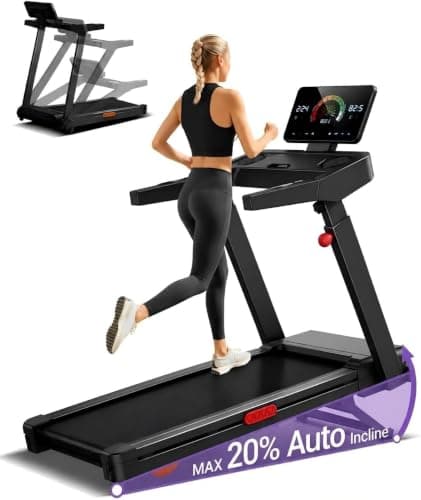
An honest UMAY 20% incline treadmill review: 3.5HP, 14km/h, a 108 x 40cm belt and a 180kg rating for around £240, plus the listing claims we'd question.
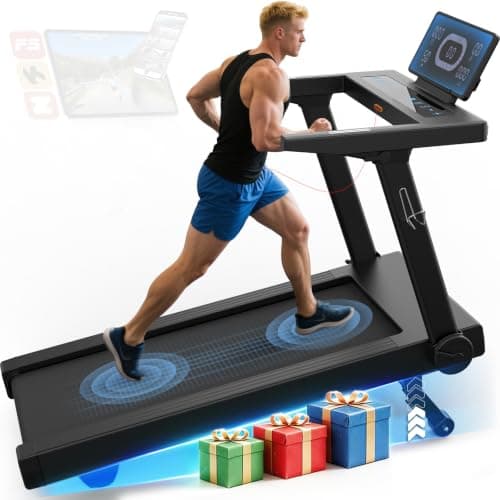
An honest Cowmew treadmill review: 20% auto incline, 20km/h, a 130 x 48cm deck and 180kg rating for £425, plus the 7HP and 40dB claims we doubt.
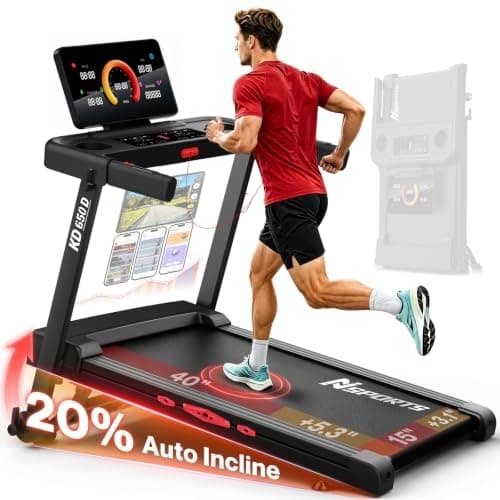
An honest Neezee treadmill review: 0 to 20% auto incline, 18km/h, a 46 x 115cm belt, 150kg rating and 5-year warranty for £350, plus the claims we doubt.
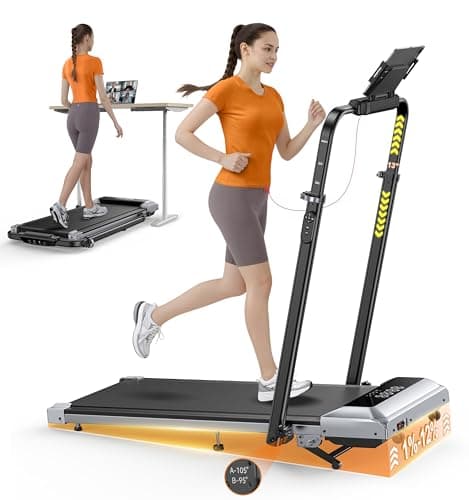
Our Toputure 12% incline walking pad review: manual 1/6/12% incline, 115cm handrail, 12km/h, 130kg limit and a 40x100cm belt, for £239.99 on Amazon UK.
Best Exercise is a participant in the Amazon EU Associates Programme, an affiliate advertising programme designed to provide a means for sites to earn advertising fees by advertising and linking to Amazon.co.uk. As an Amazon Associate we earn from qualifying purchases. This comes at no extra cost to you and never influences our independent reviews or rankings.