Nutrition
Creatine Gummies vs Powder: Which Is Better? (UK Costs Compared)
Creatine gummies vs powder, with real UK prices per 5g dose. Gummies cost 4 to 10 times more and some fail lab tests. Here's when each one actually makes sense.

By Declan Hallwood, Nutrition & Supplements Editor · Updated 9 August 2026
Ask this question in any gym and you'll get told, with total confidence, two opposite answers. The honest version is that creatine timing is one of the least important decisions in your supplement routine, and the gap between the best and worst timing is smaller than the gap between taking it every day and taking it most days. That said, there is a small amount of real evidence pointing one way, so here's what it shows and what to do with it.
Take it after training if you're picking a side. Take it whenever you'll actually remember if you're being sensible.
The reason timing matters so little comes down to how creatine works. It isn't a stimulant that acts during the session; it raises the amount of phosphocreatine stored inside your muscle cells, and that store takes days to fill and weeks to empty. By the time you're a fortnight into supplementing, a single 5g dose is topping up a tank that's already close to full. Whether that top-up lands at 6am or 9pm barely registers.
The one rule that matters
Daily consistency beats every timing strategy. Someone taking 5g at a random time each day will out-perform someone taking 5g at the perfect moment four days a week. If you're deciding between optimising timing and just remembering it, remember it.
Two studies get quoted in this argument, and they disagree, which tells you something about the size of the effect.
The first is a 2013 trial from Antonio and Ciccone. Nineteen recreational male bodybuilders took 5g of creatine either immediately before or immediately after training for four weeks. The post-workout group came out marginally ahead on lean body mass and bench press strength, and the authors concluded that post-workout "appears to be superior" (The effects of pre versus post workout supplementation of creatine monohydrate on body composition and strength). Nineteen people is a small sample, the differences were modest, and the finding has never been replicated convincingly.
The second is larger and longer: eight weeks, male and female collegiate athletes, creatine taken pre-training versus post-training. It found no meaningful difference between the groups in resistance training adaptations or body composition (Effects of creatine monohydrate timing on resistance training adaptations and body composition).
So one small study nudges towards after, and one bigger study says it makes no difference. That's the entire evidential basis for an argument people have been having for a decade.
Dose and consistency. The International Society of Sports Nutrition's position stand is unambiguous that creatine monohydrate is both effective and safe, with short and long-term use up to 30g a day for five years tolerated without the kidney and cramping problems it's been accused of for years (ISSN position stand: safety and efficacy of creatine supplementation). The efficient protocol it describes is around 0.3g per kilogram of bodyweight daily for 5 to 7 days, then 3g to 5g a day to maintain.
For an 80kg person that's about 24g a day during loading, split into four doses so your stomach doesn't object, then a single 5g scoop from then on. Skip the loading phase if bloating bothers you; 3g a day gets you to full saturation in roughly four weeks instead of one, and the end point is identical.
The form matters too, and here the answer is boring. Creatine monohydrate is the version with the research behind it and it's also the cheapest by a distance. HCl, kre-alkalyn, buffered blends and the rest charge more for claims that haven't held up. Our best creatine UK guide covers which monohydrate tubs are worth buying, and we've reviewed both Myprotein creatine and Bulk creatine individually.
Pick whichever of these you'll stick to:
Water intake deserves a mention. Creatine pulls water into muscle cells, which is where the initial 1kg to 2kg of scale weight comes from, and it's a good thing rather than a side effect to manage. Drink normally. There's no need to force litres of extra fluid.
Creatine works for most people, but roughly 20% to 30% of users are non-responders whose muscle stores are already near saturation from a diet high in red meat and fish. If you've taken it properly for six weeks with no change in bodyweight, strength or training volume, you're probably one of them, and no amount of timing adjustment will fix that.
Anyone with existing kidney disease should ask their GP first. The safety data in healthy people is extensive, but that isn't the same as a green light for someone with impaired renal function.
Slightly after, if you want the marginally better-supported option. One well-known 2013 trial found post-workout creatine produced somewhat better gains in lean mass and bench press strength than pre-workout, though the difference was small and the study was tiny. A larger eight week trial found no meaningful difference at all. Take it whenever you'll remember.
Far less than people think. Creatine works by saturating your muscles over days and weeks, not by being present during the session. Once your stores are full, an individual dose is topping up a nearly full tank. Total daily intake and consistency beat timing by a wide margin.
Yes. Saturation is the whole point, so skipping rest days slowly drains what you spent weeks building. Take the same 3g to 5g on rest days at whatever time suits, with a meal if it upsets your stomach.
Only if you're in a hurry. Loading with roughly 0.3g per kilogram of bodyweight a day for 5 to 7 days fills your muscles in about a week. Taking 3g a day gets you to the same place in around four weeks with less risk of bloating. Neither ends up stronger than the other.
With food, particularly if you get any stomach discomfort. Taking creatine alongside carbohydrate and protein modestly improves how much your muscles retain, and it also makes it far easier to remember. On an empty stomach it still works fine.
Yes, and mixing it into something you already drink is the most reliable way to actually take it every day. Creatine monohydrate is stable in liquid for hours, so a shake you make in the morning and finish at lunchtime is not a problem. Just drink it rather than leaving it out overnight.
Creatine gummies vs powder, with real UK prices per 5g dose. Gummies cost 4 to 10 times more and some fail lab tests. Here's when each one actually makes sense.
What nutrient dense foods are, why they matter if you train, and a UK shopping list of the best ones, from oily fish and eggs to lentils and Greek yoghurt.
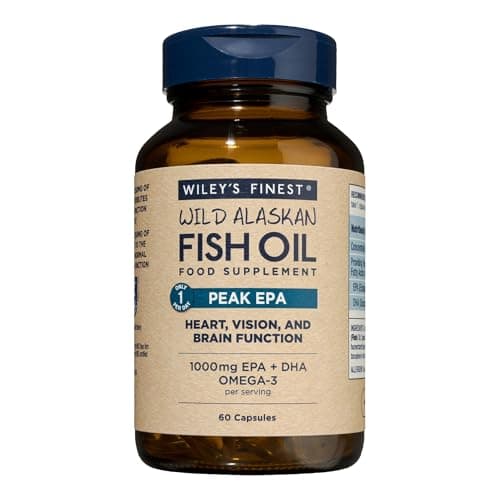
An honest Wiley's Finest Peak EPA review covering its 750mg EPA, 250mg DHA, the ethyl ester oil form, sustainable Wild Alaskan Pollock source, dosing, value and who should buy it.
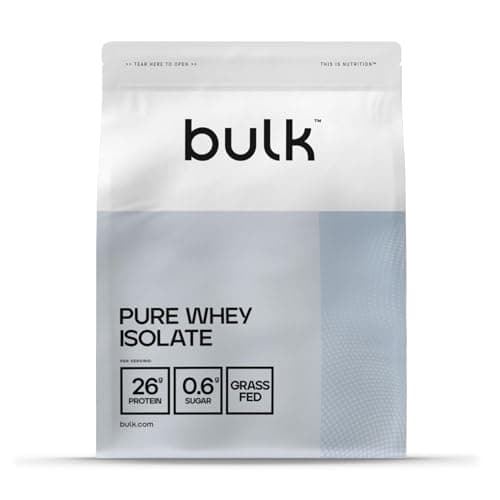
The best whey protein isolate powders in the UK for 2026, including which works best as a whey protein for women. We compare protein per scoop, price per kilo, lactose and taste across five isolates.
Best Exercise is a participant in the Amazon EU Associates Programme, an affiliate advertising programme designed to provide a means for sites to earn advertising fees by advertising and linking to Amazon.co.uk. As an Amazon Associate we earn from qualifying purchases. This comes at no extra cost to you and never influences our independent reviews or rankings.