Rowing Machines
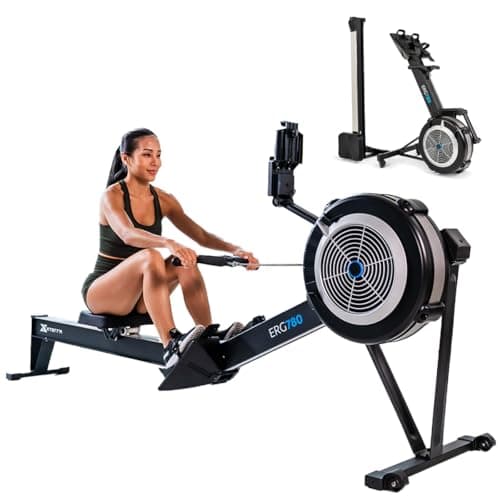
Xterra ERG780 Review: A Folding Air Rower at Half Concept2 Money
Our Xterra ERG780 air rower review covers the 10-level damper, Bluetooth FTMS app support, noise, monitor accuracy, folding storage and how it compares with a Concept2.

By Paul Kendrick, Cardio & Endurance Editor · Updated 24 July 2026
We may earn a commission from qualifying purchases made through links on this page, at no extra cost to you. This never affects our ratings.
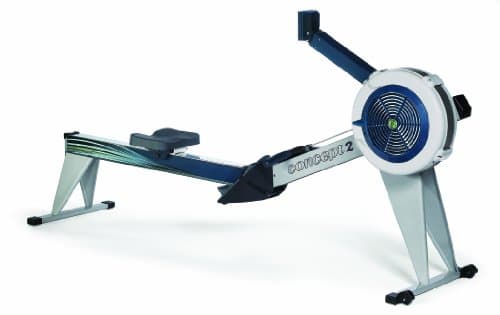
The Concept2 Model E is the taller, sturdier sibling of the Model D, the air rower that has quietly become the default machine for anyone serious about rowing, from Olympic squads to CrossFit boxes to spare bedrooms across the country. It does one thing and does it better than anything else: it gives you an accurate, consistent, brutally effective full-body cardio workout, and it keeps doing it for twenty years. The Model E's whole reason to exist is a seat raised to 20 inches off the floor, which sounds trivial until your knees, hips or age make climbing on and off a low rower a daily annoyance. If that's you, this is the Concept2 to buy.
Everything that made the Model D a benchmark carries over. You get the same air-resistance flywheel with a 1-to-10 spiral damper, the same PM5 monitor that competitive rowers trust for its accuracy, and the same smooth, self-selecting resistance that gives you back exactly what you put in. What the Model E adds on top is a more solid, slightly heavier frame, a higher seat, and a fully protected nickel-plated chain. What it doesn't add is a lower price, and that's the honest catch: it's a premium machine at a premium price, and the payoff is measured in decades of use rather than features on a box.
How we review
This review is based on extensive research of verified owner reviews, long-term feedback from rowers and coaches, expert outlet testing and Concept2's published specifications. We haven't run our own multi-year endurance test of this exact unit, so we've stuck to reporting the consistent, repeated findings, the praise and the gripes alike, rather than one-off opinions.
The Model E makes the most sense for a specific group: taller people, anyone with knee, hip or back issues that make a low seat a struggle, older rowers, and households where more than one person will use it and getting on and off easily matters. The raised seat is the reason to pay more. If you're young, mobile and just want the best rowing workout for the lowest Concept2 price, the Model D is the smarter buy and rows identically. Either way, you're getting the machine most serious rowers would pick, and rowing itself is a rare full-body cardio move that hits around 86% of your muscles in one stroke.
This is where the Model E justifies itself. The frame is welded steel and aluminium with a double powder-coat, and it feels like it could survive a house move without noticing. The higher seat sits on a beefier front leg assembly, and the whole thing has a planted, no-flex solidity that cheaper rowers can't match. The nickel-plated chain, which connects the handle to the flywheel, is better shrouded than on the Model D, so it stays cleaner and needs less frequent oiling.
Getting on and off is the daily difference. At 20 inches, the seat is roughly chair height, so you sit down onto it rather than lowering yourself to the floor and hauling yourself back up. Small thing, big deal if your joints protest. The handle, footplates and flexible foot straps are the same proven Concept2 design, comfortable over long sessions and quick to adjust for different shoe sizes.
| Resistance type | Air (fan flywheel), spiral damper 1 to 10 |
|---|---|
| Monitor | PM5 with Bluetooth and ANT+ |
| Seat height | 20 in / approx 51 cm (about 6 in higher than Model D) |
| Footprint in use | Approx 244 x 61 cm |
| Storage | Separates into two pieces, no tools |
| Max user weight | Approx 227 kg / 500 lb |
| Machine weight | Approx 32 kg |
| Apps | Concept2 ErgData and online logbook, plus third-party apps |
| Chain | Nickel-plated, fully protected |
On the water, or rather on the rail, the Model E rows exactly like every other Concept2, which is the whole point. The air resistance responds to how hard you pull: ease off and it eases with you, attack the stroke and it fights back, so a single machine covers a gentle recovery row and an all-out interval without you touching a dial mid-set. The damper adjusts how the air feels, lower for a lighter, faster catch, higher for a heavier, more grinding pull, but it isn't a difficulty setting; your effort sets the difficulty.
The PM5 monitor is the reason data-driven rowers won't use anything else. It shows pace per 500m, watts, calories, distance, time and stroke rate, saves your workouts, and pairs over Bluetooth and ANT+ with heart rate belts and apps. Concept2's own ErgData app and online logbook are free and genuinely good, and the machine plugs into third-party training apps too. Crucially, the numbers are consistent between machines, so your split on this rower means the same as on one in a gym across the country. Regular rowing like this delivers real cardiovascular and body-composition benefits, with studies showing measurable changes over a training block (study on indoor rowing and body composition), and it counts toward the 150 minutes of weekly activity the NHS recommends.
The honest downside is the sound. Because it moves air, the Model E whooshes on every pull, and it's louder than a magnetic rower's near-silence or the gentle swish of a water rower. It's not harsh, and most people talk or watch TV straight over it, but if silent early-morning sessions in a thin-walled flat are non-negotiable, factor that in. Storage is better than the machine's length suggests: pull the pin, separate it into two parts, stand the front section up, and it lives in a corner.
On value, the Model E is expensive up front and superb over time. Spread the cost across the fifteen-plus years these machines routinely last, factor in that it barely depreciates second-hand and that spares keep old ones running, and it works out cheaper per year than a string of budget rowers that die and get binned. The rowing itself is brilliant, low-impact, full-body cardio that's kind to your joints and hard on your fitness, which is why the Concept2 range tops our best rowing machine guide. Whether the raised seat is worth the premium over the Model D is the only real question, and only your knees can answer it.
For the right person, yes. The Model E costs more and its headline feature is a seat that sits 20 inches off the floor, about 6 inches higher than the Model D, which makes getting on and off far easier for taller people, anyone with dodgy knees or hips, and older users. It's also a touch heavier and more solid feeling, with the chain better protected. The rowing feel and workout are identical, so if the raised seat doesn't matter to you, the Model D saves you money.
New Model E rowers ship with the PM5 performance monitor, the same top-end console fitted to the Model D. It tracks pace, distance, watts, calories and stroke rate, stores your data, connects to phones and heart rate belts over Bluetooth and ANT+, and works with Concept2's free ErgData app and the online logbook. It's the gold standard for accuracy and consistency, which is why competitive rowers train and race on these.
It has a footprint of roughly 244cm long by 61cm wide when set up, so you need a clear stretch of floor plus room to slide back on the rail. For storage it separates into two pieces in seconds without tools, and the front section stands upright, so it tucks into a corner. It's not a fold-flat-under-the-bed machine, but it stores far more easily than its length suggests.
It makes a whooshing fan noise rather than a mechanical one, because the resistance comes from a spinning flywheel pushing air. It's louder than a magnetic or water rower on the pull, but it's an even, predictable sound, not a harsh one. Most people happily watch TV over it. If you live in a flat with thin walls and train at 6am, a magnetic rower would be quieter, but the trade-off is a less consistent feel.
Genuinely for decades. Concept2 rowers are famous for being close to indestructible, which is why you see the same machines still going strong in gyms and boat clubs 15 or 20 years on. Nearly every part is user-serviceable and Concept2 still sells spares for old models. The company backs the frame with a long warranty and the monitor and moving parts with shorter cover. This is the opposite of disposable fitness kit.
Our Xterra ERG780 air rower review covers the 10-level damper, Bluetooth FTMS app support, noise, monitor accuracy, folding storage and how it compares with a Concept2.
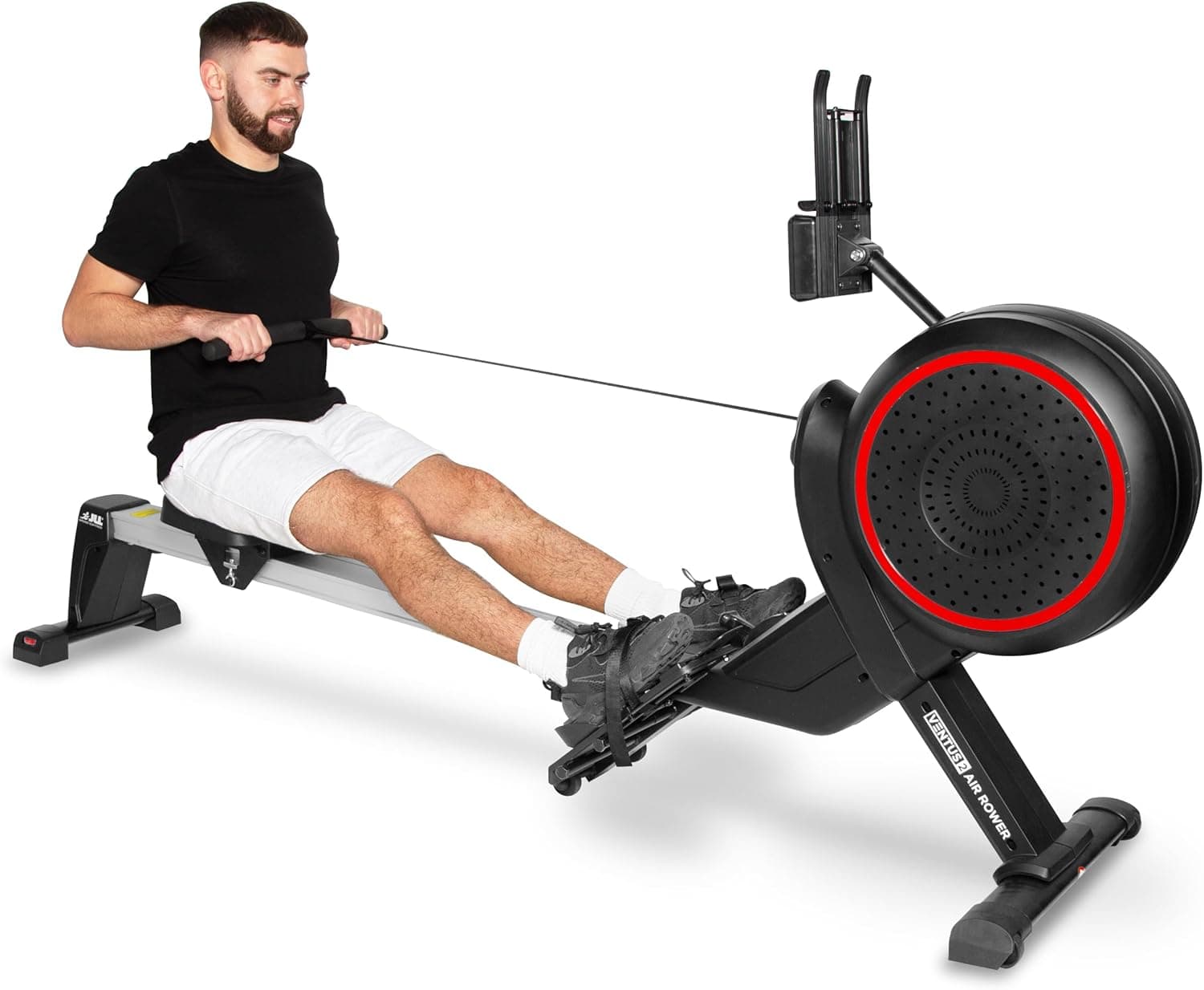
The best foldable rowing machines in the UK for 2026, compared on folded footprint, rail length and weight limit. Picks from JLL, DMASUN, YPOO, Viavito and MERACH for every budget.
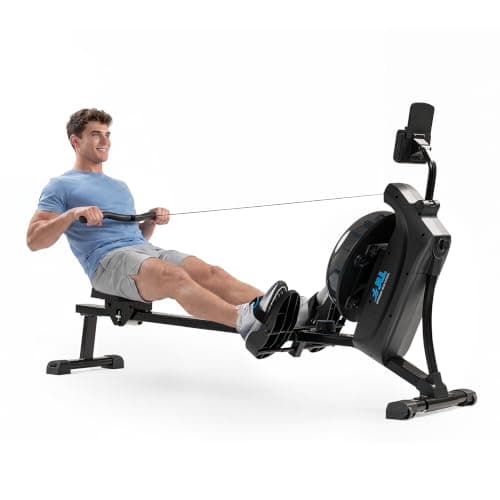
An honest JLL water rowing machine review of the dual resistance rower: the 60 degree tank, 16 magnetic levels, 130cm rail, 150kg capacity, SunnyFit app and who it suits.
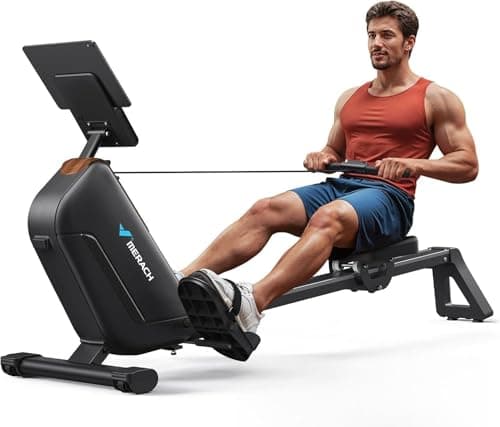
An honest MERACH R15 Pro review: 40kg peak electromagnetic resistance, 16 levels adjusted from the handlebar, a 130cm rail, 158kg capacity and who this £300 rower suits.
Best Exercise is a participant in the Amazon EU Associates Programme, an affiliate advertising programme designed to provide a means for sites to earn advertising fees by advertising and linking to Amazon.co.uk. As an Amazon Associate we earn from qualifying purchases. This comes at no extra cost to you and never influences our independent reviews or rankings.