Cross Trainers
Cross Trainer vs Exercise Bike: Which Should You Buy?
Cross trainer vs exercise bike compared on muscles, calories, joint impact, space, noise and price, with a straight verdict on which suits your home and goals.

By Paul Kendrick, Cardio & Endurance Editor · Updated 15 October 2026
We may earn a commission from qualifying purchases made through links on this page, at no extra cost to you. This never affects our ratings.
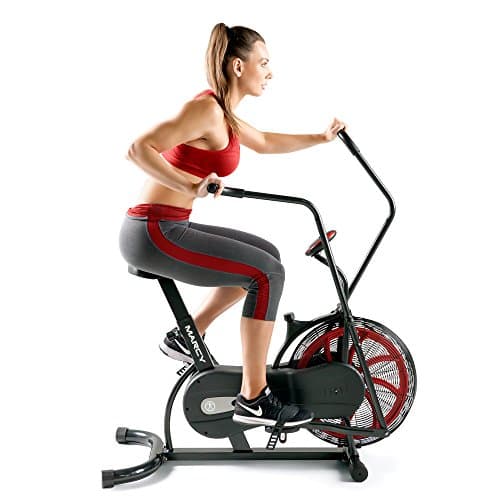
The Marcy NS1000 is a small, fan resisted bike with moving arms that sells for about £347 on Amazon UK, and our view is that it's a fair entry point to air bike training for lighter riders who want a full body cardio machine without much fuss. It isn't a heavy duty interval bike. The 110kg user limit, the roughly 26kg frame and a console that only counts the basics put a firm ceiling on who it suits, and the fan makes the noise that every fan bike makes.
Marcy has sold this design since 2019, and the formula is simple: pedal and the fan spins, push and pull the handles and the fan spins faster, and the harder you work, the more the air pushes back. There are no levels to choose and nothing to plug in. That makes it easy to live with, but it also means there's very little here beyond the core mechanism.
How we review
We haven't had the NS1000 in for hands-on testing. This review is based on Marcy's published specifications, the Amazon UK listing, recurring patterns in owner feedback, and comparison with the air bikes and cross trainers we've already covered. Where a point depends on owner reports rather than a spec sheet, we say so.
At £347.12 on the day we checked (15 October 2026), the NS1000 sits between the cheaper Strongology Scorpion at around £320 and the ERGOLIFE air magnetic bike at around £470. It was listed as in stock.
Check the Marcy NS1000 price on AmazonFor that you get a steel frame with a caged fan at the front, dual action handlebars linked to the pedals, a padded saddle that adjusts across seven heights (66cm to 86cm), and a small LCD that runs on batteries. The listing gives an assembled size of 114 x 68 x 124cm and an item weight of about 26kg (58lb), with a recommended user height of 150 to 190cm and a maximum user weight of 110kg.
The fan is the whole resistance system. Pedal gently and it barely pushes back; drive your legs and arms together and it pushes back much harder, because air resistance climbs steeply with fan speed. You don't press a button to make a session harder. You just work harder.
That's ideal for intervals, where you want to go flat out for 20 or 30 seconds and then back right off, and the bike follows you without any lag. It's less ideal for steady cardio. If you want to sit at a fixed, moderate load for 40 minutes while watching something, a magnetic bike or a conventional cross trainer with set levels is easier to pace, because on a fan bike your effort tends to drift up and down with your concentration.
There's also a ceiling. The NS1000's fan is smaller than the big wheels on commercial air bikes, and the listing doesn't give a fan diameter, so we can't compare it precisely. A smaller fan generally means less maximum resistance, which strong, experienced riders will notice during sprints. For beginners and moderate riders it's unlikely to be the limiting factor; your lungs will give out well before the fan does.
The handles move with the pedals, so every stroke involves a push and a pull from your upper body. That's why Marcy calls the NS1000 a cross trainer and exercise bike. It isn't a cross trainer in the elliptical sense, since you never stand up and stride, but it does share the full body element. You can rest your arms on the fixed section and pedal with legs only, or drive mainly through the arms to give your legs a break between hard efforts.
If you're deciding between this style of machine and a standing elliptical, our cross trainer vs exercise bike comparison covers the differences in joint load, muscle use and space.
| Resistance | Air (fan), rises with effort; no set levels |
|---|---|
| Arms | Dual action moving handlebars |
| Seat adjustment | 7 heights, 66 to 86 cm |
| Console | Battery LCD: time, speed (km/h), distance, calories |
| Assembled size | 114 x 68 x 124 cm |
| Item weight | Approx 26 kg (58 lb) |
| User height | 150 to 190 cm |
| Maximum user weight | 110 kg |
| Power | Batteries for console only |
| First available | 2019 |
The LCD shows elapsed time, speed in km/h, distance and estimated calories. That's all. There's no heart rate (no grips, no chest strap pairing), no watts, no RPM, no interval timer and no built in programmes. There's no app or Bluetooth either, so it won't connect to Zwift, Kinomap or anything similar.
Some people won't mind. A time readout is enough to run a 20 seconds on, 40 seconds off session, and a cheap heart rate strap paired to your watch or phone will give you more useful data than most budget consoles anyway. But if you want watts to track sprint power week by week, or you want a screen to keep you entertained, the ERGOLIFE's Zwift support or a pricier air bike will serve you better.
Calorie figures on budget consoles are rough estimates at best, since the bike doesn't know your weight or heart rate. Treat the number as a way to compare one of your sessions with another, not as an accurate energy count.
The 110kg user limit is our biggest reservation. It matches the Strongology Scorpion, the lowest figure in our air bike coverage, and it rules out plenty of adults before fitness comes into it. Fan bike training is physical: you yank the handles, push hard through the pedals, and the frame takes the strain. If you're near 110kg, we'd look elsewhere rather than run the frame at the edge of its rating.
At around 26kg, the NS1000 is light for this kind of bike. That's handy when you want to tip it onto its wheels and roll it into a corner, but a lighter frame tends to rock more under hard efforts than a 50kg commercial bike. A level floor and a rubber mat will help. Owner feedback on budget fan bikes of this weight often mentions some movement during sprints, so keep efforts seated and controlled rather than standing on the pedals.
Noise is the other honest drawback. All fan bikes whoosh, and the NS1000 is no different; the faster you go, the louder it gets. It's a rush of air rather than a grinding mechanical noise, but it carries. A garage or ground floor room is the best home for it.
The NS1000 is built for short, hard intervals, and the evidence for brief cycle sprints is encouraging. In a 12 week McMaster University trial, sedentary men who did three 20 second all out cycle sprints within a 10 minute session, three times a week, improved peak oxygen uptake by 19%, the same gain as a group cycling steadily for 45 minutes (Gillen et al., PLoS One 2016). Only nine people did the sprint protocol, so it's a promising result rather than the final word, and it was done on a lab cycle ergometer, not a fan bike with moving arms.
The NHS physical activity guidelines suggest adults get 150 minutes of moderate activity or 75 minutes of vigorous activity a week. Hard fan bike intervals count toward the vigorous side, which is where a machine like this earns its space: two or three short sessions a week can cover a good chunk of that target. Our air bike workout guide has sessions you can run using nothing more than the NS1000's time readout.
Buy it if you're comfortably under 110kg, want a full body cardio machine for short interval sessions, and have a room where some fan noise won't bother anyone. It suits people who like the idea of air bike training but don't want the size or price of a commercial machine, and it needs no plug socket, which helps in a garage or outbuilding.
Skip it if you're near or over the 110kg limit, if you want heart rate, watts or app connectivity, or if you mostly want long, steady sessions at a fixed load. Strong riders who already know fan bikes will likely outgrow it, and anyone training in a flat early in the morning should think hard about the noise.
The Strongology Scorpion is the nearest rival. It costs around £320, has a 16 inch fan, weighs 26.2kg and shares the 110kg limit and a basic LCD. The Scorpion's 111 x 59cm footprint is a little narrower, and its review gives a specific fan size, which the NS1000 listing doesn't. On specs alone there isn't much between them, so price on the day will probably decide it.
The ERGOLIFE air bike costs around £470 but adds eight levels of magnetic resistance on top of the fan, Zwift and Kinomap support, and a higher limit of about 136kg. If you're heavier, or you want a session you can pace at a set load, the extra £120 or so buys a lot.
For the wider picture, including bigger commercial style bikes, our best air bike UK guide ranks the options by budget and rider size. And if you've realised you want a standing elliptical after all, the cross trainers hub has those.
See today's Marcy NS1000 priceIt's a seated fan bike with handles that push and pull as you pedal, which is the layout most people call an air bike. Marcy calls it a cross trainer and exercise bike because your arms work as well as your legs, but you sit throughout. There's no standing elliptical stride like you'd get on a conventional cross trainer.
None, in the usual sense. The resistance comes from the fan, so it rises as you pedal and push harder and drops when you ease off. You control intensity with effort alone, which suits intervals but means you can't dial in a fixed level for a steady session.
Marcy lists 110kg, with a recommended user height of 150 to 190cm. That's low for a bike you might sprint on. If you weigh close to 110kg, buy something rated well above your weight, such as the ERGOLIFE at around 136kg.
Yes, as all fan bikes are. The noise is mostly the whoosh of air, and it gets louder the harder you go. It's fine in a garage or a ground floor room, but think twice if you train early in a flat with neighbours below or a light sleeper in the next room.
No. The battery powered LCD shows time, speed in km/h, distance and calories. There are no pulse sensors, no chest strap support, no built in workouts and no app. A separate heart rate watch or strap is the simple fix if you want to track effort.
Assembled, it measures roughly 114cm long, 68cm wide and 124cm tall, and weighs around 26kg. That's close to the Strongology Scorpion's footprint, and small enough for a spare bedroom or a corner of the garage.
Cross trainer vs exercise bike compared on muscles, calories, joint impact, space, noise and price, with a straight verdict on which suits your home and goals.
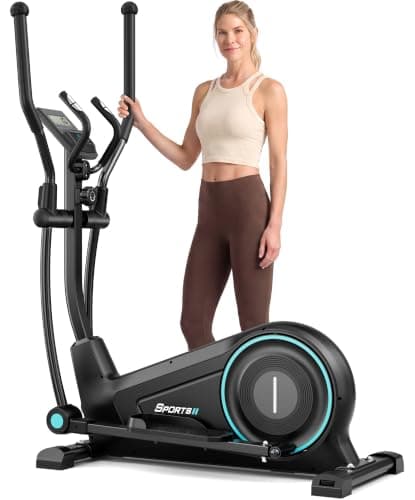
THERUN cross trainer review: 8kg flywheel, 16 magnetic levels and rear drive for £269.99, plus its short 38cm stride, 120kg limit and doubtful 20dB claim.
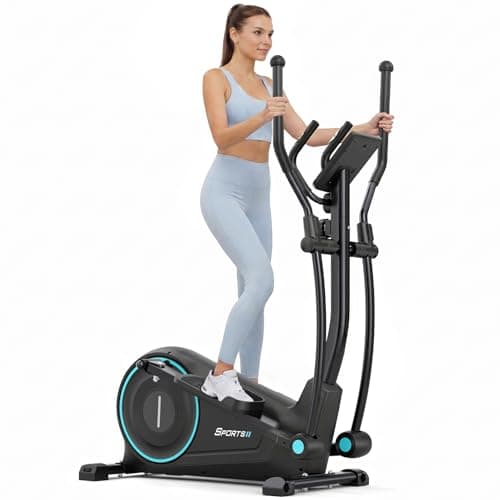
An honest Dripex cross trainer review: the 38cm stride, 8kg flywheel, 16 magnetic levels, 120kg limit, the quiet claims and who this £230 elliptical suits.
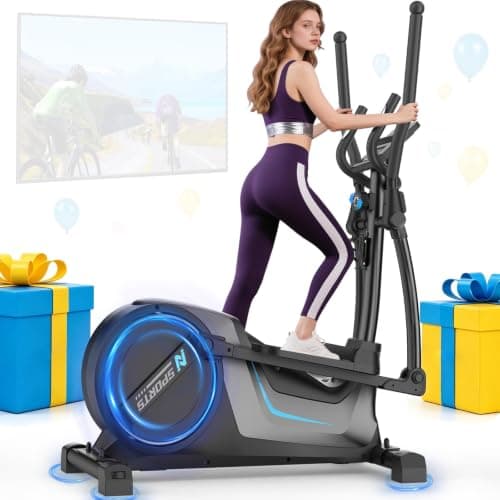
Our Neezee 3-in-1 cross trainer review: 16 magnetic resistance levels, the 8kg flywheel, Kinomap and Zwift support, 150kg limit, footprint and what the listing leaves out.
Best Exercise is a participant in the Amazon EU Associates Programme, an affiliate advertising programme designed to provide a means for sites to earn advertising fees by advertising and linking to Amazon.co.uk. As an Amazon Associate we earn from qualifying purchases. This comes at no extra cost to you and never influences our independent reviews or rankings.