Home Gym
Bells of Steel Adjustable Kettlebell Review: One Bell, 12 to 32kg
Bells of Steel adjustable kettlebell review: the 12 to 32kg competition shell, 0.5kg steps, 35mm handle, tool-based weight swaps and who it suits.

By Jack Atkins, Home Gym Equipment Specialist · Updated 7 November 2026
We may earn a commission from qualifying purchases made through links on this page, at no extra cost to you. This never affects our ratings.
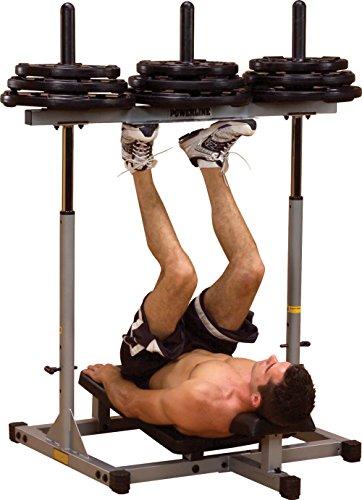
The Body-Solid Powerline VLP156 is the cheapest sensible way to get a real plate-loaded leg press into a small home gym. It costs around £450.99 at the time of writing, its frame weighs only 35kg, and it occupies a patch of floor not much bigger than a weight bench. Our verdict: it's a solid, well-specified machine with a 400lb rating and a 10-year frame warranty from Body-Solid, but the vertical layout itself is the catch. Getting into position is awkward, lying under a loaded carriage isn't for everyone, and people with sensitive lower backs may find it the least comfortable way to press.
If you understand that trade before you buy, it's a good machine. If you don't, it's the sort of kit that ends up as a very expensive coat rack.
How we review
This review is research-based. We've worked from Body-Solid's official specifications, the live Amazon UK listing and the wider evidence on leg press training, and we haven't run a long-term hands-on test of this unit. Where the manufacturer and Amazon figures disagree, we say so.
The VLP156 makes most sense for three kinds of buyer:
It's a poorer fit if you have a history of lower-back pain, if you're tall with long thighs (the range of motion can feel cramped), or if you're already pressing well over 180kg. For the broader picture on machine types, our plate loaded leg press guide covers how vertical, 45 degree and horizontal designs differ, and the sister vertical leg press guide goes into technique for this layout specifically.
These figures come from Body-Solid's official PVLP156X product page, the current version of the machine Amazon UK sells as the VLP156.
| Type | Plate-loaded vertical leg press |
|---|---|
| Dimensions (L x W x H) | 45 x 47 x 55 in (1148 x 1205 x 1395 mm) |
| Frame weight | 35 kg / 77 lb |
| Max capacity | 400 lb (approx 181 kg) |
| Weight posts | 3 x 1-inch standard posts |
| Olympic plates | Optional adapter sleeves required |
| Carriage | Nylon bushings |
| Safety | Dual adjustable 1/2-inch steel locking pins, 3 start and stop positions |
| Footplate | Extra-wide, diamond plate steel, no-slip |
| Pads | Extra-thick back pad, contoured head and neck pad |
| Warranty | 10 years (Powerline, per Body-Solid) |
| Price | Around £450.99 at the time of writing |
One quirk: the Amazon UK listing gives dimensions of 46 by 48 by 60 inches and a weight of about 92lb. Body-Solid's own shipping box weighs 41kg (91lb), so Amazon's weight figure almost certainly includes packaging, and its height is a few inches taller than the manufacturer's. Plan your space around the larger Amazon numbers and you won't get caught out.
Body-Solid's Powerline range is its home-use tier, a step below the commercial-grade Pro Club line. The VLP156 uses alloy steel with a powder-coat finish, and the design is about as simple as leg machines get: a base with a back pad and head rest, two guide rails angled up and over you, and a carriage that slides along them on nylon bushings.
You lie on your back with your hips under the carriage, put your feet on the footplate, release the locking pins and press the load straight up. The three 1-inch posts sit on the carriage itself, so the plates travel with your feet. Spreading the weight over three posts rather than one keeps the carriage balanced, which matters when you're loading and unloading plates one side at a time.
Nylon bushings are a sensible choice at this price. They're quiet, they don't need much maintenance, and they're less fussy than linear bearings about a bit of dust in a garage. The trade-off is a little more friction than a bearing-driven sled, though at home loads you're unlikely to notice.
The safety setup is the part that deserves the most attention. Two adjustable steel pins and three start and stop positions let you set a floor for the carriage so it can't come down onto you if you fail a rep. Set them every session. On a vertical press, the load is directly over your hips and chest, and the pins are what make that acceptable.
The vertical leg press works your quads, glutes and adductors in much the same way as any other leg press; our leg press guide explains how foot position shifts the emphasis. What changes is your body position.
On a 45 degree sled you sit reclined. On the VLP156 you lie flat with your legs pointing up. Two things follow from that.
First, getting in is awkward. You have to lower yourself onto the back pad, slide your hips under the carriage and lift your feet onto a plate above you. When your legs are fresh, that's fine. After four hard sets, it's clumsy, and getting out from under the carriage is worse.
Second, the lower back is less protected. Because your hips are already flexed when you lie down, the deeper you bring your knees towards your chest, the sooner your pelvis tucks under and your lower back peels off the pad. That rounding under load is the bit most people with back trouble want to avoid. A 45 degree sled gives you more room before that happens.
The good news is that you probably don't need maximum depth anyway. A 2025 study in the Journal of Sports Sciences had trained lifters do unilateral leg presses for eight weeks, one leg at roughly 5 to 100 degrees of knee flexion and the other through their full range (about 154 degrees). Quadriceps growth was similar in both legs. That's one short study, but it supports a practical approach on this machine: stop each rep before your lower back starts to round, and you're not leaving much quad growth on the table.
That also softens the "short range on some bodies" complaint. Taller lifters with long femurs may find their knees meet their torso before they hit the bottom, but a moderate range is still a productive range.
The VLP156 takes standard 1-inch plates, not Olympic plates. That's worth stressing, because most UK home gyms that grow beyond dumbbells end up with an Olympic set. If that's you, Body-Solid sells Olympic adapter sleeves separately, and you'll need to factor those into the budget.
Plates aren't included either. To use anything near the 181kg rating you'd need a lot of iron, so the honest total cost is the machine plus whatever plates you don't already own. Also note that on a vertical press you're moving the load against gravity almost directly, so a number that feels moderate on a 45 degree sled will feel heavier here. Our article on what counts as a good leg press weight explains why numbers don't transfer cleanly between machines.
For most people, leg press work fits into the NHS recommendation of muscle-strengthening activity at least two days a week. Two sessions of three or four sets is plenty to build leg strength on this machine.
See the Body-Solid Powerline vertical leg press on Amazon£450.99If the vertical layout doesn't suit you, these are the options we'd weigh up:
Body-Solid rates the current PVLP156X version at 400lb, which is roughly 181kg of plates. That's plenty for most home lifters, though strong, experienced users can outgrow it, because the leg press is where people move their biggest numbers.
Not out of the box. It has three 1-inch weight posts, so it takes standard 1-inch plates. Body-Solid sells Olympic adapter sleeves as an optional extra if your plates have 2-inch holes, so budget for those if you own an Olympic set.
Body-Solid lists the frame at 45 by 47 by 55 inches, which is about 115cm long, 121cm wide and 140cm tall, with a frame weight of 35kg. The Amazon listing quotes slightly larger figures, so measure your space against the bigger numbers to be safe.
It isn't bad for everyone, but it's the least forgiving leg press layout for the lower back. You lie flat with your legs above you, so if you lower too deep your pelvis can tuck under and your lower back rounds off the pad. Anyone with a history of disc problems or low back pain should keep the range short and check with a physio before loading it heavily.
If floor space is your main limit and you want a dedicated leg press for under £500, yes, it's one of the few credible options. If you have room for a 45 degree sled, or your back doesn't like lying under load, a different machine will suit you better.
Bells of Steel adjustable kettlebell review: the 12 to 32kg competition shell, 0.5kg steps, 35mm handle, tool-based weight swaps and who it suits.
Kettlebell vs dumbbell: dumbbells win for building muscle at home, kettlebells win for swings, conditioning and grip. Costs, load jumps and which to buy first.
How long should a skipping rope be? A height to rope length chart in cm and feet, the stand-on-it test, and how to shorten an adjustable rope properly.
How to clean a yoga mat properly: a 30-second after-class wipe, a weekly clean and a deep clean, plus what's safe for PVC, TPE, natural rubber, PU, cork and cotton mats.
Best Exercise is a participant in the Amazon EU Associates Programme, an affiliate advertising programme designed to provide a means for sites to earn advertising fees by advertising and linking to Amazon.co.uk. As an Amazon Associate we earn from qualifying purchases. This comes at no extra cost to you and never influences our independent reviews or rankings.